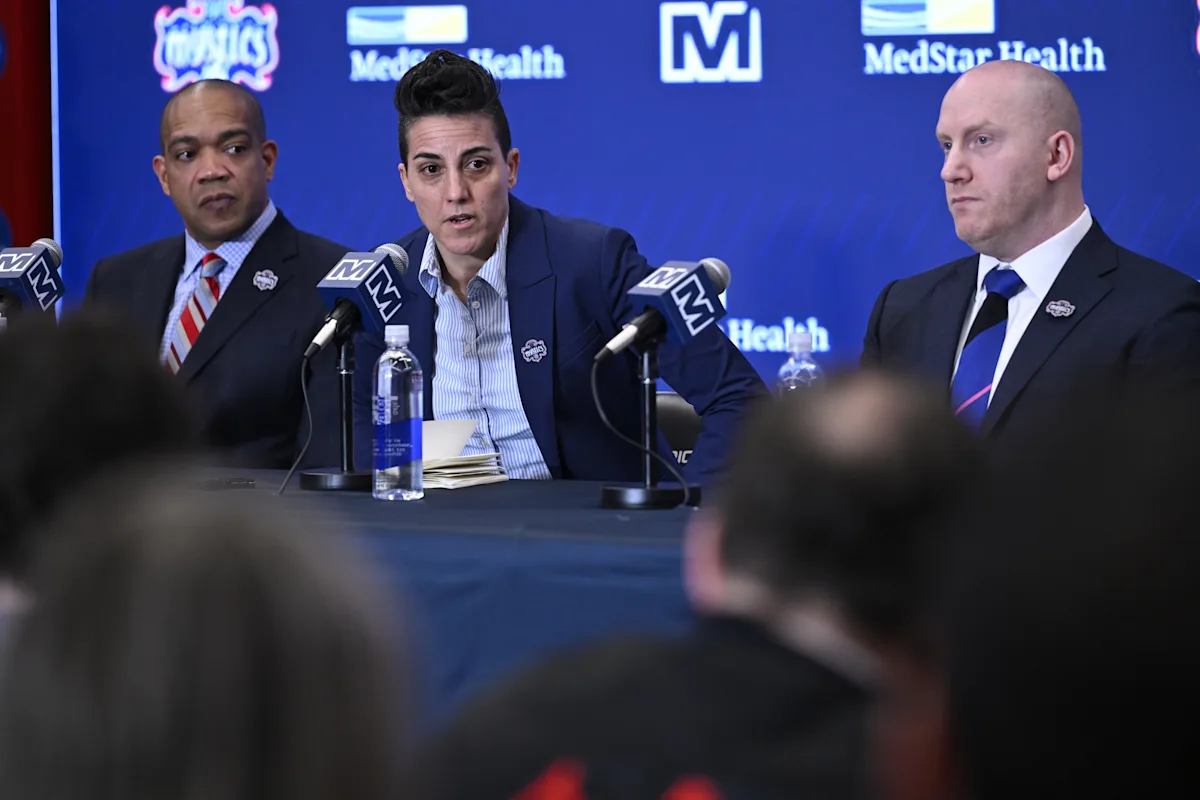
Yesterday, we highlighted a key theme for the Washington Wizards, focusing on roster turnover. Today, we’re taking a closer look at a similar issue with the Washington Mystics.
Though both teams share the same top executive—Monumental Basketball Chairman Michael Winger—who joined in May 2023, the Mystics have had a different management path. Winger was brought in primarily to rebuild the Wizards alongside his deputy, Will Dawkins, following the dismissal of then-GM Tommy Shepherd. Meanwhile, the Mystics stayed under the leadership of then-GM Mike Thibault and head coach Eric, who were working to rebuild independently. Initially, Winger allowed them to manage the WNBA side, but after the 2024 season, the Mystics and Thibault parted ways, giving Winger more control. He then hired former NBA executive Jamila Weidman as GM and Sidney Johnson, a former Chicago Sky assistant, as head coach.
Looking ahead to 2025, the priority for the Mystics—and any WNBA team—should be to position themselves as a top destination for free agents when the new collective bargaining agreement (CBA) kicks in by 2026, promising significantly higher salaries.
Winger and Weidman have a solid foundation with a young roster. After trading Ariel Atkins to Chicago for the No. 3 draft pick, the Mystics selected Sonia Citron. They also used the No. 4 pick to draft Kiki Iriafen, both of whom made the All-Star reserves in their rookie seasons. Yet, the standout player at the start of the 2025 season was Brittney Sykes, who earned an All-Star nod as an injury replacement. The Mystics entered the season with three All-Stars and playoff hopes.
However, the Mystics started mirroring the Wizards’ approach by trading Sykes to the Seattle Storm for Alisha Clark, Gia Cook, and a 2026 first-round pick. The team opted to prioritize accumulating draft assets over acquiring a star ahead of the 2026 free agency window. Afterward, the Mystics endured a 10-game losing streak and missed the playoffs. Weidman acknowledged that the team is not necessarily focused on immediate success but is instead building a foundation similar to that of the Wizards.
When asked whether the Mystics or Wizards are better positioned under Winger’s leadership, many think the Mystics currently have the edge due to promising players like Citron, Iriafen, and center Shakira Austin. However, relying solely on draft development may not be enough to secure a top-tier star in 2026. The WNBA’s new CBA introduces complexities, requiring teams like the Mystics to balance growth with competitiveness, especially as new teams join the league and salary demands rise.
In previous seasons, it was hard to argue players were overpaid even if they struggled or were frequently injured. The new CBA might change that dynamic, potentially leading to situations where some players could earn more than their contributions justify.
In summary, the Mystics face a challenging balancing act between long-term development and immediate competitiveness, and management will need to be strategic to avoid setbacks.
Fan Take: This update on the Mystics’ rebuilding process is crucial for WNBA fans as it highlights the evolving landscape shaped by the upcoming CBA and shifting team strategies. How Washington positions itself now could set a precedent for how WNBA teams manage talent and payroll in the future, impacting the league’s competitive balance and growth.