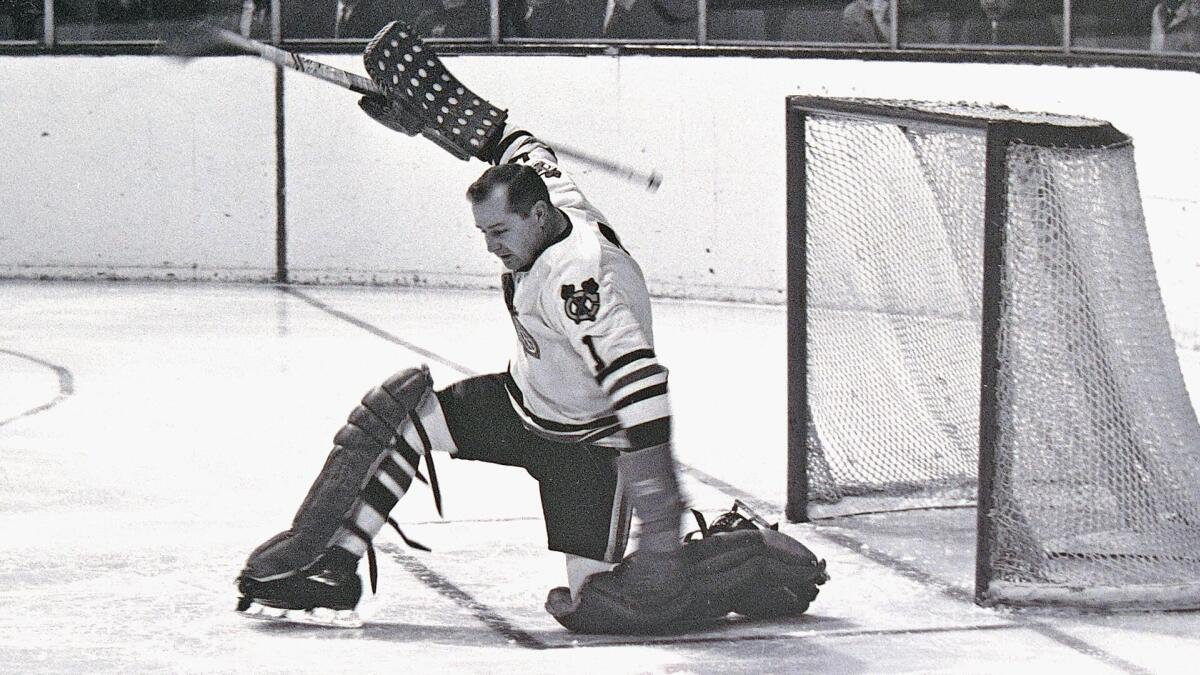
Legendary NHL goaltender Glenn “Mr. Goalie” Hall has died at age 94. Over an 18-season career in the NHL, Hall became one of the most celebrated goaltenders in hockey history, earning his spot in the Hall of Fame in 1975. He was a three-time Vezina Trophy winner and a two-time Stanley Cup champion, finishing with a career goals-against average of 2.50 and a save percentage of .918. His 84 shutouts are fourth all-time, and his streak of 502 consecutive games started from 1955 to 1962—primarily with the Detroit Red Wings and Chicago Blackhawks—remains one of the longest in NHL history. Hall’s impressive numbers, numerous honors, and reputation as one of the toughest players to ever play the position have solidified his legacy as a true hockey icon.
NHL Commissioner Gary Bettman praised Hall, acknowledging his many achievements, including winning a Calder Trophy with the Red Wings, a Stanley Cup with the Blackhawks in 1961, and being a seven-time first-team All-Star. Hall was also one of the pioneers of the butterfly goaltending technique, revolutionizing the way the position is played, and his influence continues to impact the sport today.
Hall’s career started remarkably even before he played a game—he was part of the Red Wings’ 1952 Stanley Cup-winning team before he ever took the ice. His break came in the 1955-56 season when he replaced Terry Sawchuk, establishing himself as one of the best goalies in the league and earning the Calder Trophy. Traded to the Blackhawks after the 1956-57 season, he enjoyed a successful decade with Chicago, winning 276 games, posting a 2.60 GAA, a .916 save percentage, and 51 shutouts. In 1961, he helped Chicago win the Stanley Cup, and his No. 1 jersey was retired by the Blackhawks in 1988.
In the 1967 expansion draft, Hall was claimed by the St. Louis Blues. Even late in his career, he remained a top performer, notably during the 1968 Stanley Cup Playoffs when he recorded a .916 save percentage and led the Blues to the finals—despite losing to the Canadiens. His exceptional playoff run earned him the Conn Smythe Trophy as MVP, making him one of just a few players in history to receive it on a losing team. After a brief retirement following the 1968-69 season, Hall came back for a couple more seasons before transitioning into coaching, including assisting the Calgary Flames to a Stanley Cup victory in 1989.
Inducted into the Hockey Hall of Fame in 1975, Hall’s legacy endures through his pioneering techniques and unwavering durability, which helped shape modern goaltending.
Fan Take: Glenn Hall’s passing marks a significant loss for the hockey world, but his innovations and legendary career continue to influence the sport to this day. For hockey fans, his story is a reminder of how one player’s resilience and creativity can change the game forever.