
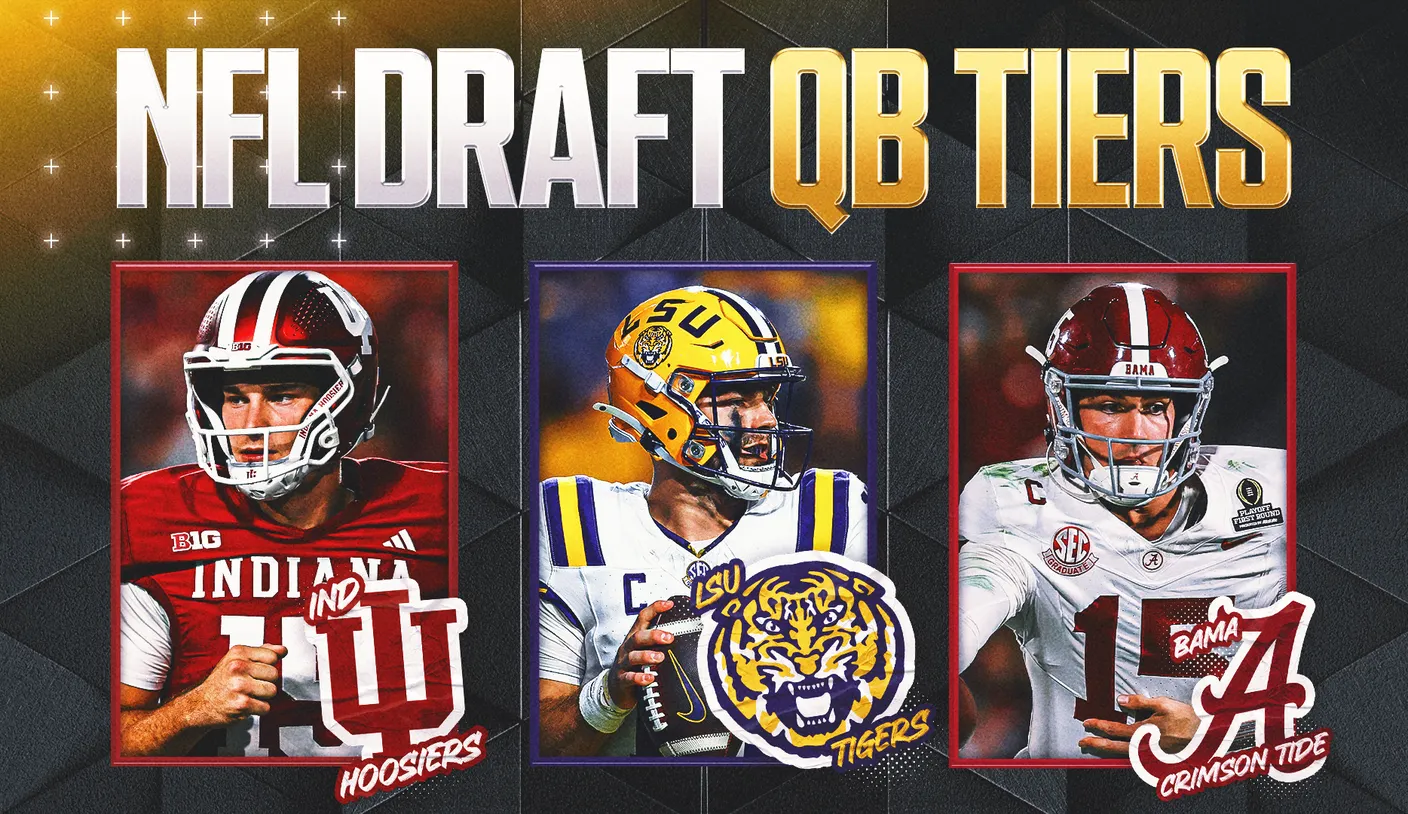
In a typical year, the pecking order for NFL quarterback prospects would already be clear. This cycle, however, remains muddled beyond top-rated Fernando Mendoza of Indiana, echoing the confusion of the 2010 draft when Sam Bradford went first, Tim Tebow slid late in Round 1, and most QBs weren’t picked until Day 3. With Oregon’s Dante Moore returning to school, the class appears even thinner at the top—possibly leaving just two QBs worthy of a top-50 look—so how prospects perform at the East-West Shrine Bowl, the Senior Bowl and in pre-draft workouts could carry extra weight this spring.
Over the past decade, teams have drafted an average of 12 quarterbacks per year (ranging from nine to 15). Below is a rundown of this year’s leading QB prospects and where they’re currently projected to go.
First round
1. Fernando Mendoza, Indiana (6-5, 225)
Mendoza entered the postseason as the unquestioned leader of the class and cemented that view with an MVP-caliber performance in the College Football Playoff title game, guiding Indiana to its first national championship. Critics will point out he didn’t dominate statistically in the final (16-of-27, 186 yards), but scouts value his consistency, mobility and knack for making clutch plays. He isn’t the flashiest-armed QB in the group, but his combination of size, movement and intangibles makes him the favorite to be the No. 1 overall pick in 2026. If the Raiders don’t take him, whoever acquires that pick is likely to.
2. Ty Simpson, Alabama (6-2, 210)
Simpson has limited starting experience (15 career starts) but emerged to lead the SEC in passing yards and touchdowns this past season (3,500 yards, 28 TDs). A broken rib suffered in the Rose Bowl clouds his Senior Bowl availability, but if he’s healthy, a strong week of practices could push him into Round 1 consideration. Simpson demonstrates accuracy at all levels of the field—short, intermediate and deep—but his lighter frame and the fact he couldn’t finish a full season as Alabama’s starter raise durability concerns. He projects best in warm-weather or domed environments with a solid supporting cast.
Third day / Later rounds
3. Drew Aller, Pennsylvania State University (6-5, 235)
Aller probably boasts the strongest arm in the class but is recovering from a season-ending ankle surgery and won’t participate in the All-Star practices; he hopes to do private workouts pre-draft. If teams are satisfied about his health, he could be a second-day pick given his experience making deep, aggressive throws and an impressive college TD-to-INT ratio (61:13). Still, scouts see inconsistencies in instincts and ball placement, and he profiles more as a classic dropback passer in an NFL era that increasingly prizes mobility.
4. Garrett Nussmeyer, LSU (6-1, 205)
Nussmeier’s profile is unusual for the Senior Bowl because he finished his college career as a backup amid coaching changes at LSU. He regressed after a strong 2024 (25 TDs) to just 12 TDs last season and was benched late in the year, raising red flags. He led the SEC in interceptions this past year and lacks elite arm talent, so to improve his draft position he’ll need to show better decision-making and resilience at pre-draft drills and interviews. His football lineage—his father is a former pro QB and current NFL coordinator—will ensure teams dig into his background.
5. Cade Klubnik, Clemson (6-2, 206)
Klubnik’s career trajectory mirrors Nussmeier’s in some ways: after a breakout junior year (36 TDs, six INTs) expectations were high, but Clemson’s recent struggles limited his production. He lacks ideal NFL size, but he’s an athletic, dual-threat quarterback with a career TD-INT ratio of 73:24. With the right coaching and weapons, some scouts think he could flourish at the next level in a role similar to how Bo Nix developed in the pros.
6. Tyren Green, Arkansas (6-6, 235)
Green is the archetypal “upside” player—big, long-strided, and armed with a big arm reminding some of Randall Cunningham. He produced 50 total TDs (34 passing) in 25 games at Boise State and Arkansas State, but he also threw 20 interceptions in that span and often shows raw processing rather than polished reads. He should draw attention at Mobile with his physical traits, but he’ll need to tighten his defensive recognition and accuracy to climb draft boards; some scouts even question whether he might transition to another position.
7. Cole Payton, North Dakota (6-3, 233)
Payton is the notable wildcard: a left-handed, two-way playmaker who starred at FCS powerhouse North Dakota State. He’s powerful and elusive—he even spelled in the backfield occasionally—and finished his college career with more rushing than passing scores. Inexperience as a starter and mechanical issues on short throws are concerns, but his arm talent, touch downfield and experience under center in a pro-style offense intrigue evaluators. A strong Senior Bowl week could vault him into Day 2 consideration, though he may need time to develop before starting in the NFL.
8. Diego Pavia, Vanderbilt (5-10, 207)
Pavia epitomizes toughness, leadership and competitive fire—qualities that endeared him to voters as a Heisman finalist—but he lacks prototypical size and consistent accuracy. He’s best suited to shotgun schemes that give him room to operate and often plays with relentless effort. While he may not wow scouts in practice sessions, his track record of performing in big moments and his leadership make him an appealing developmental option who could surprise at the Senior Bowl or in the later rounds.
9. Carson Beck, Miami (6-4, 220)
Beck put up bigger passing numbers than Mendoza in the title game but sailed a key interception late that cost him momentum with evaluators. He’s a classic rhythm passer with a strong arm and good touch, experienced across 55 college games at Georgia and Miami. However, questions about his composure under pressure may keep him squarely in Day 3 territory despite his prototypical size and resume.
10. Haynes King, Georgia Tech (6-3, 215)
King is a former four-star recruit who began at Texas A&M and now profiles as a playmaking runner who led the ACC with 15 rushing TDs last season. Scouts see flashes of accuracy and improved decision-making, but inconsistency and durability issues temper his upside. He should draw attention at the Shrine Bowl with his mobility and creativity.
11. Joe Fagnano, Connecticut (6-4, 225)
Fagnano’s stock has risen after a steady climb from FCS beginnings; working with coach Jim Mora Jr. helped him produce 48 TDs to five INTs over the past two seasons. He operated often in shotgun-heavy schemes that limited pre-snap reads, but he has size, a clean release and the ability to drive the ball or deliver touch passes. He’s a lesser-known name nationally but could emerge after a strong Shrine Bowl week.
12. Mark Gronowski, Iowa (6-2, 235)
Despite modest counting stats in a conservative Iowa offense (10 TDs, seven INTs in 13 games last season), Gronowski is respected for winning big at the FCS level (led South Dakota State to national titles and won the Walter Payton Award). He’s a proven winner with dual-threat production across his career and earned an invitation to the Shrine Bowl as teams evaluate how his skills translate to the next level.
Author note: Rob Rang, a FOX Sports draft analyst with more than 25 years covering the NFL draft and scouting experience in the CFL, reported this piece.
Fan Take: This draft class could reshape how teams approach QB evaluation—team workouts and All-Star performance may matter more than usual with so few clear first-round options. For NFL fans, that means the next few weeks of Senior Bowl and pro-day showings could produce surprising risers and alter which franchises pursue a long-term signal-caller.