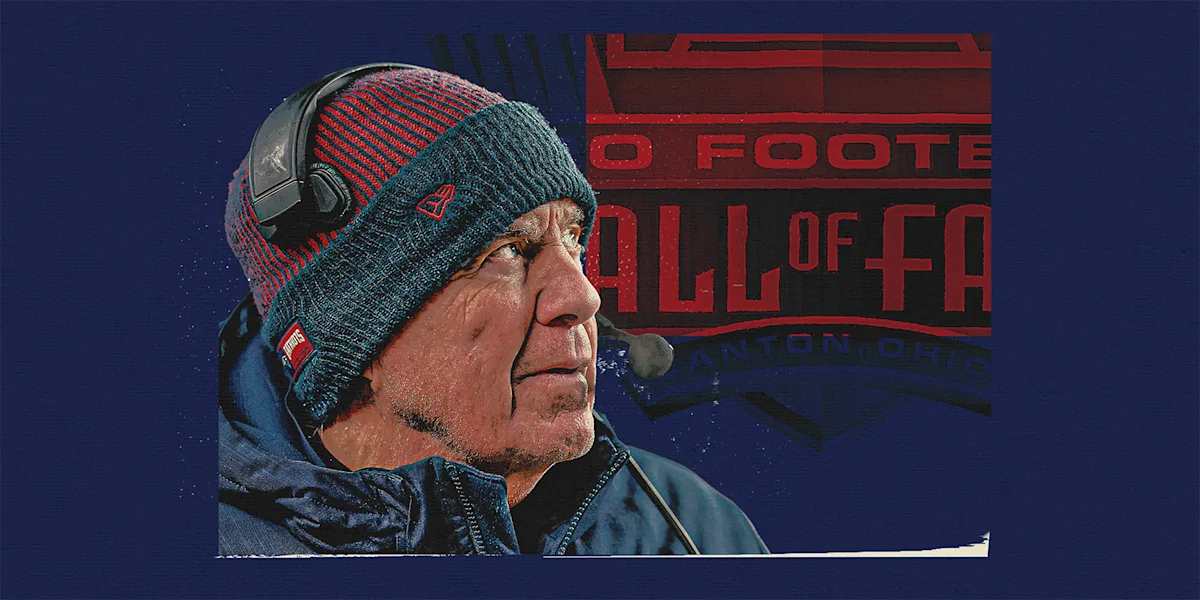
Forget the Philadelphia Special — the bigger surprise this week is that Bill Belichick didn’t make the Pro Football Hall of Fame on the first ballot.
Yes: Belichick, who built a coaching résumé that includes eight Super Bowl titles and the second-most wins in NFL history, apparently did not reach the 80 percent threshold required for first-year induction. Reporters at ESPN say he fell short, and with a 50-member voting panel that means a double-digit number of voters declined to support him.
Put his accomplishments next to any coach’s résumé and they stand out. Among the highlights:
– 333 total wins (including playoffs), trailing only Don Shula.
– Appearances in 12 Super Bowls — eight victories overall; six as New England’s head coach and two earlier as a Giants assistant.
– 17 division championships with New England, the most in NFL history.
– 21 winning seasons as a head coach, which ranks among the all-time leaders.
Belichick reshaped how many aspects of coaching are done — from game planning and personnel management to in-game strategy and the little details that edge out opponents. For two decades he was the benchmark every other coach chased.
The Hall’s voting mechanics probably played a part. Under the new rules for the seniors and coaches ballots, each voter picks three of five finalists; an 80 percent approval (40 of 50 votes) is required for induction. That system makes it easier for votes to scatter and for a worthy candidate to miss out if several voters use their slots on other nominees. There are reports — disputed by those involved — that some voters wanted Belichick to “wait a year” as a response to past Patriots controversies, and that notion may have siphoned support.
That brings up the messy elephant in the room: Spygate and Deflategate. Those episodes appear to have influenced at least some voters’ thinking. Whether you view them as disqualifying or already appropriately punished by the league, using them to deny a coach’s first-ballot entry feels, to many, like letting grievance or theater outweigh a body of work. If the goal is a true record of the game’s history, you can document the scandals in a Hall plaque without erasing decades of achievement.
There’s also an obvious inconsistency to consider: Tom Brady was Belichick’s quarterback through those same controversies. If voters are setting a precedent by withholding Belichick, should the same standard apply to Brady down the road?
At its core, this decision risks making the Hall look partisan and petty. Voters who withhold honors as punishment or grandstanding are effectively reshaping how the sport’s history will be told. You simply cannot explain the NFL of the 21st century without Bill Belichick’s influence — to exclude him on principle undermines the Hall’s credibility.
Fan Take: This matters because fans rely on the Hall of Fame as an authoritative account of the game’s greatest contributors; denying Belichick first-ballot entry risks politicizing that record and setting a precedent that could affect future selections. If personal vendettas or optics begin to outweigh on-field achievement, the Hall’s relevance and fairness will increasingly come into question.