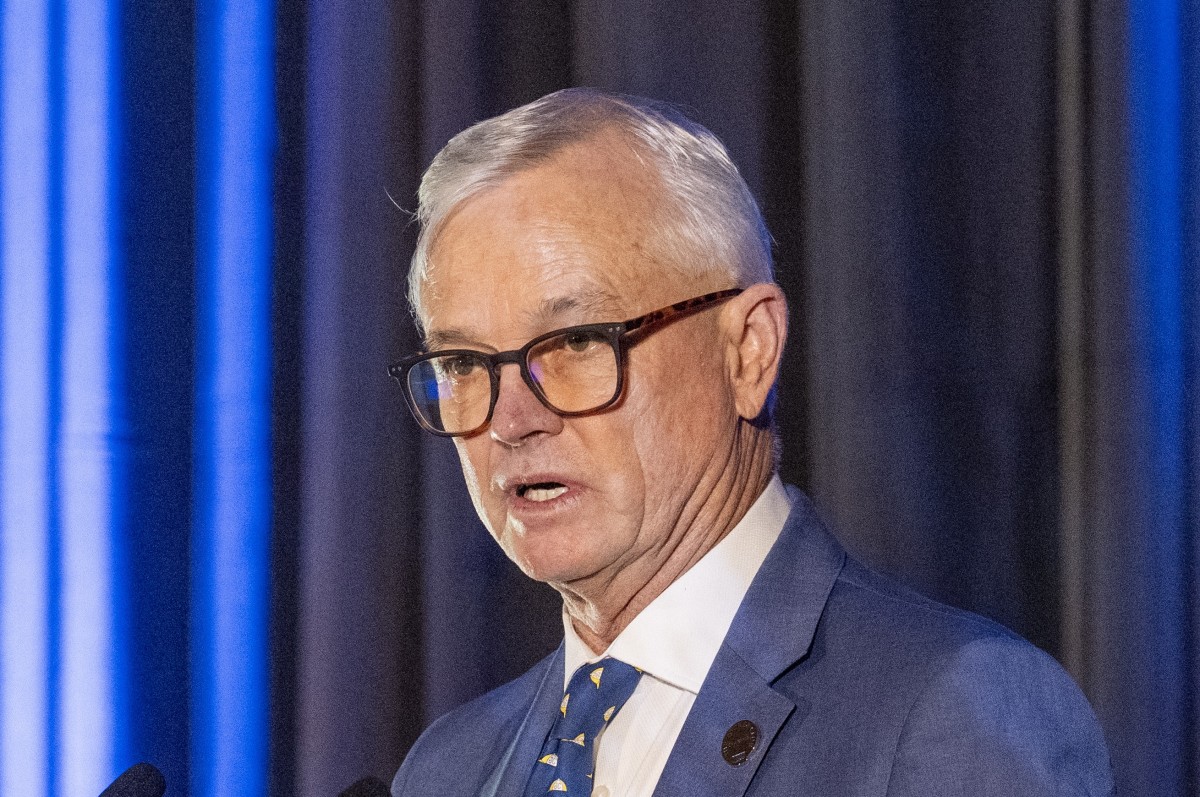
Since 2023, Mike Ripoll has launched a controversial campaign through provocative posts and public comments aimed at the Jockey Club and other key Thoroughbred organizations. His statements are built on selective information and misleading narratives that create division, erode trust, and divert attention from the critical work needed to advance the industry. Rather than offering practical solutions, his efforts appear designed to position himself as the sport’s self-appointed “commissioner.”
As guardians of the Jockey Club, we are dedicated to enhancing horse racing and breeding by prioritizing horse welfare, supporting industry workers, fostering growth, and building public confidence. Our goal has been to focus on these efforts rather than engage in unfounded attacks. However, due to the rise in threats and misinformation, we believe it is necessary to respond with facts instead of rhetoric.
Starting now, we will address Mr. Ripoll’s criticisms, demonstrating that his accusations are based on incomplete information and falsehoods that ultimately harm the sport. We will also highlight how the Jockey Club actively supports Thoroughbred racing and breeding throughout the horses’ lives. Our responses include:
Claim: Mr. Ripoll alleges that the review committee is riddled with conflicts of interest and personal financial gain.
Reality: These accusations are baseless and aimed at damaging reputations through insinuations rather than facts. Mr. Ripoll himself admitted there is no reliable evidence and only suggested litigation might reveal anything substantial. These reckless claims are unfair to dedicated volunteers who abide by New York State nonprofit law and work in good faith for the Jockey Club.
Claim: The Jockey Club is mishandling funds.
Reality: Over the last 15 years, the Jockey Club has invested $112 million in a variety of racing and aftercare initiatives beyond its daily operations. For 2026, an additional $7 million commitment will support programs that encourage growth, innovation, horse safety, increased TV coverage, and marketing—efforts vital for the industry’s strength and appeal.
Claim: The Jockey Club does not participate in aftercare.
Reality: Aftercare is a shared industry responsibility, and the Jockey Club is the largest single funder, donating $2.5 million this year and $23 million in total over the past 15 years. It is also a founding member of the Thoroughbred Aftercare Alliance. Ripoll’s so-called aftercare “plan” shared on social media was incomplete and largely mirrored existing models without addressing crucial aspects such as donor incentives or success metrics. The Jockey Club plans to increase its aftercare funding in 2026 and continue collaborating with stakeholders on retraining and traceability.
Claim: All industry data should be free.
Reality: While Mr. Ripoll argues that data compiled by Equibase—jointly owned by the Jockey Club and major racing associations—should be free like other sports, he overlooks the substantial costs involved in collecting, verifying, and distributing accurate data. Additionally, many major sports monetize their data, so the expectation that data should be freely distributed is unrealistic.
Claim: The Jockey Club is responsible for the decline in Thoroughbred foal production.
Reality: The downturn results from complex influences such as business cycles, industry consolidation, and increased competition from other gaming activities. Notably, tax policy changes like the 1986 Tax Reform Act removed incentives that had supported breeding investment. Recently, the Jockey Club helped secure permanent bonus depreciation benefits to aid the industry. For more details, refer to Jockey Club President Everett Dobson’s November 2025 essay addressing these trends.
Claim: The Horse Racing Integrity and Safety Authority (HISA) has failed to improve horse safety, and the Jockey Club’s support of HISA is misguided.
Reality: Evidence from the Equine Injury Database shows that safety has improved under HISA regulation. For example, the fatality rate fell from 1.39 per 1,000 starts in 2021 to 0.9 in 2024 at HISA-supervised tracks, compared to 1.76 at non-HISA tracks that same year.
In conclusion, Mr. Ripoll’s views differ from those of the Jockey Club and the broader industry. Although members of the review committee have met with him several times to address concerns, these discussions deteriorated into one-sided accusations without constructive dialogue. Disagreements do not grant him the authority to dictate the sport’s future or appoint himself as “commissioner,” especially given the lack of evidence and clear plans from his side.
By sharing these facts, we aim to clarify the truth behind Mr. Ripoll’s claims and demonstrate the collaborative work underway to sustain and grow Thoroughbred racing. We remain committed to partnering with all industry members to foster positive and productive progress.
Jockey Club Board of Directors
Everett R. Dobson (Chairman)
Luis A. Serra
William S. Farish Jr. (Vice Chair)
Gary Fenton
Terry Finley
Ian D. Hyett (Treasurer)
Mark Holliday
Stuart S. Janney III
Brett Jones
William M. Lear Jr. (Secretary)
David O’Farrell
Vincent Viola
For comments or questions about this letter, please contact:
Shannon Ruth
Vice President of Communications, Jockey Club
email: sluce@jockeyclub.com
Originally published by Paulick Report on January 27, 2026.
Fan Take: This update is crucial for horse racing fans because it addresses misinformation that threatens to divide the community and derail progress in the sport. Understanding the facts helps ensure that efforts to improve horse welfare, industry growth, and transparency continue moving forward for the benefit of horses, participants, and fans alike.