Anyone familiar with the history of women’s athletics recognizes that the phrase “the personal is political” holds true. Similar to their experiences in broader society, women athletes must continually fight for fundamental rights, respect, and recognition. Unlike many male athletes, women in sports don’t enjoy the luxury of simply focusing on their game; they are often compelled to speak out against injustice.
This reality was once again evident this week as several professional female basketball players demanded justice following the recent deaths of Renee Good and Alex Preti at the hands of Immigration and Customs Enforcement (ICE) agents in Minneapolis. During the second season of Unrivaled in Miami, New York Liberty’s Brianna Stewart paused during player introductions holding a sign that read “Abolish the Ice.” This issue hits home for Stewart personally, as her wife, Marta Zergey Casademont, is a Spanish immigrant with a green card, and they share two children.
“I’m exhausted by all the negativity we see on Instagram and in the news,” Stewart told ESPN. “Right now, hate seems to dominate over love, so we wanted to send a clear message: ‘Abolish the ice.’ That means implementing policies that support families and communities, rather than promote fear and violence.”
Unrivaled observed a moment of silence on January 25th, after which many WNBA and Unrivaled players spoke out. Brianna Turner, formerly with the Indiana Fever, posted on social media, “Those few who still defend ICE will forever be on the wrong side of history.” Angel Reese of the Chicago Sky shared, “Praying for our country.”
WNBA Rookie of the Year Paige Backers, a Minnesota native playing for the Dallas Wings and Brees BC, expressed her feelings before an Unrivaled game in Philadelphia. “Being from there, this hits close to home. It’s heartbreaking. Growing up, I watched peaceful protests and communities unite in tragedy. Innocent lives are lost, families broken apart. People fear sending their children to school or going to work. This isn’t acceptable. We hope and pray for change.”
Another Minnesota native, Rachel Banham of the Chicago Sky and Lunar Owls BC, praised how Unrivaled provides a platform for voices to be heard. “This league is made up of minorities and women of color who aren’t afraid to speak out and represent those without a voice. I’m usually quiet, but I’m proud to be part of a community that is vocal, where we learn from one another.”
Male athletes and coaches have also voiced their support, with NBA stars Tyrese Haliburton, Stephen Curry, Victor Wembanyama, and coach Steve Kerr condemning ICE and standing with Minneapolis. Nonetheless, WNBA players have been leading this charge from the start—a pattern that is far from new.
Since the WNBA’s inception in 1997, players have consistently used their platform to advocate for social justice, including racial equality, LGBTQ+ rights, equal pay (notably in collective bargaining negotiations), reproductive freedoms, and immigrant rights. They don’t just represent these causes—they live them fully. Often, it is their voices that ignite movements, even if those voices go unappreciated initially.
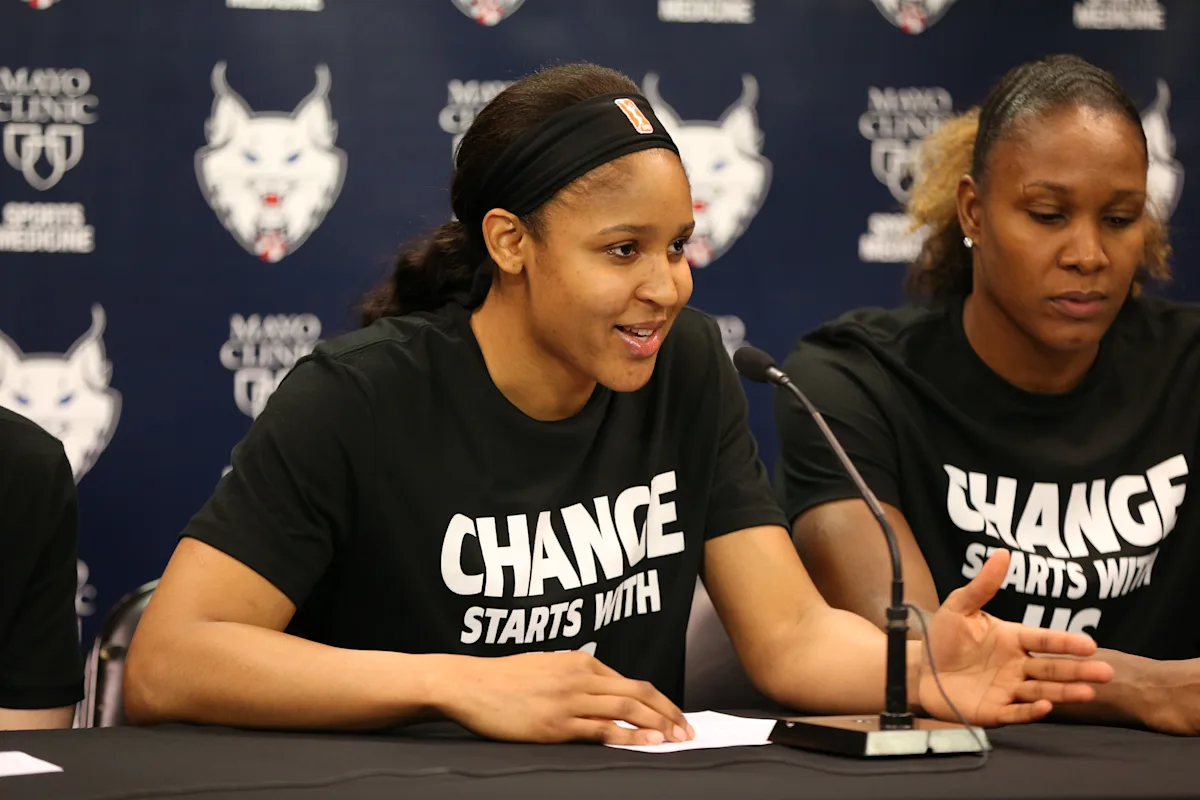
Nearly a decade ago in July 2016, also in Minneapolis, the country learned about the police shooting of Philando Castile, coinciding with other tragedies like the killing of Alton Sterling and five police officers in Dallas. At that time, WNBA players spoke out demanding justice. Maya Moore’s Minnesota Lynx led calls for athletes and communities to work toward a fairer world.
This protest came a month before Colin Kaepernick famously kneeled during the national anthem to protest racial injustice, a moment often considered the start of modern athlete activism. However, WNBA players were leading these efforts well before that.
In the summer of 2020, amid widespread shutdowns due to COVID-19 and the killing of George Floyd in Minneapolis, athletes not only voiced their opinions online but took to the streets. Natasha Cloud of the Washington Mystics and Renee Montgomery of the Atlanta Dream sat out the entire season to engage more deeply in activism.
The movement also amplified the names of Breonna Taylor and other Black women killed by police, with players proudly chanting, “Say her name.” Furthermore, all 144 WNBA players actively participated in voting efforts and civic engagement, reinforcing their calls for justice.
Their activism helped drive significant political change in Georgia, helping to elect Reverend Raphael Warnock to the U.S. Senate over Kelly Loeffler, the then-owner of the Atlanta Dream, who had criticized Black Lives Matter. Loeffler not only lost her Senate seat but also the team, as Montgomery joined a new ownership group in 2021.
When the Supreme Court overturned Roe v. Wade, ending federal protections for reproductive rights, and much of the sports world returned to normal, WNBA players again raised their voices.
This history shows that WNBA players are perpetually engaged and push others to follow their lead. While many claim we are at a turning point, meaningful action remains elusive. WNBA athletes have called for change for years, yet complacency often overshadows bravery.
What’s needed now is a new precedent rooted in courage.
Fan Take: For WNBA fans, this story highlights how the league’s players are not just athletes but fearless advocates for social justice, continuously using their platform to shine a light on crucial societal issues. Their leadership signals that the sport is more than just basketball—it’s a movement that champions equality and inspires real-world change.