

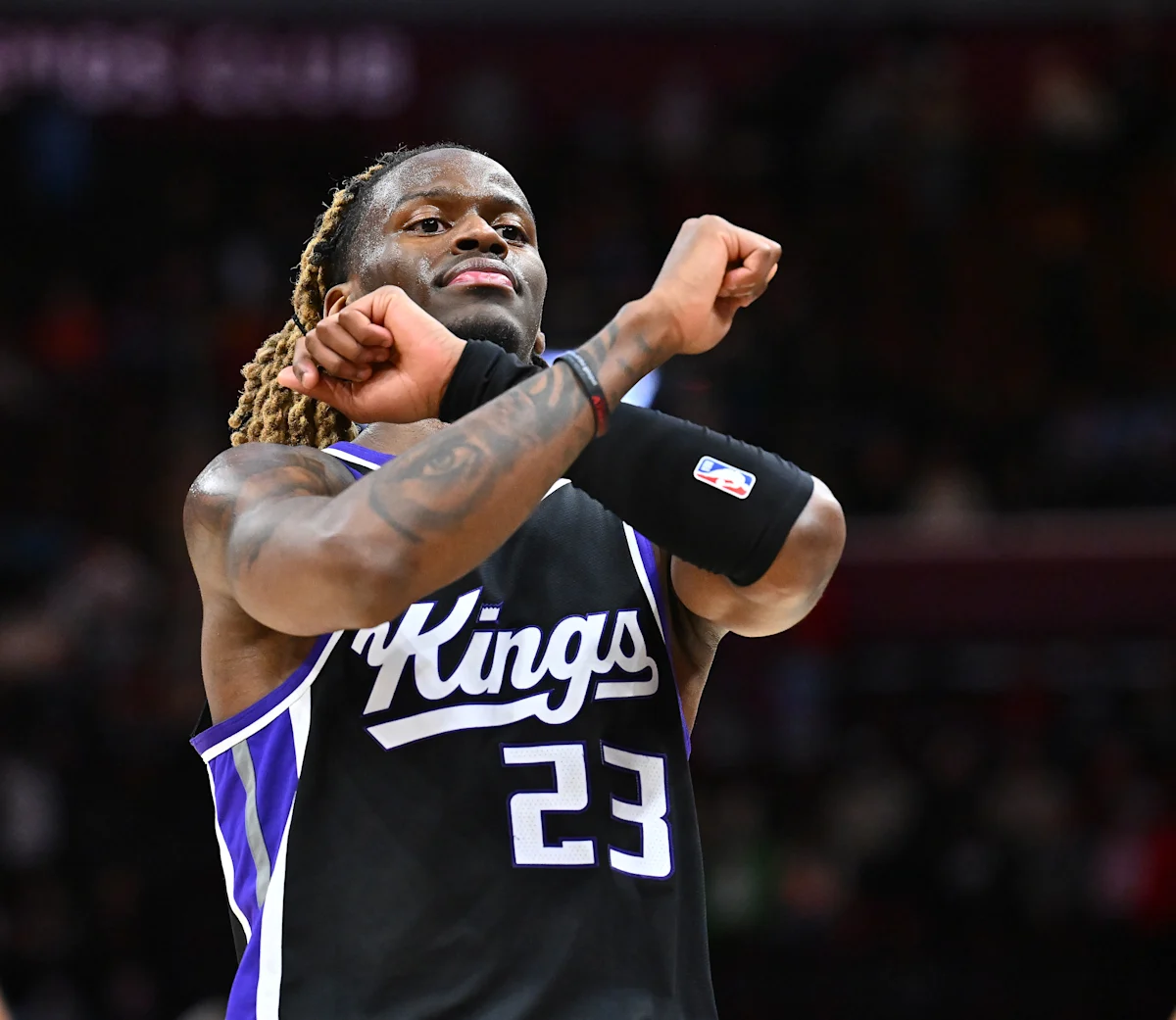
The Cleveland Cavaliers have traded DeAndre Hunter to the Sacramento Kings in exchange for Keon Ellis and Dennis Schroder as part of a three-team deal. This transaction helps Cleveland minimize losses and restores their roster to a familiar setup.
Here’s the context.
Looking back at last season’s roster, the starting lineup was impressive, but the role of Sixth Man of the Year candidate Ty Jerome was equally critical. Jerome ensured that the Cavs maintained multiple offensive playmakers on the court at all times.
With Isaac Okoro providing strong defense as a point-of-attack defender, the Cavaliers had a key option to disrupt opponents when defensive stops were crucial. The flexibility of alternating between Okoro and Jerome gave Cleveland a strategic advantage.
That’s essentially the role Ellis and Schroder are expected to fill now.
Ellis stands out as an elite perimeter defender. While Okoro is a strong defensive playmaker, Ellis brings a disruptive edge, generating steals and blocks at a rate that matches or surpasses Okoro’s impact. Additionally, Ellis is a more confident and threatening three-point shooter.
As for Schroder, he represents a reliable backup guard option. Although often overlooked league-wide—valued enough to attract trade interest but not enough to be untouchable—Schroder isn’t a direct replacement for Jerome’s efficient, high-volume scoring. Still, he’s arguably the best backup point guard currently available on the roster.
While Okoro is an upgrade and Jerome a downgrade, the acquisition of Ellis and Schroder places the Cavs back close to where they were nearly a year ago. Given how successful that roster construction has been, this is arguably a positive step.
However, the departure of DeAndre Hunter leaves a gap.
Last season, the Cavs urgently needed a solid small forward, and a year later, they find themselves in a similar predicament again.
Cleveland currently has an abundance of guard-sized players—nine in total—including Darius Garland, Donovan Mitchell, Craig Porter Jr., Max Strus, Sam Merrill, Jaylon Tyson, Lonzo Ball, plus Ellis and Schroder.
Though some of these players like Tyson, Strus, and Merrill have shown they can effectively play on the wing, the backcourt remains overloaded with guards attempting to transition to wing roles. This has been a longstanding issue. That’s why Hunter’s trade last year was considered necessary; despite his shortcomings, Hunter brought the size and raw potential to fill the missing wing piece.
Unfortunately, that strategy didn’t pan out.
Hunter has struggled mightily this season, showing limited athleticism, defensive lumps, and an inability to create for teammates or fit into a cohesive system. Previously effective when shooting from deep, Hunter’s shot has fallen off dramatically, hitting just 30 percent this season—his career-low.
This trade is essentially a gamble on Hunter, presuming his struggles this season represent his true ceiling rather than last year being an anomaly. The Cavs can’t be blamed for cutting their losses given Hunter’s negative impact on the team, including costly turnovers.
There’s no shame in making a decisive break. While Hunter didn’t work out, Ellis and Schroder better align with the Cavs’ previous successful playing style. This move restores the playmaking and perimeter defense lost last summer but leaves the roster notably thin on small forwards taller than 6-foot-6, aside from Dean Wade.
Crucially, this trade also helps the Cavs regain financial footing. They’ve saved $50 million in luxury tax payments and now sit just $13.9 million above the second luxury tax apron. With further salary moves, Cleveland could become a more appealing trade partner for big deals again.
In summary, the Cavaliers leveraged Hunter’s experience to pivot back to a proven roster formula. Along the way, they improved their financial health and opened avenues for addressing the team’s wing size deficiencies. This is a smart, commendable move, even if some may criticize the prior choices that led to it.
Fan Take: This trade signals the Cavs’ return to a familiar and effective strategy, combining strong defense with reliable playmaking, which fans should welcome. It also highlights the challenges teams face in balancing player potential with fit and financial constraints, a dynamic that continues to shape the future of the NBA.