

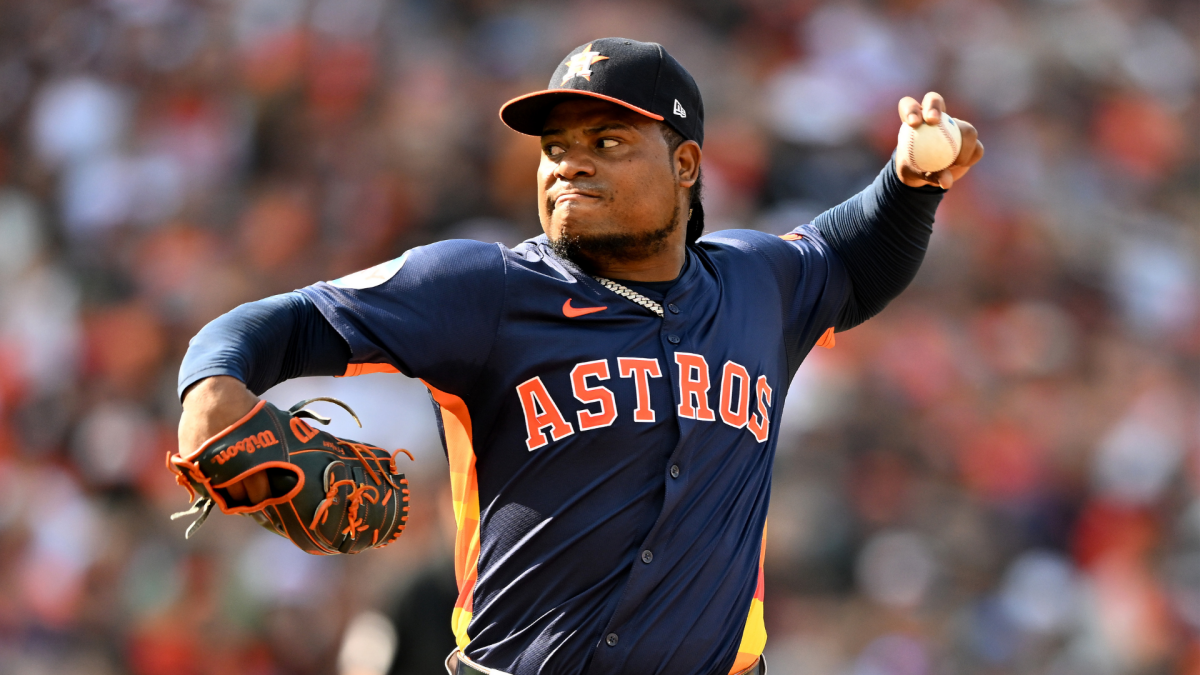
Spring training is about to start next week, yet left-handed pitcher Framber Valdez, one of the top free-agent pitchers this offseason, remains unsigned. The seasoned Houston Astros starter, who turned 32 in November, threw 192 innings last year with a 3.66 ERA, supported by solid underlying stats such as a 3.37 FIP and 3.74 xERA. Despite being one of the elite pitchers in the league, Valdez is still looking for a new contract.
The first significant buzz about Valdez in weeks surfaced Tuesday. Sportsnet reported that the Toronto Blue Jays had a meeting with Valdez in November before ultimately signing Dylan Cease. Toronto currently has six potential starters competing for five rotation spots—Cease, Shane Bieber, Jose Berrios, Kevin Gausman, Cody Ponce, and Trey Yesavage—so their interest in Valdez seems opportunistic; if other teams hesitate, they might make a move.
It’s expected that Valdez will sign soon. While all pitchers can deliver dependable innings at some point, Valdez is well beyond just reliable; he’s a pitcher who can lead a contender’s rotation and even pitch in the postseason. My estimate is that he will finalize a deal within the next 7-10 days, though this is purely speculative. The beginning of spring training should speed up negotiations.
It’s increasingly common for top free agents to remain unsigned until late in the offseason or even into spring training. For example, Blake Snell, a two-time Cy Young winner, didn’t sign with the San Francisco Giants until March 19, 2024. Still, it’s somewhat surprising that a pitcher of Valdez’s skill set remains available in early February, especially given the ongoing demand for quality pitching. There are three main factors that might explain why this three-time Cy Young Award finalist hasn’t agreed to a contract yet.
High contract demands and qualifying offer implications
To put it simply, Valdez and his agent might be holding out for a very high salary, refusing to lower their asking price. Also, because of the qualifying offer attached to him, any signing team would have to surrender a draft pick, which could push teams towards exploring other options. Essentially, teams may feel that Valdez’s contract demands don’t match his perceived value.
Underlying performance red flags
While hard to see at a glance, some concerning trends exist in Valdez’s performance metrics. For instance, his changeup has gradually declined from an excellent pitch in 2022 to an average one in 2025 based on Statcast run values, causing him to lose some effectiveness against right-handed hitters and shifting from platoon neutral to slightly vulnerable against them.
Looking at his recent stats:
- Strikeout rate has dropped from 24.8% to 22.2% over the past four years.
- Walk rate has increased from 7.1% to 8.4%, which is now around league average.
- Hard-hit rate was 46.3% last season, the sixth highest among qualifying pitchers.
This combination of dropping strikeouts and more hard contact is not ideal. Although his groundball rate last year was still high at 58.6%—well above the league average of 41.8%—it’s significantly down from the nearly 70% he posted earlier in his career. Valdez has historically excelled by inducing ground balls, so this decline is notable.
These “red flags” don’t indicate Valdez is falling off dramatically; he remains above average but doesn’t quite look like the truly elite arm he was earlier. His ERA might drift closer to 3.80 than the 3.30-level he has previously posted, which while still strong, might cause some teams to hesitate.
Concerns about clubhouse behavior
There might also be some locker room concerns. On September 2 last year, Valdez seemed to intentionally hit catcher Cesar Salazar in the chest with a fastball after allowing a grand slam to the previous batter. His reaction was unusual—he turned his back to the batter and walked off to the mound instead of reacting like it was an accident. Astros manager Joe Espada met with both players afterward, and Valdez apologized, taking responsibility.
Cross-ups happen, but this one raised eyebrows, as it seemed possible Valdez acted out of frustration or ill intent. While some players with difficult personalities are tolerated if they perform well—Valdez helped the Astros win a World Series and multiple division titles—the perceived clubhouse issues might be used as leverage during contract talks rather than outright deal-breakers.
Given the timing late in the offseason, Valdez will probably have to accept a lucrative but shorter-term deal. It’s rare for players to lock down lengthy contracts entering their age-32 season. The likely package might be around $25-$27 million per year for two to three years, possibly with opt-outs. Of course, it only takes one team to exceed those terms.
Potential suitors include teams like the Baltimore Orioles, Chicago Cubs, Detroit Tigers, San Diego Padres, and San Francisco Giants, all of whom could benefit from a solid starting pitcher (the Cubs’ infield defense would pair nicely with Valdez). The longer he remains unsigned, the more surprising teams—maybe the Athletics or Atlanta Braves—could jump in. Despite the concerns, Valdez is expected to sign soon and continue to deliver strong performances.
Fan Take:
This situation is a crucial reminder of how even top-tier talent can face complex negotiations influenced by performance trends and contractual dynamics. For baseball fans, Valdez’s eventual signing is significant because it highlights the evolving market for starting pitchers and could reshape playoff contenders’ rotations this season.