

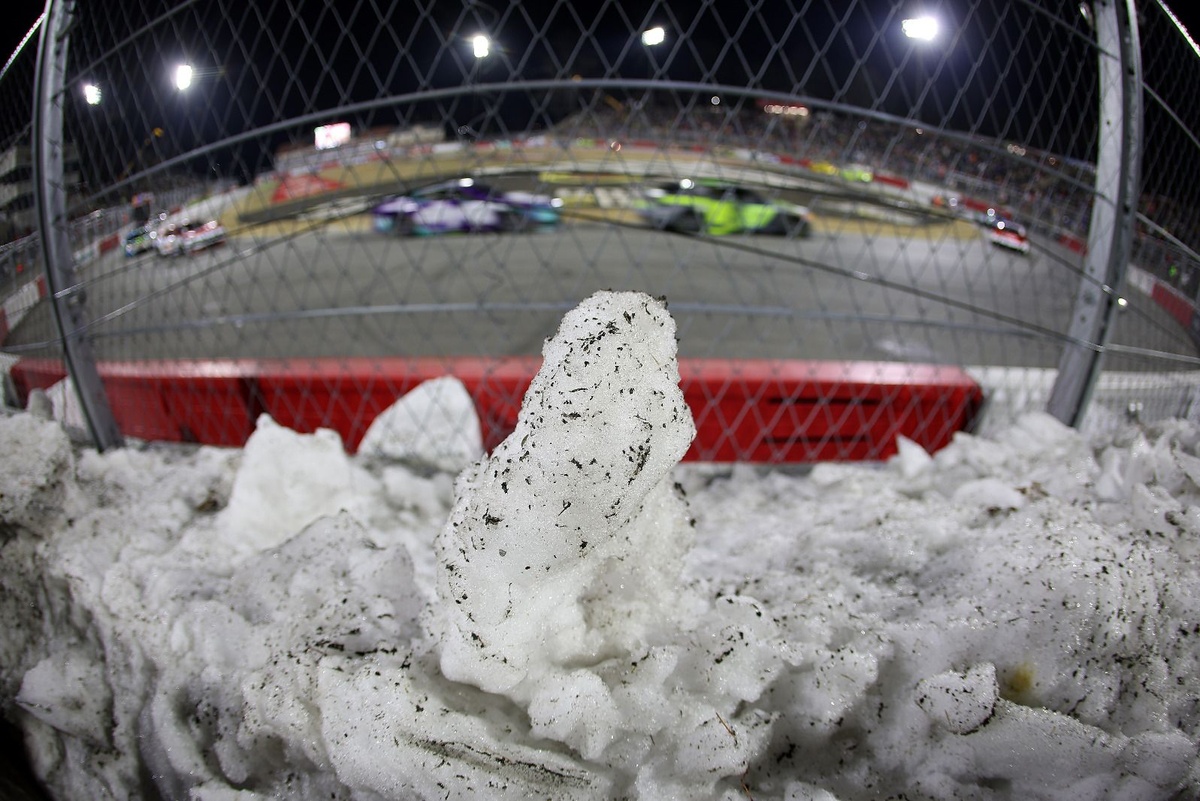
NASCAR officials explained that the choice to allow teams to refuel without penalty during the Cookout Crash at Bowman Gray Stadium, held under sleet conditions, involved several complex factors. This decision frustrated many crew chiefs, especially those who had already fueled their cars before the race, some who lost track positions to pit for fuel, and those who acted ahead of NASCAR’s call. Notable drivers like Kyle Larson and Chase Elliott ran out of gas, while Kyle Busch and Tyler Reddick briefly took the lead prior to the refueling directive.
Confusion also arose over which tires teams could use and when, as the wet track slowly dried but race control never officially lifted Goodyear’s wet-weather tire mandate. NASCAR Cup Series Managing Director Brad Moran explained at a media event that this race marked the first use of the new 750 horsepower package in competition, meaning fuel economy data was unreliable. Additionally, Bowman Gray lacks a traditional pit road, some fuel stations lack fire safety, and there was uncertainty whether certain drivers’ fuel issues were mechanical rather than actual shortages. Since caution laps did not count, and several cars clearly ran out of fuel, NASCAR opted to permit refueling to avoid undermining the race’s quality and competition.
Moran acknowledged teams were expected to start with full tanks after prior events, but warned that fuel strategy involved balancing tank weight against running time. He admitted the decision faced challenges due to the unique track setup and conditions and said the organization would review the fuel data moving forward. Though the failure to count caution laps was not ideal, it was considered necessary given the circumstances to keep the race engaging.
Another officiating controversy occurred during the Cookout Crash Last Chance Race’s opening lap when Michael McDowell was penalized for jumping the start ahead of pole sitter Josh Berry. McDowell was sent to the rear of the field and ultimately failed to transfer into the main event. NASCAR’s senior VP of competition, Elton Sawyer, explained the penalty was clear-cut, as McDowell launched before even entering the controlled start zone. McDowell described his approach as aggressive but felt Berry’s early move had caught him off guard.
Fan Take: This incident highlights the ongoing challenges NASCAR faces when managing new rules and unique race conditions, which directly impact fairness and competition. For fans, how NASCAR balances safety, strategy, and maintaining exciting racing will be key to the sport’s reputation and future growth.