As WNBA athletes negotiate the most significant collective bargaining agreement (CBA) in league history, the Unrivaled league is emerging as more than just a platform—it’s becoming a hub where players convene to coordinate strategies and foster solidarity. Yet, balancing these efforts with demanding schedules remains a challenge, making physical attendance at negotiations difficult, a point recently highlighted by WNBA reporters.
Following months of negotiations, the WNBA and WNBPA held their first face-to-face meeting since October on Monday in New York. The three-hour session was deemed useful by both parties, though complications persist behind the scenes.
WNBA reporter Annie Costabile, speaking on Rachel Annamarie Demita’s YouTube channel, shed light on how travel and conflicting commitments impact negotiations. She noted how players like Elizabeth Williams, who is currently playing in Turkey, face vastly different seasonal challenges, complicating their ability to prioritize the talks. This underscores a broader issue: players juggling contracts with Unrivaled, overseas commitments, and the upcoming WNBA season often find it hard to engage simultaneously.
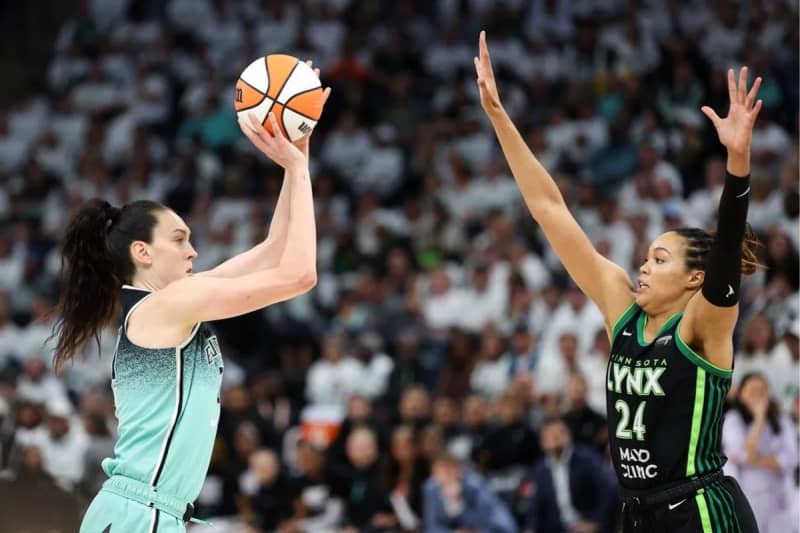
Napheesa Collier, before undergoing ankle surgery last month, echoed similar sentiments on a Zoom call, pointing out that negotiating the CBA during the offseason is particularly difficult due to limited availability.
Collier emphasized that bringing players together for direct conversations could accelerate progress in negotiations.
Additionally, Project B announced that its Tokyo Games will run from March 26 to April 4, 2027, while the inaugural season is planned to kick off in November and last through April. This 5v5 league aims to hold a Global Series across Europe, Asia, and the Americas, with the Tokyo event likely concluding before players return to WNBA action.
The presence of high-profile WNBA stars in Project B raises potential scheduling conflicts, further complicated by the WNBA’s proposed adjustments to the league’s competition calendar.
Costabile’s comments gain clarity when reviewing the CBA negotiation timeline: the WNBA Draft is April 13, training camp begins April 19, preseason starts April 25, and the regular season opens May 8. With top players competing overseas during this period, coordinating negotiations and preparing teams becomes more challenging.
Union leaders expressed frustration that the league did not counter any proposals during Monday’s lengthy meeting, attended by roughly 40 athletes—both in person and virtually—as well as Commissioner Cathy Engelbert and several team owners and executives. Aligning the calendars of Unrivaled’s winter league and the WNBA offseason remains a critical hurdle.
Costabile highlighted a fundamental issue with the WNBA’s structure: financial compensation and season length disparities with competing leagues. She noted that unlike other leagues, the WNBA was established without exclusivity clauses, allowing players to participate internationally. This arrangement, rooted in the league’s founding by David Stern and Val Ackerman, who promised players could compete elsewhere, raises questions about long-term goals and the risk of diluting the players’ brand by spreading their talent across multiple leagues.
Costabile also remarked on the accelerated summer league schedule for women, requiring only two weeks of preparation, contrasting with the extended off-season for men. She argued this reflects the WNBA’s origin as an afterthought with weaker business frameworks rather than as a premier league.
The core challenge remains that the WNBA never functioned as an exclusive league. Players often earn significantly more overseas during the winter months, forcing them to choose between higher pay abroad and commitment to the WNBA. The ongoing pay disputes exacerbate these tensions.
Players are demanding 30% of gross revenue, whereas the league typically offers about 70% of net revenue over the contract’s duration. Both sides must resolve these financial differences by May 8, while fans hold on to the positive outlook shared by some players.
Caitlin Clark, sidelined since July by a groin injury, expressed optimism about the negotiations during her first NBC appearance. She conveyed strong confidence in reaching an agreement soon, crediting the progress made on the court for this momentum.
Clark’s hopeful stance places constructive pressure on both parties and highlights unity among players around the contract’s importance.
Ultimately, meaningful change hinges on how the WNBA addresses exclusivity and reconciles foreign league participation within CBA rules. Until then, players will keep juggling the pursuit of financial stability internationally with efforts to elevate the WNBA as their primary competition.
Fan Take:
This evolving negotiation is crucial for WNBA fans because it directly impacts the players’ ability to dedicate themselves fully to the league, ultimately influencing the sport’s growth and quality. Resolving these scheduling and pay issues could pave the way for a stronger, more competitive WNBA that keeps its top talent engaged year-round, elevating the profile of women’s basketball globally.