
Just 10 seconds into NASCAR’s 2026 Super Bowl commercial promoting the sport’s new motto, “Hell Yeah,” a notable detail catches the eye: the license plate’s “e” is replaced with a number 3. In the ad, a fan dons a jacket bearing the iconic No. 3, and a Craftsman truck painted in the classic black design performs a slow-motion burnout, sending a clear message that NASCAR is embracing the fierce, no-nonsense spirit of Dale Earnhardt once again.
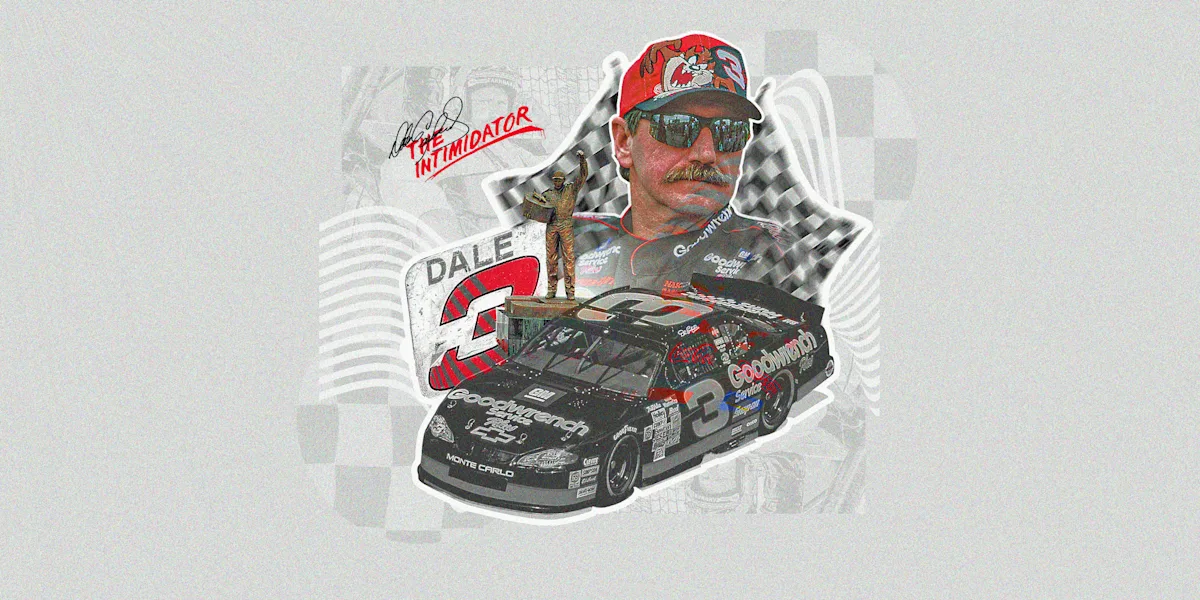
Even 25 years after Earnhardt’s sudden death in the final lap of the 2001 Daytona 500, the legendary driver remains a central figure in NASCAR. Though his Goodwrench No. 3 hasn’t raced in decades, Dale Earnhardt still embodies what NASCAR strives to represent—toughness, grit, and an unyielding racing spirit.
While tattoos bearing Earnhardt’s symbol may have faded and the last Cup driver to race alongside him, Ryan Newman, has retired, his legacy remains vibrant. He features in new documentaries, books, and countless social media tributes. His iconic look—including his sunglasses, mustache, and the black No. 3 flag—continues to be a fixture at tracks nationwide. No current competitor, not Jeff Gordon, Chase Elliott, or even the Earnhardt family, matches his impact, nor does anyone likely will, given the current cultural shifts.
Earnhardt stands as the perfect representation of NASCAR’s working-class roots. Originating from Kannapolis, North Carolina, he raced and lived with fierce determination. Unlike those who overcome challenges gradually, Earnhardt bulldozed through every obstacle he faced.
Known for his intensity and occasional harshness, Earnhardt was respected, if not liked, by fellow drivers. Being labeled a “blackmailer” wasn’t a compliment, but garage peers acknowledged his skill and toughness. Champions like Jeff Gordon, Jimmie Johnson, and Kurt Busch have admitted how intimidating it was to compete against him. Yet beneath his rough exterior was a sharp wit, exemplified by his legendary comment to drivers complaining about high speeds: “Let’s wrap kerosene cloths around your ankles so the ants don’t climb up and eat that candy ass.” It was equally unnerving to see him charging at you or smiling behind his sunglasses.
Though Earnhardt wasn’t flawless—he played hardball with racing rules and could be difficult personally—his stubbornness cost him dearly. Tragically, his refusal to wear a HANS device, which might have prevented the fatal spinal injury in his crash, underscores this complexity.
In the decades since his passing, American culture has shifted away from idolizing cars and the rugged masculinity Earnhardt embodied. He was both traditional and occasionally progressive—cutting the Confederate flag from his truck’s bumper sticker after realizing its offense, enjoying simple pleasures like riding his tractor, and privately partnering with rivals like Jeff Gordon despite public disputes.
Earnhardt never played the victim. Instead, he strapped into his No. 3 and tackled challenges head-on.
His influence extends well beyond NASCAR stands. Anyone who’s ever felt the roar of an engine or pressed the gas pedal aggressively carries a piece of Earnhardt’s spirit. His absence still resonates deeply, and his legacy endures.
Raise hell. Honor Dale. Now and always.
Fan Take: This nod to Dale Earnhardt in NASCAR’s latest Super Bowl ad is a powerful reminder of the sport’s roots and its unshakable connection to one of its greatest icons. For fans, it signals a return to the raw passion and intensity that Dale brought to racing—qualities that could reinvigorate the sport’s identity and deepen its emotional appeal moving forward.