MotoGP technology director Corrado Cecchinelli has confirmed that data validates the effectiveness of the sport’s new stability control system, which was integrated into the standard ECU partway through last season. This system, also called slide control, is designed specifically to reduce the likelihood of certain types of highside crashes.
Although the system doesn’t guarantee prevention of every accident, Cecchinelli is confident that it helps lower risk. “Manufacturers are pleased to have it,” he said. “All teams are utilizing it, and the data confirms it’s actively functioning rather than just sitting unused in the software.” However, he cautioned that without stability control, it’s impossible to say whether a rider would definitely crash in a given scenario. While it’s unclear if the system is literally saving lives at this stage, it certainly doesn’t seem to make things any less safe and likely contributes to reducing crash numbers from zero.
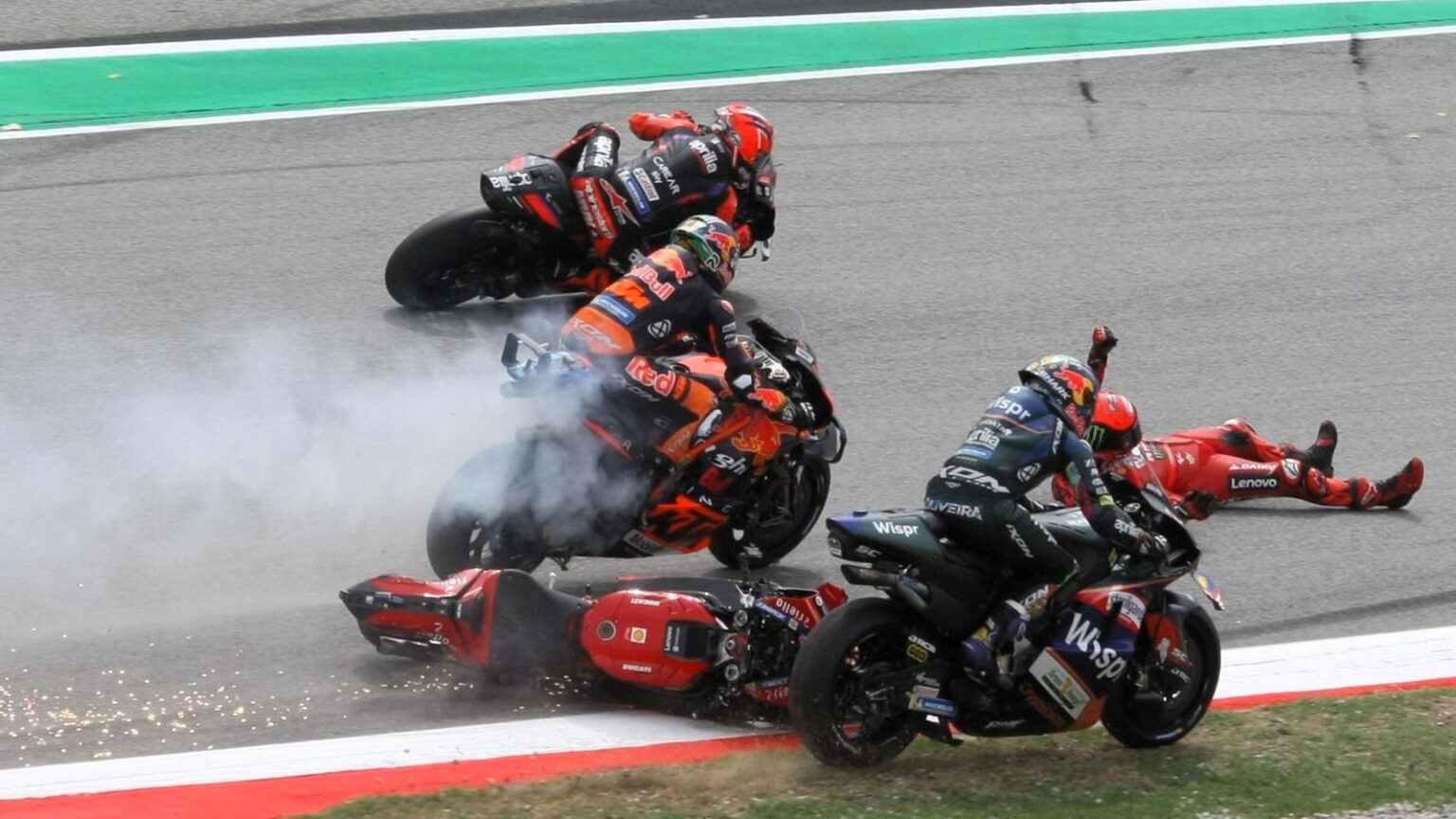
Despite the existing traction control in MotoGP, stability control was introduced to handle violent highsides such as the one suffered by Francesco Bagnaia at the 2023 Barcelona round. Bagnaia’s Ducati suddenly slid sideways exiting the first chicane, throwing him off the bike—although he was fortunate to avoid serious injury in the incident.
Cecchinelli explained that traction and stability control address different issues. Traction control manages rear wheel spin by comparing its speed to the front wheel, intervening when the rear spins faster than ideal. On the other hand, stability control focuses on controlling slips that don’t necessarily involve spinning, like sudden sideways “snap” motions. For example, while traction control reacts to excessive wheel spin, stability control tackles situations where the bike quickly shifts its angle around the vertical axis, known as yaw rate.
Both systems ultimately work by requesting torque reduction from the engine. When multiple electronic controls—such as wheelie control, traction control, and stability control—are active simultaneously, the system prioritizes the one demanding the largest cut in engine torque. Low-speed events like wheelies are mainly controlled by electronically closing the throttle, while quicker and more severe dynamics like sudden spins or snaps require ignition intervention, achieved through rapid spark cuts or retardation, producing a characteristic “machine gun” sound.
However, even with these advances, some highsides are unavoidable. Maverick Vinales experienced an off-throttle highside during wet qualifying at Sachsenring before stability control was fully implemented, attributing his crash to running out of fuel and cold tires rather than the lack of electronics. Similarly, Jorge Martin had an off-throttle highside during testing in Sepang 2025. These examples highlight the limits of electronic aids in preventing all crash types.
Fan Take:
This development in stability control technology is a crucial step forward for MotoGP, offering riders an additional safety net against dangerous highsides. For racing fans, it promises not only safer competition but potentially more thrilling races, as riders can push harder with greater confidence in the electronic safeguards.