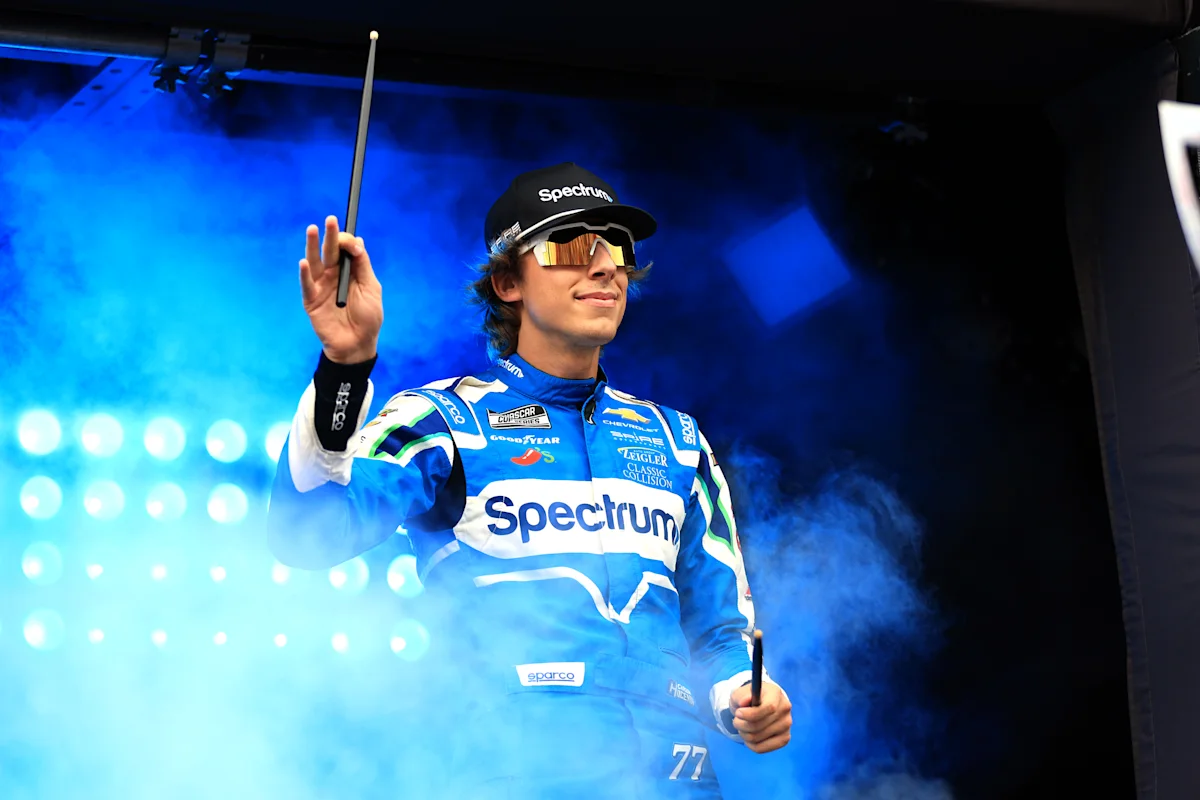
At only 23 years old, Carson Hocevar is rapidly gaining a reputation as one of NASCAR’s notable antagonists. During Sunday’s Southern 500 at Darlington, which marked the start of the Cup playoffs, Hocevar’s No. 77 Spire Motorsports Chevrolet made contact with Brad Keselowski’s left-rear, causing Keselowski to spin out and crash, finishing the race in 23rd place. The 2012 Cup Series champion was furious after the incident, warning Hocevar, “His day’s coming, and it’s coming hard. Watch out, Carson.” Hocevar’s take on the incident was nonchalant, saying, “I don’t know what happened. He spun.”
Hocevar ended the race in 11th and currently ranks 12th in the Chase standings, placing him among the top 16 drivers this season. Standing at 6-foot-4 and hailing from Michigan, his aggressive driving style and apparent disregard for NASCAR’s unwritten rules and respect have made him many rivals. From viral clashes with Corey Heim to criticism from racing veterans like Denny Hamlin, Kevin Harvick, and Jamie McMurray, Hocevar’s nickname “The Hurricane” seems fitting—he storms through races with raw, untamed force, leaving destruction in his path.
At a NASCAR Foundation gala in New York on Tuesday, drivers shared their less-than-flattering opinions of Hocevar. Zane Smith, who had a heated clash with Hocevar at Chicagoland involving strong language, told Yahoo Sports, “I’m not a fan.” Hocevar, ever the provocateur, responded by launching a social media campaign offering to trade T-shirts with fans, quickly reaching his limit of 77 trades. Notably, Smith’s shirts made up several of those exchanged.
Three-time Cup champion Joey Logano, who sits just ahead of Hocevar in the standings, remarked, “He’s obviously created a lot of drama out there. In some ways, that’s good. In other ways, you want solid role models out there for your kids to watch.” While Hocevar’s fellow drivers largely dislike him, fans seem to embrace his bold, rebellious style. As of last month, he was the top-selling driver on the NASCAR Shop website and ranked among the top five in trackside merchandise sales.
Despite having just one Cup victory in three full-time seasons, Hocevar’s appeal is undeniable. After his first win at Talladega earlier this year, sales of his Lionel diecast model soared, marking the best post-win sales since Lionel’s partnership with NASCAR began in 2010. His online merchandise reportedly generated around $500,000 in sales during the month following the victory. Unconfirmed reports suggest his sales topped $200,000 within 24 hours after Sunday’s incident with Keselowski.
While many drivers grow increasingly frustrated with Hocevar’s antics, NASCAR appears to leverage his notoriety. A press release on August 27 promoting the Daytona race headlined, “Does Everyone Hate Carson Hocevar?” with a subheader, “The Chase has 16 drivers. Carson Hocevar might have 15 enemies.” The release balanced critiques from drivers like Kyle Larson and Ryan Blaney with mentions of Hocevar’s crossover into mainstream culture, including appearances at the Met Gala and inclusion in Time’s list of the 100 most influential sports figures.
According to Time, Hocevar “could very well be the next face of NASCAR,” possessing a rare blend of talent and confidence that draws a devoted fanbase. Between January and May, he recorded the highest growth in social media followers across platforms like Facebook, Instagram, and X (formerly Twitter), gaining nearly 200,000 followers—a 70.6% increase. Today, he boasts over 300,000 followers on Instagram and more than 200,000 each on Facebook and TikTok, along with strong presences on X and Twitch.
As NASCAR pushes an image of high-energy, close-contact racing with frequent collisions, Hocevar personifies the sport’s gritty, aggressive ethos. Ross Chastain, a longtime friend and mentor to Hocevar, who also has business ties to Hocevar’s management group, encourages him to stay true to his persona: “The nickname is appropriate. He’s leaning into it. This is the Carson I’ve known since the truck series, but we’re also seeing him mature, and that chaos gets attention.”
Hocevar’s villainous image has roots in his career, such as the 2023 truck series championship race where he caused a crash that eliminated both himself and Heim from title contention. His fiery style, while earning playoff spots, raises questions about whether it limits his full potential on the track.
Off the track, Hocevar’s star power attracts prominent sponsors like Spectrum, Ikea, Chili’s, Monster Energy, Delaware Life, and Gainbridge. However, concerns linger because some sponsors are linked to Spire Motorsports’ majority owner Mark Walter, who is under federal investigation for potential loan fraud. This connection raises uncertainties about Hocevar’s future should the investigation affect the team.
Fellow driver Conor Zilisch warned, “He definitely rubs drivers the wrong way, which will one day turn back on him.” Jesse Love, who had his own on-track clash with Hocevar, predicts the driver’s controversial persona may eventually wear thin with both peers and fans: “When the class clown act gets old, it usually fades out. But in the meantime, he’s making a lot of money and growing his fan base, so more power to him.”
The big question remains: Is Carson Hocevar simply a passing phase or the embodiment of NASCAR’s bold, unapologetic future? Does his aggressive style overshadow his driving talent? Could he rank higher in the standings if he tempered his hurricane-like tactics to something less volatile?
While Hocevar makes plenty of enemies on the track, he continues to cash in as one of NASCAR’s most compelling villains and social media sensations. Whatever he’s doing seems to be effective, even if it stirs the pot with every opponent he faces.
Fan Take:
Carson Hocevar’s fiery presence brings a fresh, intense energy to NASCAR that captivates fans craving excitement and unpredictability. Whether he becomes the sport’s next superstar or burns out, his bold style forces NASCAR to balance drama and sportsmanship, shaping the future of racing entertainment.
Source: sports.yahoo.com