

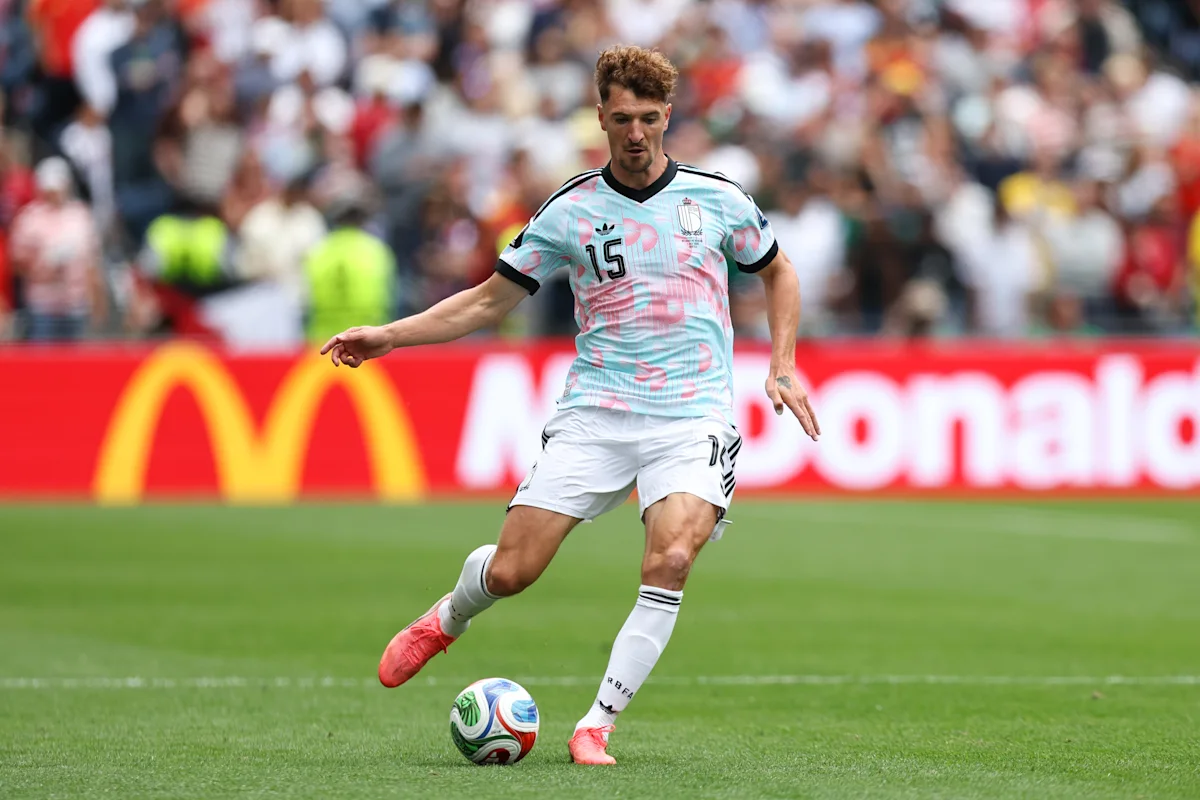
Belgium’s match against the United States men’s national team this summer during the 2026 World Cup was a challenging one for the Americans, culminating in a 4-1 loss during the Round of 16. This defeat followed a contentious FIFA ruling that seemed to pit the U.S. team against Belgium, as highlighted by Belgian defender Thomas Meunier.
Meunier, 35, a seasoned player with 83 international appearances, voiced his thoughts to The Athletic about how FIFA’s decision to lift Folarin Balogun’s red-card suspension affected perceptions of the match. “Everyone wanted us to beat America,” he mentioned, emphasizing that the sentiment surrounding the match was stark.
Balogun himself expressed mixed feelings about participating in the knockout game. While he was grateful to return to the field, he recognized the potential controversy surrounding his inclusion, causing noticeable tension within the team. “It was difficult to focus,” he admitted while reflecting on external pressures leading up to the game, as shared on CBS Mornings in July.
Meunier pointed fingers not at Balogun, but at FIFA and the political influences encroaching on the purity of the sport. As new details emerged regarding U.S. President Donald Trump’s intervention to contest Balogun’s ban—which stemmed from an earlier red card during a win against Bosnia and Herzegovina—Meunier voiced concern about the intersection of politics and football.
“I believe politics and football do not need to intertwine,” he stated, highlighting the challenges posed by the political landscape on the sport. He lamented that as long as political motivations veer towards undermining the sport’s integrity, issues like Balogun’s situation could arise.
The debate intensified when Meunier commented on the broader implications of commercialization within football, suggesting that this World Cup reflected a darker side of the game dominated by money and entertainment. Although he critiqued some elements, he acknowledged the impressive infrastructure and facilities in place for the tournament.
Belgium ultimately faced a disappointing quarterfinals exit, losing 2-1 to eventual champions Spain. The Belgian Football Association expressed dissatisfaction with FIFA’s handling of the Balogun case and stated its reluctance to support Infantino’s bid for reelection due to ongoing issues and unanswered questions regarding this controversial ruling. They plan to address the situation in the upcoming FIFA Council meeting on October 15.
In light of these developments, it’s crucial for soccer fans to recognize how this incident reflects broader issues within the sport, particularly the influence of politics and financial interests. For the integrity of soccer, transparency and consistency in handling disciplinary matters are vital, as they can shape the future of how the game is governed and perceived globally.
Source: sports.yahoo.com