Mike Macdonald opened the NFL season exactly as he closed the last one—by handing the Patriots a statement loss. The Super Bowl-winning Seattle Seahawks set the tone for 2026 by beating New England in the season opener, but they weren’t the only team making bold claims: the 49ers dominated the Rams in Australia, the Bears routed the Panthers, and the Vikings erased a 12-point third-quarter deficit to beat the Packers despite losing new QB Kyler Murray after just 10 offensive plays.
Below the obvious results, here are five deeper takeaways from Week 1.
1. Jalen Hurts looked back to form
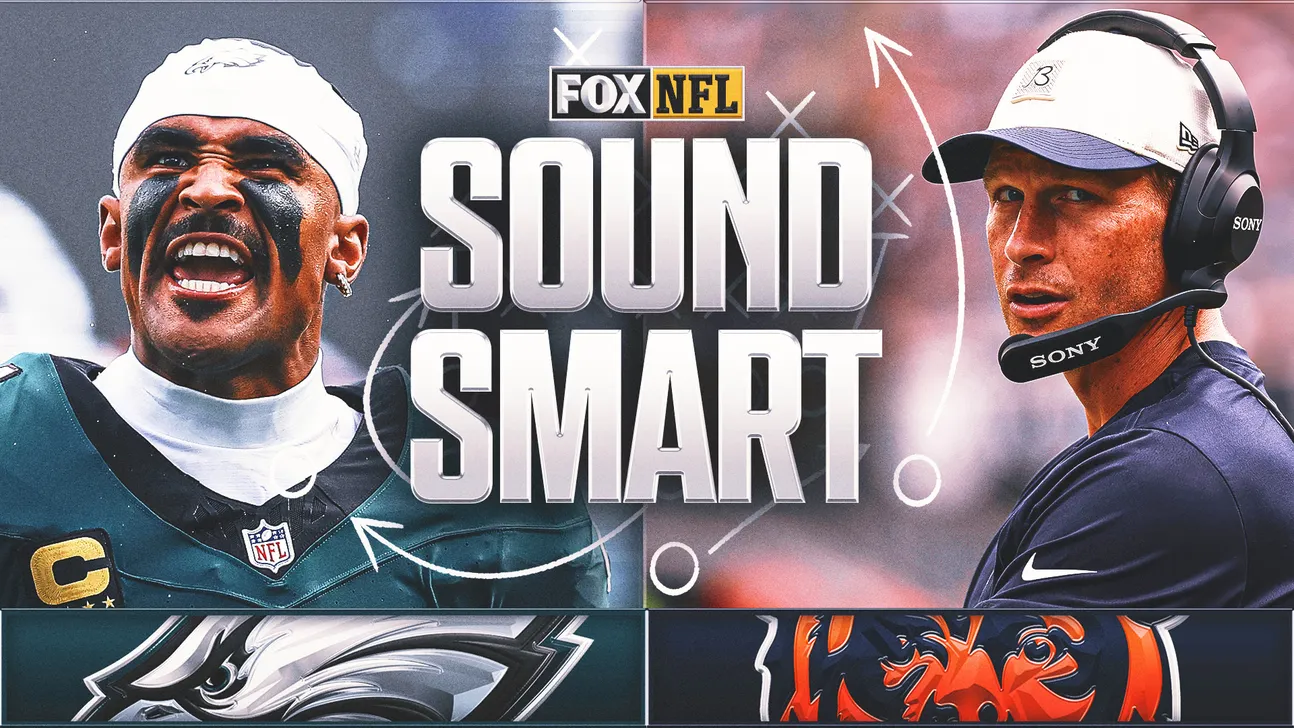
Hurts and Tom Brady discussed quarterbacking basics on FOX’s pregame segment—largely about staying in the right play and doing the simple things consistently. Hurts echoed that after the Eagles’ 24-22 win over Washington, saying quarterbacking often comes down to execution and process. He didn’t make the game effortless this time the way he did in 2022 and 2024, but he delivered when it mattered: a fourth-quarter, clock-eating drive featuring a 22-yard scramble and a 43-yard touchdown pass to Dallas Goedert. New OC Sean Mannion appears to be letting Hurts play to his strengths, and while the offensive line (guard Landon Dickerson allowed five pressures) and some skill pieces (Devonta Smith quiet, Makai Lemon limited after camp rehab) have work to do, the offense looked steadier and more consistent than in recent, more erratic seasons. Hurts stressed there’s “a lot to build on,” and the feel was that the Eagles are trending toward the kind of team that not only contends but can win a Super Bowl.
2. The Bears aren’t bluffing
Second-year coach Ben Johnson set ambitious goals this offseason—aiming to outscore the 2013 Broncos’ record 37.9 points per game—and Chicago’s Week 1 performance suggested that ambition wasn’t pure hype. The Bears exploded for a 59-37 win over Carolina, the second-highest single-game point total in franchise history (Super Bowl era), and they recorded six rushing touchdowns—their first time reaching that mark since 1941. Rookie QB Caleb Williams completed 72% of his passes (a sizable jump from last year’s 58.1 target) and threw for 269 yards, even without targeting top receivers Luther Burden, Rome Odunze or TE Colston Loveland for touchdowns. Johnson emphasized wanting explosive plays and end-zone production rather than merely “sustaining” drives—Week 1 showed that the offense can deliver on that promise. If Williams and the scheme keep progressing, Chicago could be more than a one-year wonder.
3. Drake Maye’s costly lapses
Drake Maye was under tough circumstances—facing the Super Bowl champs, traveling cross-country, and losing star receiver A.J. Brown to a first-half ankle injury—but he made the situation worse by forcing throws. Against the Seahawks, Maye threw three fourth-quarter interceptions on consecutive drives and finished with a late end-zone pick with 26 seconds left, squandering a chance to tie or win. Those picks suggested poor situational awareness and decisions into coverage, echoing mistakes he made in the Super Bowl rematch. Maye was candid afterward—calling his loss of patience “unacceptable”—and while this doesn’t spell doom for him, it reinforces the notion that last season’s MVP runner-up finish might have been inflated by an easier schedule. He’s shown improvement in processing and reads over time, but when will those lessons consistently show up on the field?
4. Tom Brady revisits a playbook artifact
Tom Brady pulled out the famous Super Bowl LI “Picasso” call sheet during the Eagles-Commanders broadcast and walked viewers through how plays were organized situationally for that comeback. The sheet’s strength was its segmentation—third-down, red-area, etc.—so the QB and staff could zero in on specific options rather than sorting through a long, unstructured list. Brady explained the top play for each box tended to be the one the quarterback preferred, and noted that September football lacks the clear tendencies coaches can exploit deep into a season. It was a rare, revealing peek into how Brady and Josh McDaniels constructed game plans in their dynasty years.
5. 49ers motion is a genuine schematic edge
San Francisco used pre-snap motion on 65.6% of offensive plays against the Rams—the highest single-game rate of the Kyle Shanahan era (since 2017), per Next Gen Stats. Fullback Kyle Juszczyk’s motion was a key element: sometimes sending him upfield created a running start to lead blocks for Christian McCaffrey and Kaelon Black and forced the Rams into extra communication and gap adjustments. Part of the 49ers’ advantage likely came from travel factors—San Francisco had one fewer time-zone shift after their Australia stay—but the schematic wrinkle itself was impactful. It echoes the “cheat motion” concepts popularized by the Dolphins, but with a twist; if the league doesn’t clamp down on it, expect similar motions to proliferate across playbooks.
Fan Take (two sentences):
Week 1 reinforced that small schematic tweaks and quarterback decision-making will shape who climbs the standings—Hurts and the 49ers showed how style and structure can unlock success, while Maye’s mistakes underline how quickly promising seasons can be derailed. For NFL fans, these early signs matter because they hint at which teams might sustain dominance and which young QBs or schemes need urgent correction before the playoff race tightens.
Source: www.foxsports.com