

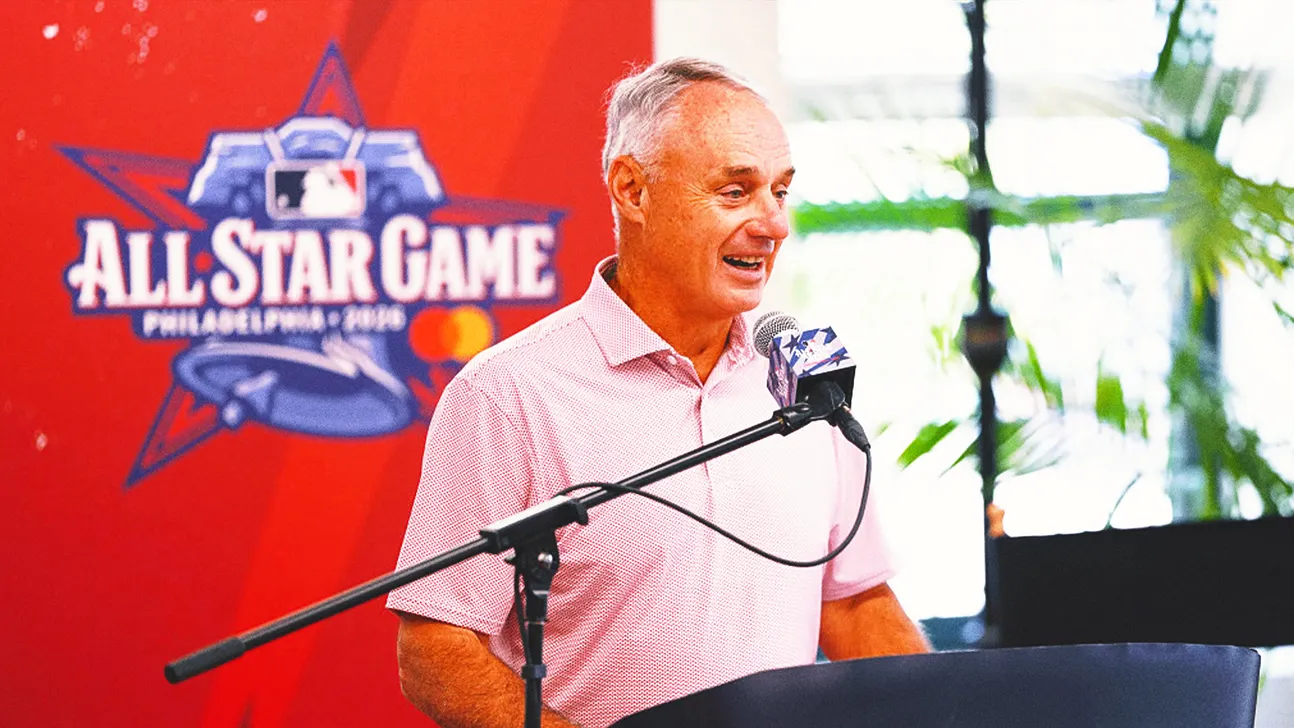
PHILADELPHIA – During a comprehensive press conference with the Baseball Writers’ Association of America on Tuesday, Major League Baseball Commissioner Rob Manfred reiterated his support for implementing a salary cap, presenting it as a solution rooted in fan concerns about competitive balance within the league.
Discussing the current negotiations with the players’ union ahead of the Collective Bargaining Agreement’s December 1 expiration, Manfred emphasized, “I have an ownership group that is more united than any group in my entire time in baseball.”
On the same day, MLBPA interim executive director Bruce Meyer criticized the league’s efforts to win public favor for the salary cap, particularly pointing to advertisements aired on MLB.TV. He asserted, “Our game is in a great place,” and accused the owners and the commissioner’s office of misrepresenting the state of the sport to fans, calling such tactics “perverse.”
When questioned about the status of CBA discussions, Manfred remained optimistic. “I am an optimist,” he said, stressing his belief that collaborative bargaining can lead to solutions. He highlighted that similar salary cap systems in other major sports have resulted in higher and faster-growing player salaries than those in MLB.
Manfred cited a recent NHL agreement that increased player compensation by $170 million as an example where a salary cap benefited players. He also noted MLB’s willingness to compromise by simplifying routes to free agency, arguing that the league’s proposal tackles the key issues raised by the MLBPA rather than dismissing them.
Central to Manfred’s remarks was the league’s focus on listening to fans. He claimed that MLB uses sophisticated methods such as professional polling and demographic-focused focus groups across different market sizes to understand fan opinions. Manfred pointed out that fans are chiefly concerned with the wide payroll disparities and how these differences affect a team’s ability to keep star players or attract top free agents.
Highlighting the payroll gap, Manfred said, “The number from top to bottom in our sport in terms of payroll is $441 million,” contending that such an immense gap undermines the hope of smaller market fans. He explained that larger-market teams have a significantly better chance to make and advance through the playoffs, a reality substantiated by stark data.
Meyer countered by demanding transparency from team owners, insisting that if the league wants to highlight payroll disparities, the financial details of clubs should be publicly accessible—a point included in the MLBPA’s proposals. He also rejected comparisons with the NBA and NFL, noting that even with salary caps, players in those leagues often lose out on earnings.
Manfred outlined two key goals for a healthier league: small-market fans should trust that players developed locally can be retained through free agency, and there should be a vibrant free-agent market allowing players to consider teams beyond major markets like New York or Los Angeles.
When asked why the league doesn’t just redistribute more revenue to narrow the payroll gap, Manfred explained that revenue sharing alone won’t fix the problem due to increasing disparities in owners’ personal wealth. He added that no professional sport has resolved competitive balance solely through revenue distribution.
Fan Take: While this debate is happening in baseball, its outcome could have ripple effects in basketball since salary cap discussions shape how professional sports leagues balance competition and player earnings. For basketball fans, this signals that how leagues negotiate and structure pay can influence both the quality of the game and the fairness fans expect across all markets.
Source: www.foxsports.com