

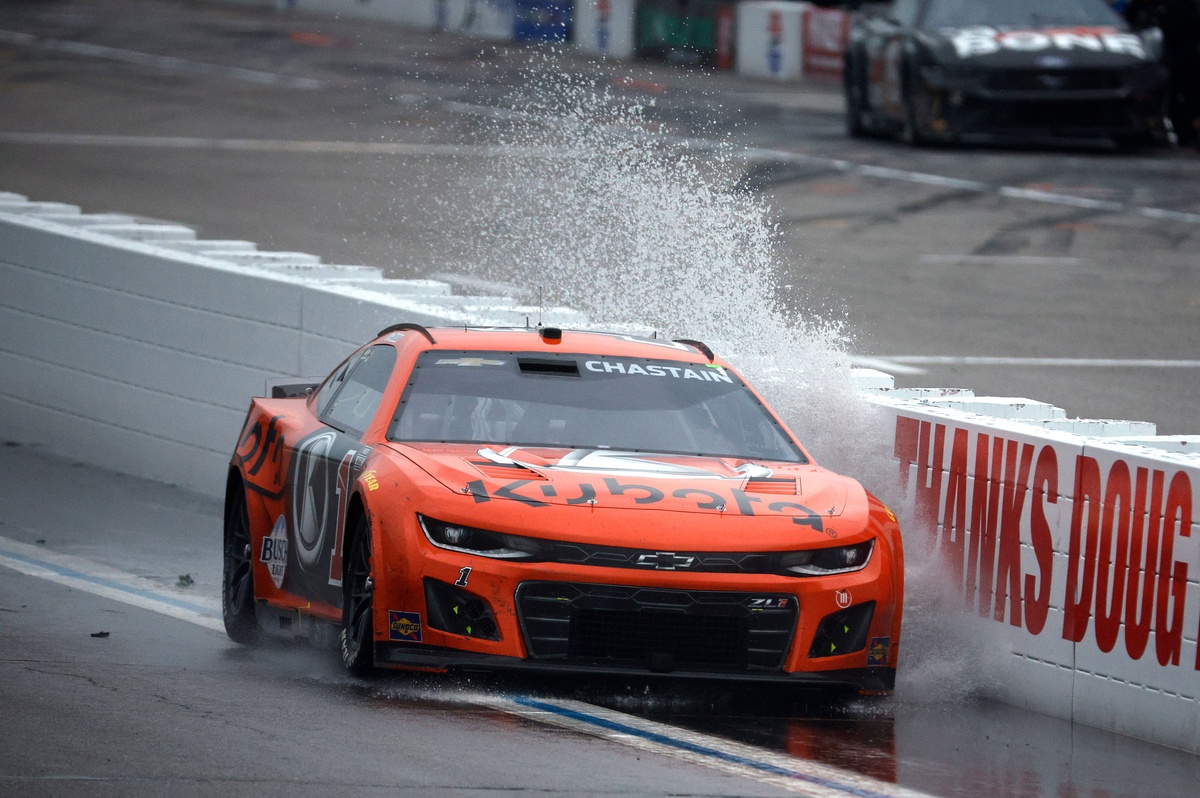
NASCAR officials have updated their wet-weather tire policy just before a busy race weekend at Bristol Motor Speedway. Previously, wet-weather tires were permitted on all oval tracks one mile or shorter in length, a rule that remains the same. However, the change lies in who controls the decision to switch back from wet tires to slicks.
At the race start, NASCAR will still determine the tire type—whether slicks or wet-weather tires—that all cars must use. After the green flag, when a caution flag is issued due to rain and NASCAR judges the track to be wet, teams then have the autonomy to choose between slicks or wet-weather tires. NASCAR will only make wet-weather tires available if they officially declare the track wet.
Additional rules include that if pit road is considered damp by NASCAR, any yellow-flag pit stops will be non-competitive, meaning no position changes can happen during those stops. Cars leaving pit road under such conditions will restart behind those that didn’t pit. Conversely, green-flag pit stops will still be competitive with possible position changes.
This policy revision has been welcomed by most teams, especially after a notable incident at New Hampshire Motor Speedway on August 23, where Shane van Gisbergen gained a significant advantage on wet tires before NASCAR called a competition caution and mandated all cars to switch back to slicks during a non-competitive pit stop. The new rules are expected to make races involving variable weather more strategic and exciting by giving teams full control over their tire choices as track conditions change.
NASCAR CEO Steve O’Donnell emphasized that the organization listens to fan and industry feedback, stating that this change demonstrates their commitment to improving competition and enhancing the fan experience. The half-mile Bristol Motor Speedway, alongside tracks like Iowa Speedway, New Hampshire, Phoenix Raceway, Martinsville, North Wilkesboro, and Richmond, are among those approved for wet-weather tire use.
Fan Take: This rule change is a game-changer for NASCAR fans who crave unpredictable, thrilling races in mixed weather conditions. Allowing teams to make tire strategy calls opens the door for bold moves and savvy decisions that could shake up race outcomes and make the sport even more dynamic and engaging.
Source: www.motorsport.com