

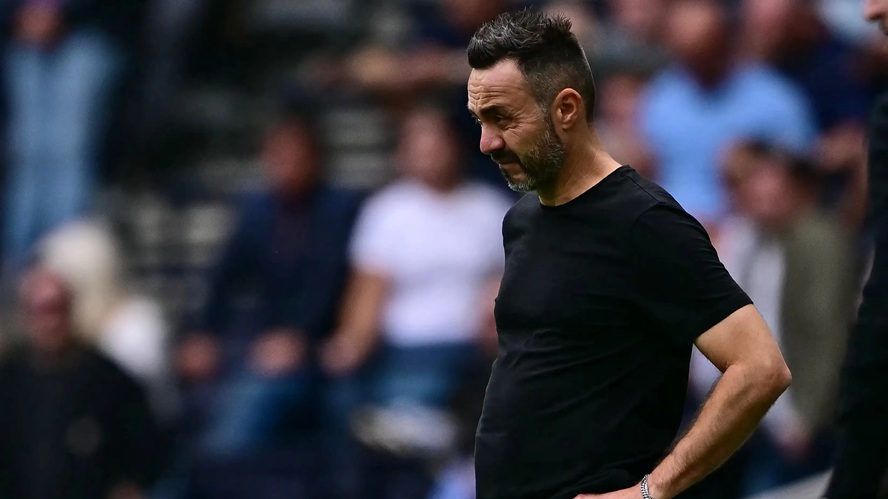
For 86 minutes against Aston Villa, Tottenham Hotspur appeared to be on the brink of yet another frustrating defeat, with no goals to show for their efforts. Then, Conor Gallagher netted Tottenham’s first Premier League goal of the season, followed by Jan Paul van Hecke adding a second deep into stoppage time, finally breaking the goal drought.
The expected reaction should have been relief, but instead, there was a palpable concern at the final whistle.
Tottenham’s biggest issue wasn’t merely the lack of goals; it was much more complicated.
The Scoreline Masked the Truth
At first glance, the final score may suggest that Spurs demonstrated resolve, but that’s misleading. Aston Villa largely dominated the match, and at 3-0, the game was essentially decided. The late goals changed the scoreline but not the reality of the match.
While Tottenham showcased some good football and created chances, they fell apart once again, signaling a concerning pattern.
Roberto De Zerbi’s Challenge Continues
The troubling reality for Tottenham is that the summer was meant to signal a fresh start—new manager, fresh players, novel ideas. Yet this defeat felt all too familiar.
Spurs showed promise early on in the first half, creating opportunities and forcing opposition goalkeeper Zion Suzuki to make several saves. However, one defensive blunder and a shift in momentum caused them to crumble.
This wasn’t just a loss; it highlighted a team that seems emotionally fragile during tough moments.
The Second Goal Was a Turning Point
The turning point reflecting Tottenham’s struggles came in the second half. After Mohammed Kudus had a goal disallowed for a questionable offside call, Spurs visibly lost their grip on the match. A stronger team would shake off such disappointment, but Tottenham unraveled.
Just minutes later, Villa scored again, exposing their recurring issues: vulnerability during defensive transitions, indecision in crucial moments, and an inability to recover mentally from setbacks.
Top teams can handle disappointments and continue to perform, while Spurs appear to view every setback as a catastrophe.
Villa Displayed Team Cohesion, Spurs Showed Individualism
The sharpest distinction on the pitch was in the teams’ organization. Unai Emery’s squad resembled what fans hoped for after a rocky start—structured, cohesive, and dangerous on the counter. In contrast, Spurs too often seemed like a group of individuals attempting to tackle problems in isolation.
When Villa scored, the team found stability; when Tottenham conceded, chaos ensued. This contrast is critical.
The League Table is Concerning
There’s often a temptation to focus on early-season performances, with managers asking fans for patience as results will inevitably improve. However, Tottenham is facing an issue where performance is ultimately judged by results.
After five matches, they sit with only two points and find themselves in the relegation zone as they approach the international break.
These statistics are harsh, especially considering the investments made to renovate the squad.
Late Goals Don’t Solve the Real Problem
Discussions about whether the late goals could create momentum are inevitable. They might do so, and breaking the scoring drought could lift some psychological weight. However, Tottenham must avoid confusing symptoms with the root causes.
While the inability to score was a problem, defensive lapses, mental fragility, failures to manage momentum shifts, and a lack of resilience under pressure are much larger concerns. Scoring late addressed the least critical issue.
The International Break is Timely
For Roberto De Zerbi, this forthcoming two-week period could be crucial—not because his position is under immediate threat—he seems to have the support of the club—but because he needs to instill something fundamentally missing from Tottenham’s early season: belief.
Not the tactical kind, but psychological belief. His players need to stop acting like a team waiting for disaster to strike.
Currently, any setback triggers panic, every mistake breeds uncertainty, and each goal conceded saps confidence. These habits are tough to break.
Conclusion
Tottenham fans have waited weeks for a Premier League goal and finally witnessed two. However, these goals came in a loss that exposed underlying flaws.
This wasn’t a turning point, rather a reminder that scoring has never been the primary issue; and that simply acquiring new talent won’t fix deeper structural weaknesses.
Despite the changes over the summer, Spurs are alarmingly distant from their ambitions. The drought is over, but the rebuilding appears to have hardly begun.
Fan Take: This news highlights a pivotal moment not just for Tottenham but for fans of soccer worldwide. It underscores how even teams with significant investments can struggle when the underlying issues—like mental resilience and team cohesion—aren’t addressed, affecting the integrity and competitiveness of the sport.
Source: www.soccernews.com