

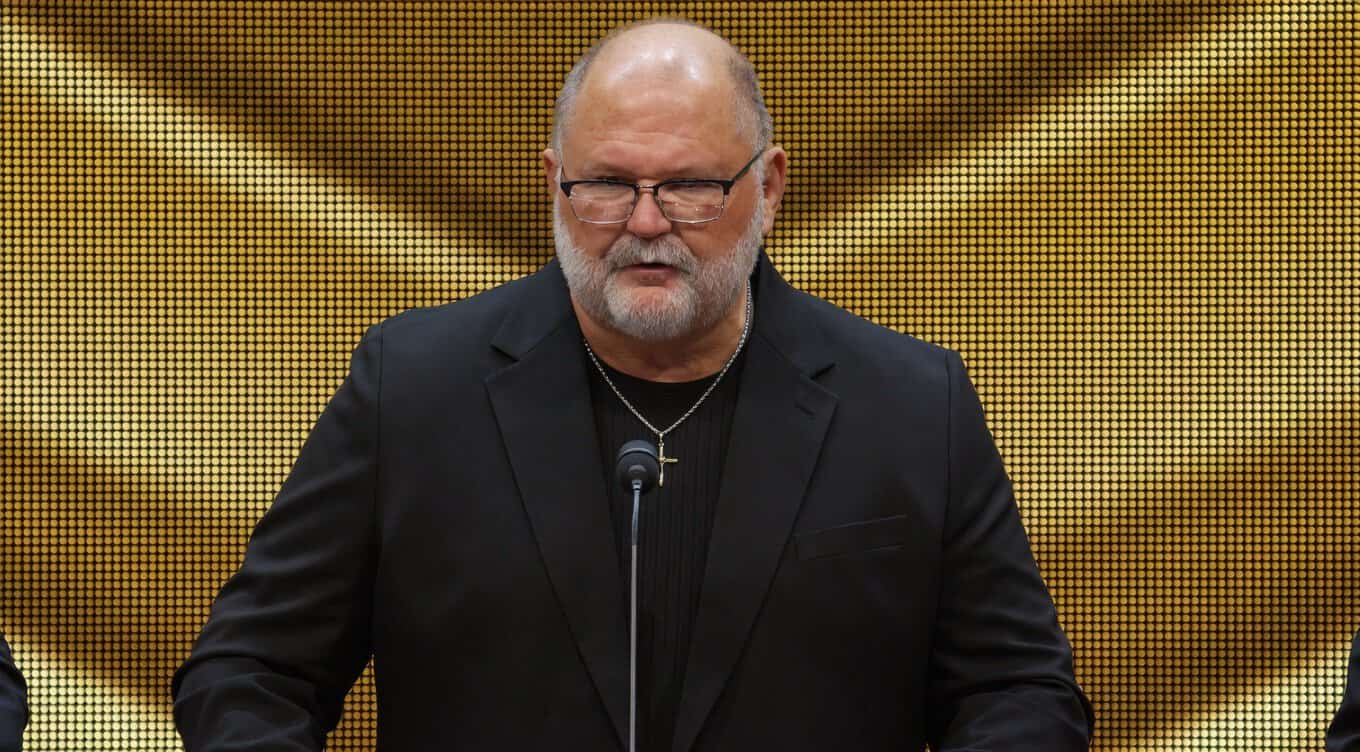
Arn Anderson expressed his support for anything that leaves the audience questioning whether what they witnessed was genuine, emphasizing that the outcome of the match is the least significant element. He discussed the rise of the work shoot promo in the late 1990s during an episode of ARN, considering whether blurring the lines between reality and performance was beneficial or harmful to the business.
“I appreciate anything that feels believable. Something that makes you think, ‘Wait a minute, I thought this was just entertainment,’” Anderson explained. “When someone crosses the line, says something they probably shouldn’t, it injects a sense of reality that makes you question what you saw—whether it’s real or not.”
Anderson’s time as a member of the Four Horsemen coincided with an era when wrestling was tightly protected, and the faction operated on the premise he’s describing. The Four Horsemen were portrayed as a genuine group who traveled and handled their earnings together, creating an act that worked because fans were never fully sure where reality ended and the character began.
His main criterion is whether the performance leaves the audience with lingering questions. “If you’re asking questions, it did something right,” Anderson said.
When told that nowadays the line between fiction and reality has been so blurred that any moment causing doubt is a success, Anderson agreed wholeheartedly and added, “Absolutely. That’s far more important than who won or should have won. The victory is the least important part.”
He also offered advice to viewers: “Watch carefully, and only give your respect to wrestlers who genuinely earn it, because the performers can see through those who don’t. Those are the ones who truly connect and endure.”
This stance is somewhat unexpected given Anderson’s career, which involved defending the secrecy of wrestling during an era when admitting the scripted nature of the business on television was almost taboo. Wrestlers who broke character risked losing bookings, while the work shoot promo deliberately exposed that hidden reality and used it as a narrative device.
What Anderson describes aligns more closely with the traditional territorial system than with the modern wrestling environment. Back then, fans’ uncertainty was fundamental to the product’s success, and the work shoot sought to recapture that ambiguity once it started to fade. He argues that the core of wrestling’s appeal has always been the uncertainty itself, not just the match outcome.
The technique of blending reality and scripted elements, often credited to CM Punk’s 2011 Raw promo, actually has roots going back over a decade earlier. Since then, fans have come to expect wrestlers to occasionally break character and deliver believable moments, making this approach a standard tool rather than a shocking exception. Anderson highlights that success lies in provoking questions from the audience rather than convincing them of any definitive truth.
His comment about demanding wrestlers earn their respect targets the audience’s responsibility in shaping the product. Anderson believes crowds that give away their reactions too easily lead to weaker entertainment, whereas performers who have to work hard for respect tend to have more enduring success.
Arn Anderson is a WWE Hall of Famer, co-founder of the Four Horsemen alongside Ric Flair, and has worked as a producer for WWE and AEW. He currently hosts ARN with Paul Bromwell.
Fan Take: This perspective from Arn Anderson is a vital reminder that wrestling thrives on the line between reality and performance—keeping fans guessing is what truly drives engagement. For fighting fans, embracing this blurred boundary could mean more compelling, emotionally charged storylines that elevate the sport beyond simple wins and losses.
Source: wrestlingnews.co
