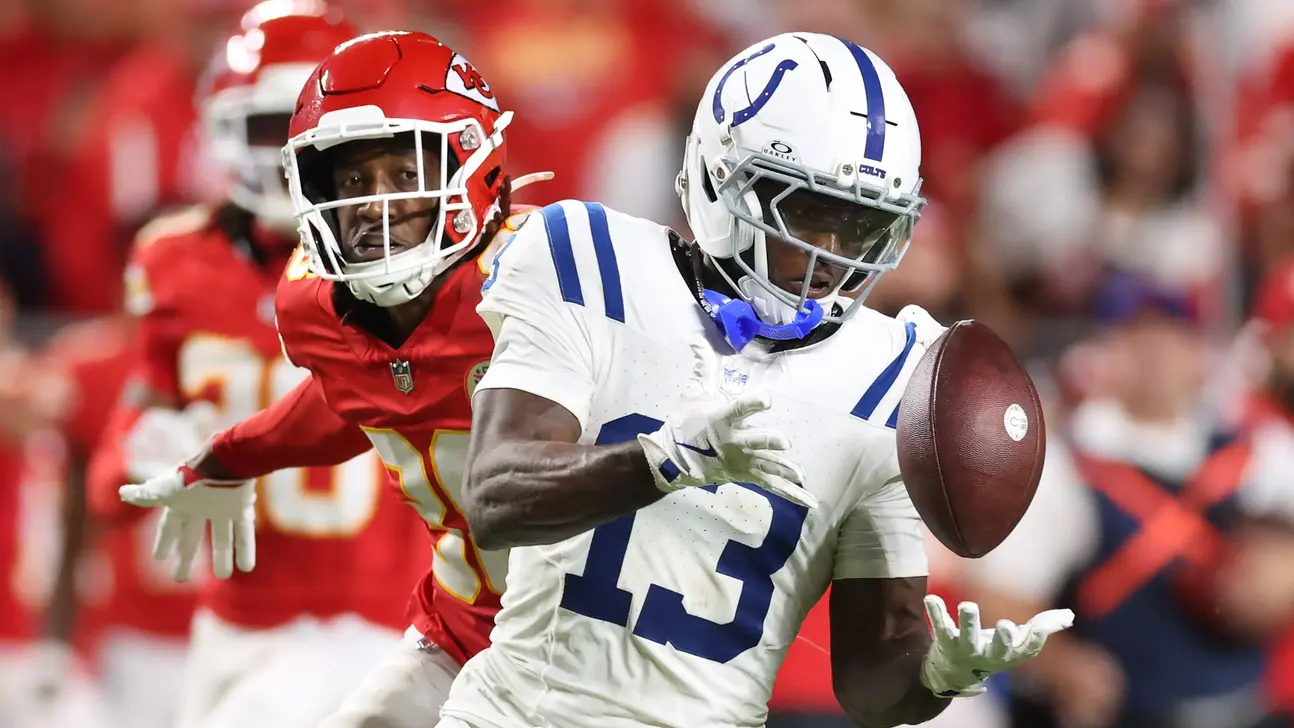
A replay review late in Sunday night’s game kept the Indianapolis Colts’ overtime drive alive when officials reversed a ruling that said wide receiver Laquon Treadwell had fumbled, a decision that came before the Kansas City Chiefs ultimately prevailed 33-30 in overtime.
Kansas City had opened overtime with a field goal to go up 30-27, meaning Indianapolis needed a touchdown on its ensuing possession to win; failing to score would have ended the game. Daniel Jones connected with Treadwell on a 48-yard pass that put the Colts at the Chiefs’ 17-yard line, and Kansas City’s Nohl Williams appeared to punch the ball free and recover it, prompting a fumble call on the field.
Had that call stood, the Chiefs would have closed out a 30-27 victory. But after officials reviewed the play, they overturned the fumble ruling.
The review focused on whether Treadwell had established control of the ball before the defender made contact. Replays showed Treadwell initially bobbled the catch, but officials concluded the defender made contact after Treadwell had secured possession, and that his knee then hit the turf before the football came loose.
Under NFL rules, a player is considered down by contact once a defender touches him and a body part other than his hands or feet touches the ground, so the play was ruled complete. The catch stood as a 48-yard reception, and Indianapolis retained possession at Kansas City’s 17-yard line.
The Colts kept their offense on, then called a timeout and brought out the field-goal unit. Kicker Spencer Shrader converted a 38-yard field goal to tie the score at 30-30 with 3:11 left in overtime.
Kansas City then drove from its own 32 and won the game as time expired on Harrison Butker’s 40-yard field goal, sealing a 33-30 Chiefs victory.
Fan take: This review was a reminder of how pivotal instant replay and precise timing are in deciding tight games — a single reversed call can change the entire late-game strategy. For NFL fans, it underscores the importance of body-control and ball security on contested catches, and how officiating interpretations can directly influence outcomes and playoff implications.
Source: www.foxsports.com