

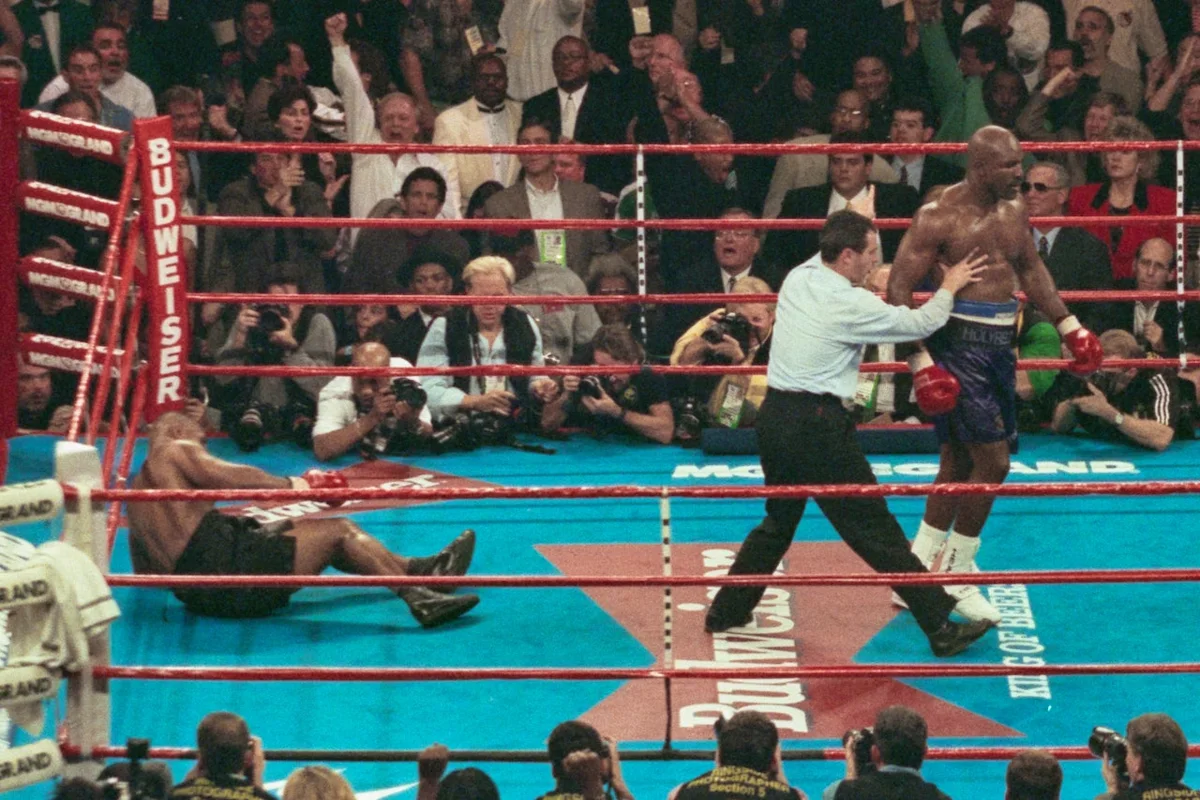
In October 1989, contracts were finalized for a boxing match between Mike Tyson and Evander Holyfield, targeted for the summer of 1990. However, the two fighters only faced each other in November 1996. The complex journey to organizing high-profile heavyweight bouts—marked by plans falling through, resurfacing, disappearing again, and eventually happening—is one of the sport’s most absurd traditions.
The saga between Tyson and Holyfield was disrupted by prison sentences, turmoil outside the ring, unexpected defeats inside the ring, and increasing greed among those involved. In comparison, the ongoing efforts to stage a fight between Tyson Fury and Anthony Joshua seem less dramatic once you consider the historical context.
Joshua initially called for a fight in April 2016 after capturing the world heavyweight title, while Tyson and Holyfield’s rivalry had been brewing since a heated encounter in early 1984 during the American Olympic boxing trials, sparked by a pool-table dispute. Heavyweight fighters are known for holding grudges for a long time.
The wait for Tyson and Holyfield was ultimately worthwhile; their bouts were spectacular and contentious, symbolizing the last glorious days of heavyweight boxing’s prominence. The anticipated Fury vs. Joshua fight, expected to take place in Cardiff on December 11, promises to live up to expectations.
The first scheduled Tyson-Holyfield match, set for June 18, 1990, in Atlantic City, was canceled after Tyson was shockingly knocked out by Buster Douglas and lost his world title and his aura of invincibility earlier that year. Holyfield then defeated Douglas, which only heightened the anticipation for a Tyson fight.
Negotiations, often tense, took place between Holyfield’s promoter Dan Duva and Tyson’s promoter Don King, with Duva holding the advantage as his fighter was now champion. The fight deal was finally agreed upon on July 11, 1991, in New York, with the bout slated for November 8, 1991, at Caesars Palace in Las Vegas. It was boxing’s biggest event, with a combined guarantee of $45 million for the fighters and projected earnings of $100 million.
However, Tyson’s arrest on rape charges after attending a beauty pageant in Indiana barely days after the deal delayed the fight. The match was rescheduled for January 1992, just before Tyson’s trial, but following a rib injury to Tyson, the fight was scrapped. Tyson was found guilty and incarcerated, seemingly ending the bout forever.
Yet in boxing, no fight is ever truly dead. After Tyson’s release in late summer 1995, discussions about the match resumed—the fight had only been resting and the financial incentives remained strong. Tyson regained the heavyweight title in early 1996, while Holyfield experienced losing, regaining, and then losing the title during Tyson’s absence.
The fight was officially announced for November 1996 at the MGM Grand, with Holyfield considered an underdog. He stunned everyone by winning, and then secured victory again in the infamous “Bite of the Century” rematch the following year.
Compared to the extensive patience, negotiation skills, and persistence it took to set up Tyson and Holyfield’s fights, arranging a clash between Fury and Joshua has been relatively straightforward.
Fan Take:
For fight fans, the saga of Tyson and Holyfield highlights the drama and unpredictability that make heavyweight boxing thrilling beyond just the action in the ring. The looming Fury vs. Joshua showdown offers a fresh chapter in heavyweight history, promising electrifying moments that could define the sport’s future.
Source: sports.yahoo.com