
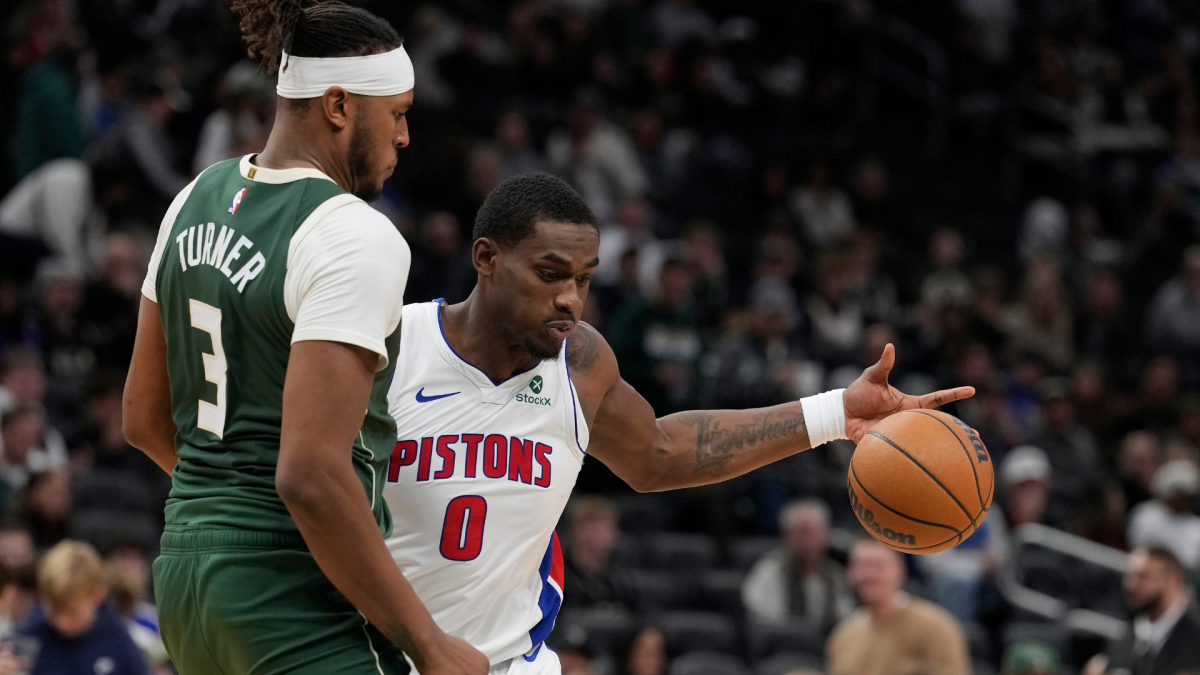
The Detroit Pistons have reportedly increased their contract offer to restricted free agent Jalen Duren to $200 million over five years, surpassing their previous offer of around $190 million. This move is significant because it means the Pistons are now proposing more money upfront than Duren would likely earn by testing free agency next summer. Currently, Duren’s qualifying offer stands at $9.6 million, making him an unrestricted free agent after next season. If he chooses to leave, the maximum contract based on projected 2027-28 salary caps would pay roughly $189.2 million over four years, totaling about $198.8 million across five seasons—less than the latest Pistons offer. This situation makes Duren one of the few players for whom a max contract doesn’t represent his peak earning potential.
Taking the qualifying offer could still benefit Duren if he performs well and convinces Detroit to increase their offer. The Pistons have precedent for this with Greg Monroe, who leveraged a qualifying offer into a lucrative deal the following year. However, this path is risky due to potential injuries, performance issues, or a stalled development, which could harm Duren’s market value. Moreover, the main teams interested in Duren outside Detroit—the Sacramento Kings and Milwaukee Bucks—are not currently top contenders, which may discourage him from leaving a strong 60-win Pistons squad. Reports suggest Duren feels a “thread line of disrespect” stemming from last season’s underwhelming extension offer, leading to uncertainty if he will accept the latest deal or risk free agency.
As October 1 approaches, the deadline for Duren to accept his qualifying offer, the stakes grow high. Both sides risk losing if neither budges: Duren could forfeit significant money, while the Pistons risk losing a promising 23-year-old All-NBA center for nothing. The current difficult center market means replacing Duren would be costly, both in draft picks and finances, as illustrated by the Indiana Pacers’ expensive efforts to replace Myles Turner. Conversely, overpaying Duren could trap Detroit under a burdensome contract given his limitations—slight undersizing, moderate rim protection, and limited offensive range beyond the paint—especially with rising star Ausar Thompson also on the roster.
While the Pistons clearly want to retain Duren, increasing their offer to $200 million—well below his Rose Rule max of $287 million—reflects careful financial restraint. If Duren rejects this deal, Detroit may need to consider a sign-and-trade, although they have avoided such moves to date to preserve team chemistry. Potential trade targets include centers like Myles Turner, who, despite his flaws and salary, could provide shooting that complements Thompson’s skill set and a better fit than Sacramento’s Domantas Sabonis. Any trade, however, would require significant draft assets, and Detroit would aim for more than just a replacement; they want to build a draft surplus to support future offensive stars like Cade Cunningham.
Without Duren or Isaiah Stewart, the Pistons’ dominant interior defense, which outscored opponents by over 14 points per game last season, would diminish. The team might have to adapt by emphasizing perimeter shooting and building a different kind of contender, a method other successful teams have employed. Ideally, Detroit would spend at least one more playoff run refining this promising core before deciding on major changes. However, Duren’s hardline stance may force their hand: he’s been offered more than he can earn independently elsewhere, meaning if he declines, the Pistons must seriously explore alternative plans soon.
Fan Take: This contract saga highlights the complexities of the modern NBA’s salary cap and restricted free agency, where talented young players like Duren are reshaping team-building strategies. For basketball fans, the outcome will reveal not only how the Pistons navigate retaining their rising star but also how the evolving center market impacts team futures across the league.
Source: www.cbssports.com