
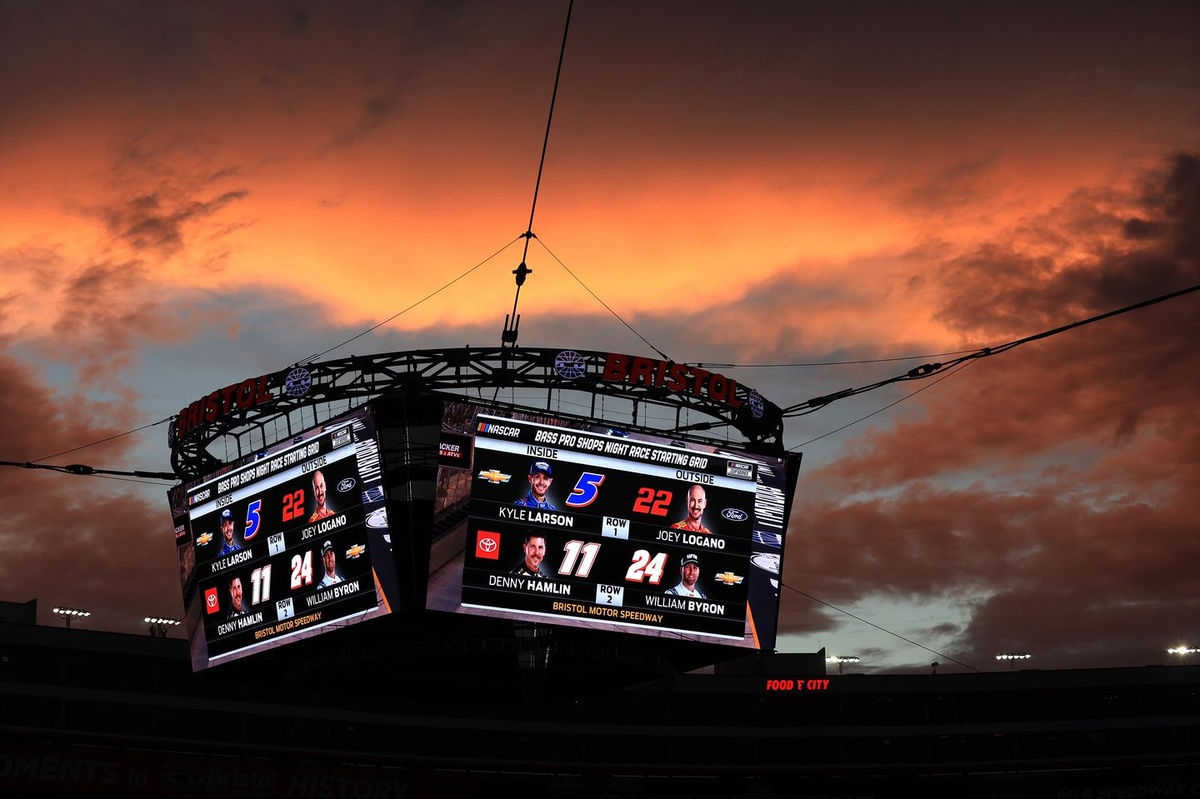
Amid the excitement of the Bristol Night Race and an intense Chase for the Championship, two of the first three playoff events have experienced qualifying sessions canceled due to rain, resulting in starting lineups determined entirely by the metric system. This method, which assigns starting positions based 70% on a car’s finishing place in the previous race and 30% on the owner points standings, has sparked debate as stage points play a crucial role in crowning the champion.
The metric system was introduced in 2020 during the COVID-19 pandemic when traditional qualifying was suspended, providing a fairer alternative to consistently granting pole positions to the points leader, Kevin Harvick. During the 10 playoff races, this system is tweaked to have championship contenders start last in qualifying, but when qualifying is canceled by rain—as happened at the Southern 500 and Bristol Night Race—the lineup is set only by the metric without grouping playoff drivers at the front.
This arrangement caused issues at Darlington, where the lineup heavily reflected the previous Daytona race, which was marred by large crashes that sidelined many contenders. This disadvantaged drivers like Kyle Larson and the No. 5 Hendrick Motorsports team, who missed out on valuable Stage 1 points. However, Larson later benefited from the metric by securing pole position at Bristol after winning the prior race at Gateway.
Crew chief Cliff Daniels has consistently stated his belief that if qualifying is canceled due to weather, starting positions should be based strictly on owner points, which Larson supports too. Larson expressed frustration at Darlington, feeling disadvantaged despite racing hard, and suggested the metric be used only to set the qualifying order rather than final grids when rain intervenes.
Championship rival Denny Hamlin opposes returning to random draws for qualifying order, agreeing with Larson that the metric should be fair but acknowledging the complexity brought on by rainouts after superspeedways, where race outcomes can be unpredictable. Hamlin proposed possibly weighting starting positions more heavily on point standings to balance the system.
Ryan Blaney appeared indifferent to the debate, accepting the metric system despite its occasional strange impacts on races like Bristol, emphasizing its consistency is preferable over randomness. Ross Chastain also declined to voice strong opinions, focusing instead on adapting to whatever NASCAR decides. Bubba Wallace finds the metric fair for setting qualifying order but is confused by the changes rain causes in the process. Michael McDowell noted that rainouts during the Chase are rare and the metric works well for most situations, so he is generally content with the current approach.
Brad Keselowski offered a broader perspective, admitting no system is perfect and fairness is difficult to achieve in these scenarios. He sympathizes with NASCAR’s challenge in making consistent decisions when faced with unpredictable weather and race outcomes.
Fan Take: This discussion highlights a critical issue in NASCAR’s playoff format—how to balance fairness and consistency when weather disrupts qualifying. For fans, it underscores the tension between competition integrity and unpredictable race conditions, signaling a need for refinements that could impact the championship battle and enhance the sport’s excitement.
Source: www.motorsport.com