

We’ve reached the last round of power rankings for the 2026 Ballon d’Or, with the eligibility window for this season now closed and Spain officially named world champions. The leading player from the previous season will be revealed on October 26.
However, the question of who that player might be is more ambiguous than in previous years. A year ago, the focus was on Ousmane Dembele, who despite others like Mohamed Salah and Raphinha having stronger statistical performances, captivated audiences with his compelling narrative. Dembele thrived during critical moments, excelling on the best team and winning significant accolades, primarily the Champions League.
If you’re curious about the buzz surrounding Lamine Yamal, Kylian Mbappe, and Harry Kane of late, it’s because they are aiming to sway undecided voters before the September 28 deadline. While each player has impressive claims, the competition this season featured numerous standout performances but very few exceptional ones.
Ballon d’Or nominees: Lionel Messi and Harry Kane lead the pack, with Rose Lavelle being the only American woman nominated.
Chuck Booth
The top players of the club season didn’t secure that additional trophy to solidify their candidacies. While Bayern Munich and Barcelona dominated their leagues, it’s important to note that the English champions posed a challenge to the individual accolades that Ballon d’Or honors. Arsenal won the league missing key forward players, showcasing their strength in depth, which might not translate to individual awards. Likewise, although Paris Saint-Germain triumphed in both league and Champions League titles, several top players were underwhelming in Ligue 1. Dembele’s impact was limited to roughly 2500 minutes of play for club and country last season.
As usual, the World Cup will influence the voting outcomes, but the criteria around “team performances and achievements” complicates clarity among potential winners. Both Kane and Mbappe had outstanding individual tournament showings, but their teams didn’t match that success. Yamal, however, benefited from Spain’s collective victory even with his individual struggles due to injury.
Meanwhile, the standout performers from the tournament don’t all fit comfortably into this ranking. Rodri was vital for Spain, yet injuries marred his club season. Lionel Messi’s legendary reputation received a boost from his performance as a 39-year-old, but opinions differ on how much significance the preceding MLS Cup run holds for his candidacy.
This year, more than any other, there is no definitive answer. What follows is just my best attempt at clarity. A reminder: this isn’t a forecast of who will win the Ballon d’Or; for that, you’ll need to check with betting platforms. This is a reflection of who deserves to win, even if you might not agree.
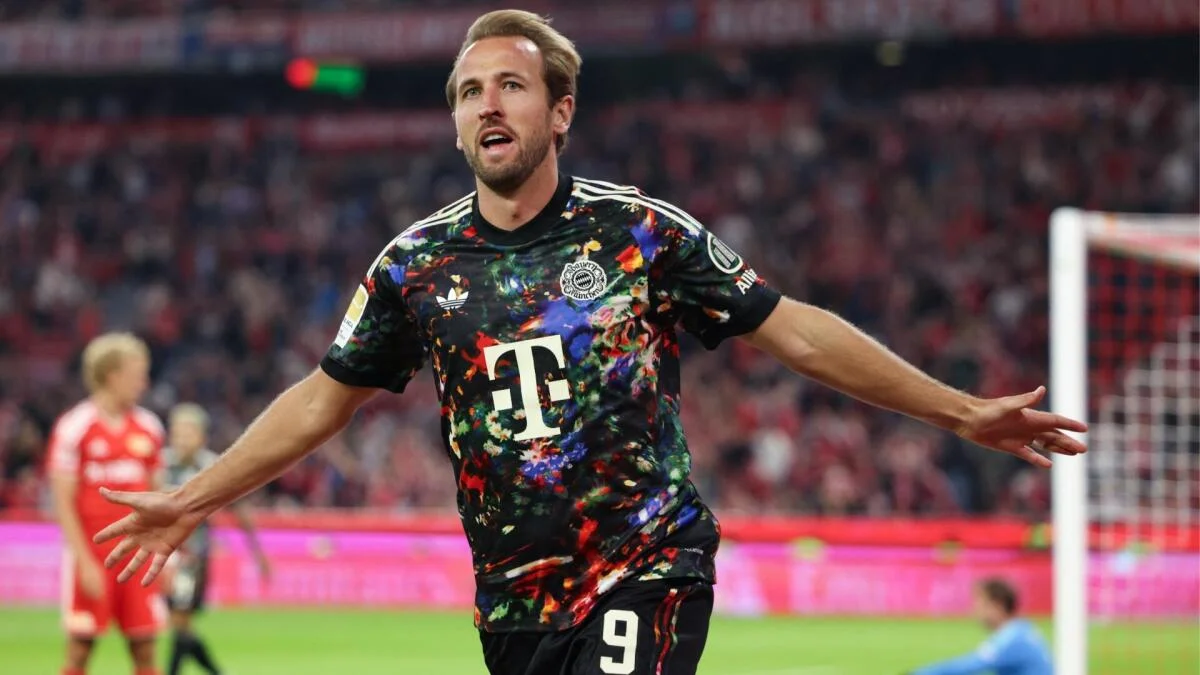
1. Harry Kane, Bayern Munich and England
Kane’s standing as the best player is somewhat clouded by how his Champions League and World Cup efforts concluded. At 33, his capacity to impact crucial matches is challenged, especially during the notable semifinal against Argentina, where he appeared fatigued.
Yet, disregarding that game, Kane had an impressive record with 73 goals for club and country, reflecting a scoring prowess reminiscent of Messi’s peak years. Even if the major finals didn’t favor him, his performances against Ivory Coast, PSG, and Real Madrid were outstanding.
In the Bundesliga, Kane’s 36 goals in 31 league games sit only behind legends Gerd Muller and Robert Lewandowski. There’s ample reason for Kane to claim the Ballon d’Or this year.
2. Vitinha, Paris Saint-Germain and Portugal
PSG was the top team in Europe, but naming which player deserves the Ballon d’Or from their roster produces a dilemma. It seems unfair to reward a player who spent substantial time on the sidelines, saved by his coach for tougher challenges in the Champions League.
This sets a challenge for those like Dembele, Joao Neves, Nuno Mendes, and even Khvicha Kvaratskhelia, who may have stood out at times but had periods of inactivity. Conversely, Vitinha distinguished himself by playing nearly 4,000 minutes—far more than most of his colleagues in the Champions League final. His contributions through progressive plays were vital for his team’s success, making a strong argument for him as the best midfielder in the world.
3. Michael Olise, Bayern Munich and France
As last season’s assist leader, Michael Olise‘s contributions were undeniable. Over various competitions, he delivered 10 more assists than any other player, proving his adeptness as a primary attacker among elite forwards.
In assessing the season, statistical expectations matter less than tangible returns. Olise has successfully distanced himself from the competition with his remarkable output.
4. Lamine Yamal, Barcelona and Spain
In terms of solid output, Yamal, at just 19, may not have reached the same heights as other top attackers with 37 goals and assists compared to others surpassing 40. Nevertheless, his World Cup performance could have elevated him higher, had he not suffered an injury.
His struggles with injuries throughout the season, including 96 days lost, have limited his impact. Based on his on-field evidence, as he matures physically, Yamal promises to be a future Ballon d’Or contender.
5. Kylian Mbappe, Real Madrid and France
Mbappe presents a complex candidacy. His goal contributions rank only behind Kane, and he showcased remarkable brilliance during the World Cup, potentially leading future tournaments in scoring like renowned Olympians.
For awards that focus on individual performances, his contributions are significant. However, team success remains a criterion, and since neither his club nor country reached top honors, this complicates his case.
6. Gabriel Magalhaes, Arsenal and Brazil
Once again, a reminder that this is not a prediction. Gabriel Magalhaes likely won’t breach the top 10, evidenced by his long odds for the Ballon d’Or. Historically, defenders have struggled to gain accolades, but Arsenal’s remarkable league title—achieved largely through defensive strength—highlights his importance.
His defensive prowess significantly hindered opponents, making a strong case for a top placement in voting, especially considering the challenges faced by his team during the season.
7. Luis Diaz, Bayern Munich and Colombia
As a potentially lesser-known figure, Luis Diaz may struggle for recognition to win the Ballon d’Or, even expressing that he favors Kane for the award. Yet, his contributions deserve acknowledgment, with 39 combined goals and assists in vital moments.
Diaz’s excellent passing and creativity played a crucial role in advancing Bayern’s offense, affirming his position among the top performers last year.
8. Bruno Fernandes, Manchester United and Portugal
Conversely, Fernandes became the catalyst for Manchester United, lifting his team from mid-table obscurity to Champions League contention. His unmatched assist tally in the Premier League, especially from set pieces, contributed significantly to his team’s success.
Furthermore, his impact is glaringly evident now that United struggles when he isn’t firing on all cylinders.
Manchester United’s main issue: When Bruno Fernandes isn’t at his best, the team falters.
James Benge

Beyond set pieces, Fernandes crafted 99 chances from open play—22 more than any rival, underscoring his significant role in United’s successes.
9. Lionel Messi, Inter Miami and Argentina
The critical question for the following nominees is the value placed on the World Cup. Though it’s the sport’s apex, competing at a level below elite leagues can skew perceptions of performance. Messi’s ability to shine at 39 adds to his legendary status, but much of his overall play may not reflect his peak capabilities.
10. Rodri, Manchester City and Spain
Similar to the previous mention, Rodri exhibited innate skills at the World Cup yet spent part of the season recovering from injury. He proved adept in facilitating Spain’s progression during matches, but a limited duration naturally caps his ranking.
This discussion around the Ballon d’Or emphasizes the delicate balance between individual brilliance and team achievements, making for fascinating debates among soccer fans. As fans engage with these rankings and predictions, they see the interplay of performance and recognition that ultimately shapes the narratives of their favorite players and teams.
Source: www.cbssports.com