

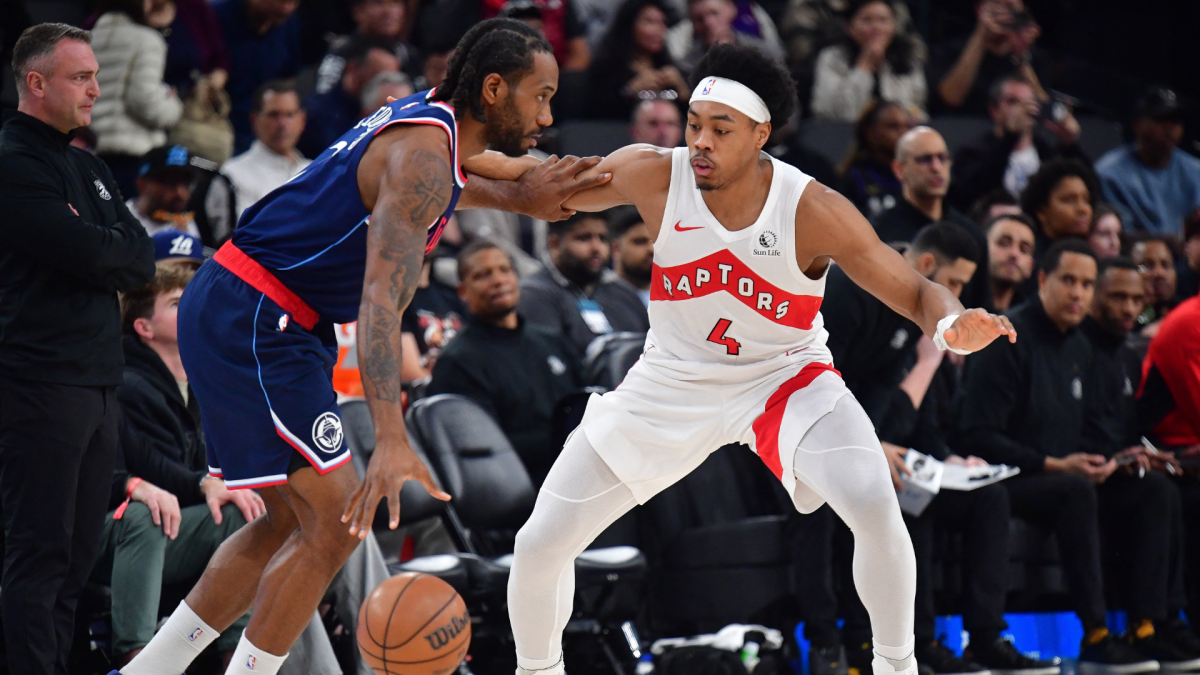
Kawhi Leonard officially joined the Toronto Raptors last week, and he has now signed a contract extension that will keep him with the team through the 2028-29 season, with the final year being a player option. According to ESPN, Leonard and the Raptors agreed on a two-year, $115 million extension on Tuesday. He will complete his current contract this season, earning $50 million, before the new deal starts in 2027.
This development is largely positive for both Leonard, who can move past the cap circumvention controversy as he reunites with the team where he enjoyed his greatest individual success, and the Raptors, who needed a significant move to strengthen their position in a highly competitive Eastern Conference. On paper, Toronto is now a legitimate contender in the East. They won 46 games last season and pushed the Cleveland Cavaliers to seven games in the first playoff round, thanks to a top-five defense that led the league with 22 forced turnovers per game. This defensive effort powered a transition offense that ranked third in points per game, behind only the Miami Heat and Chicago Bulls. Adding Leonard—who offers exceptional isolation and pick-and-roll skills superior to those of Scottie Barnes—gives the Raptors the elite half-court scoring they need to compete at the highest level.
Brandon Ingram was expected to fill that role late in games last season, averaging 21.5 points per game and earning All-Star honors. However, his more methodical style didn’t quite match a team that thrives on speed and freedom, as Toronto’s performance dropped by nine points per 100 possessions when he was on the court, according to Cleaning the Glass. In the playoffs, Ingram struggled significantly. Replacing Ingram with Leonard upgrades the team tremendously, allowing Barnes—an emerging star—to play a versatile role reminiscent of Scottie Pippen, while pairing a true superstar with an All-NBA No. 2 selection. This creates a promising mix of youth, experience, and depth.
That said, the partnership raises a few concerns worth noting:
Can Leonard maintain his health? This is the most critical question. If Leonard cannot stay on the court regularly, the rest won’t matter. The encouraging sign is that last season with the Los Angeles Clippers, he enjoyed perhaps the healthiest and best regular season of his career, averaging nearly 28 points, 6 rebounds, and 4 assists per game on nearly 50-40-90 shooting over 65 games. He has played at least 65 games in two of the past three seasons. The downside is that after participating in 68 games in 2023-24, Leonard suffered an ACL tear in the playoffs. Even during good seasons, his availability remains unpredictable; he played in fewer than 60% of regular-season games for the Clippers and missed 15 playoff games as well as 119 total games across two separate seasons due to knee issues. When healthy, Leonard is among the league’s best, but that is a significant condition.
Potential overlap between Barnes and Leonard. Last season, Barnes attempted just under eight shots per game from distances of five to 19 feet, and Leonard took just over eight from the same range. Roughly 31% of Barnes’ shot attempts were from the short midrange (4-14 feet), compared to 32% for Leonard. Barnes tends to attack the basket more, while Leonard takes more three-pointers and shoots them at a much higher success rate. Despite this, both players take many shots from similar zones, which might cause congestion, though Raptors coach Darko Rajakovic can stagger their minutes. Leonard can also increase his three-point attempts—he hit a career-high 6.8 per game last year—helping address the team’s low ranking in three-point shooting last season.
The role and fit of RJ Barrett. Barrett has consistently been a solid contributor in Toronto, averaging around 20 points per game and finishing last season with a career-best 58.5 true-shooting percentage. Ideally, Barrett could repeat that efficiency with a reduced shot volume, given that he operates in many of the same scoring areas as Barnes and Leonard, especially favoring midrange scoring and drives. However, there’s the risk that Barrett’s drives become less frequent and that he fails to spread the floor effectively, as his three-point shooting has hovered around just 34-35% over the last two seasons. Though his catch-and-shoot numbers are about league average, he has demonstrated he can hit open and wide-open three-pointers at a higher clip. Leonard’s presence should create more open opportunities than Ingram did, but Barrett will need to capitalize especially in transition, as his role in the half-court offense may diminish.
As a Barrett supporter, I believe he can adapt. With three reliable scorers necessary in the modern NBA, Leonard should surpass Ingram’s scoring average, Barnes is expected to break 20 points per game, and Barrett might drop to about 15 points per game. However, the team still needs to increase its overall scoring output, as it ranked in the bottom 10 last season. Additionally, Barrett is entering the final year of his current contract, earning $29.6 million this season. He will likely seek a similar salary going forward, but Toronto may struggle to accommodate that along with nearly $330 million committed to Leonard, Barnes, Jakob Poeltl, and Immanuel Quickley through 2029. Jamal Shead also needs a new contract after this season. This raises the question of whether the Raptors might trade Barrett before the February deadline rather than risking losing him without compensation next summer. They’ll probably observe how well he gels with Leonard and Barnes before making such a decision, but Barrett could eventually become expendable.
Fan Take:
Kawhi Leonard’s return to Toronto, along with this massive contract extension, is a game-changer for the Raptors and the Eastern Conference at large. This move not only boosts Toronto’s championship hopes but also shakes up the balance of power, making the East more exciting and competitive for fans everywhere.
Source: www.cbssports.com