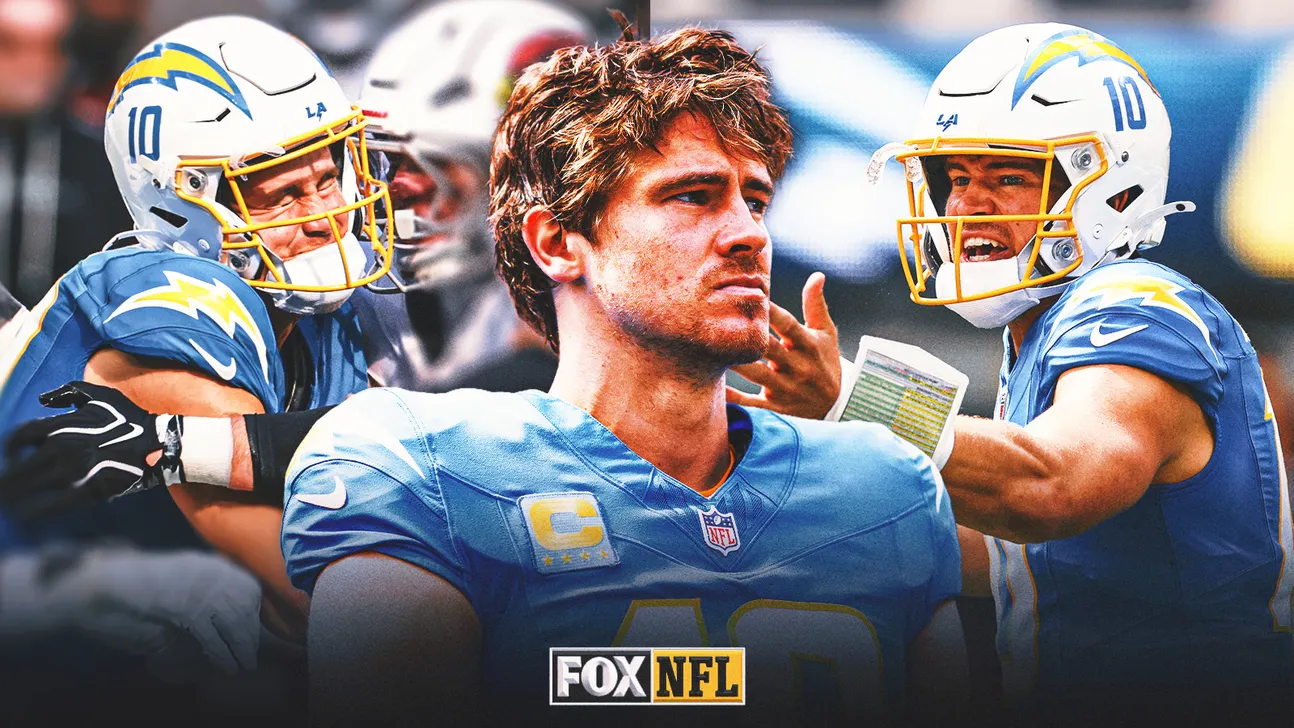
I stirred up another heated debate this week by defending Justin Herbert on social media — and quickly remembered these conversations never change many minds. Supporters point to his tape and wide-ranging tools, while critics repeatedly ask why those tools haven’t translated into more wins and bigger numbers; both camps have dug in and the argument goes in circles.
With the Chargers 0-2 and facing a brutal stretch that begins with Sunday’s game against the Bills, their season already feels in serious jeopardy. That means Herbert is likely to go another year without a playoff victory to his name, and the discussion over whether he lives up to the hype will keep simmering.
I’m on Herbert’s side, but I’ll admit there are flaws in his game that have helped produce L.A.’s rocky start. This weekend’s matchup with Josh Allen will highlight the biggest one: Allen is an instinctive, aggressive playmaker whose risk-taking often looks chaotic but consistently keeps Buffalo among the NFL’s most efficient offenses. Herbert’s approach tends to be steadier and less mistake-prone, but it hasn’t produced steady offensive performance or more team success.
Too often Herbert plays like he’s following a script — working through progressions and waiting for a receiver to break open or the protection to hold — rather than improvising when the situation demands it. That’s not because he can’t do it. At 6-foot-6 he can outrun many defensive linemen and linebackers, maintain arm strength on the move, and get throws off quickly with limited space.
Consider a play from last season’s win over Denver: he sheds a 285-pound defender, escapes the pocket, rotates his hips with an edge rusher bearing down on him, and delivers a perfectly timed 30-yard throw into tight coverage. Plays like that are the kind of improvisational throws you typically only see from the likes of Josh Allen or Patrick Mahomes — yet Herbert doesn’t make them as often as those two.
It’s not that he’s trying and failing; it’s that he often opts for the safer, structured option. That habit can be frustrating to watch when the protection breaks down or receivers aren’t creating separation. In other words, while his numbers are partly a result of an imperfect offensive environment, he also puts himself in tougher spots by choosing to operate in “hard mode” more than he needs to.
Herbert does flash the playmaker mindset when forced to. Besides the Broncos example, last Sunday against the Raiders he avoided an unblocked Maxx Crosby after a busted play-call and calmly side-stepped to connect with tight end Oronde Gadsden II for a touchdown.
If I could change one thing, it would be to flip a switch in Herbert’s mentality so he treated every dropback like there’s a rusher in his face — to play with the urgency and improvisational edge of Allen on every snap. That would likely increase turnovers at times, but Herbert’s talent suggests the upside would outweigh the added mistakes.
Given how disjointed the Chargers currently look, Herbert needs to snap out of his comfort zone. He should be more aggressive in searching for game-changing plays earlier instead of waiting until games are out of reach.
There’s evidence he can do it: per Next Gen Stats, when L.A.’s win probability is above 25% this season he’s averaged 8.3 yards per attempt and 0.12 EPA per dropback, and Pro Football Focus ranks him as the fifth-best QB outside of the fourth quarter. The problem is “garbage time” production has dragged his overall numbers down — when win probability dips below 25%, his yards per attempt falls to 5.0 and his EPA to -0.66 across 17 dropbacks, harming how his short sample is perceived.
That’s why it’s hard for defenders like me to pin the 0-2 start solely on Herbert: he’s been effective when games are competitive. But it’s equally clear he must elevate his play — closer to the level of the game-breaking quarterbacks in Kansas City and Buffalo — to overcome a flawed offensive setting and prevent games from deteriorating into garbage time.
I’ll give the critics a point on that. Still, if they’re benchmarking him against Mahomes and Allen, they may actually be holding Herbert to standards that would imply a higher evaluation than I’d give him myself.
Fan take: This matters because how Herbert adapts — more improvisation and earlier aggressiveness, or continued caution — will shape not only the Chargers’ season but broader conversations about quarterback archetypes in the NFL. If more QBs are encouraged to play like Allen or Mahomes, coaches and front offices may favor players and schemes that prioritize improvisational upside over conservative game-management.
Source: www.foxsports.com