
San Francisco’s Week 1 win over the Rams showed how dangerous the team can be when healthy — and everything since has underscored just how quickly that picture unravels.
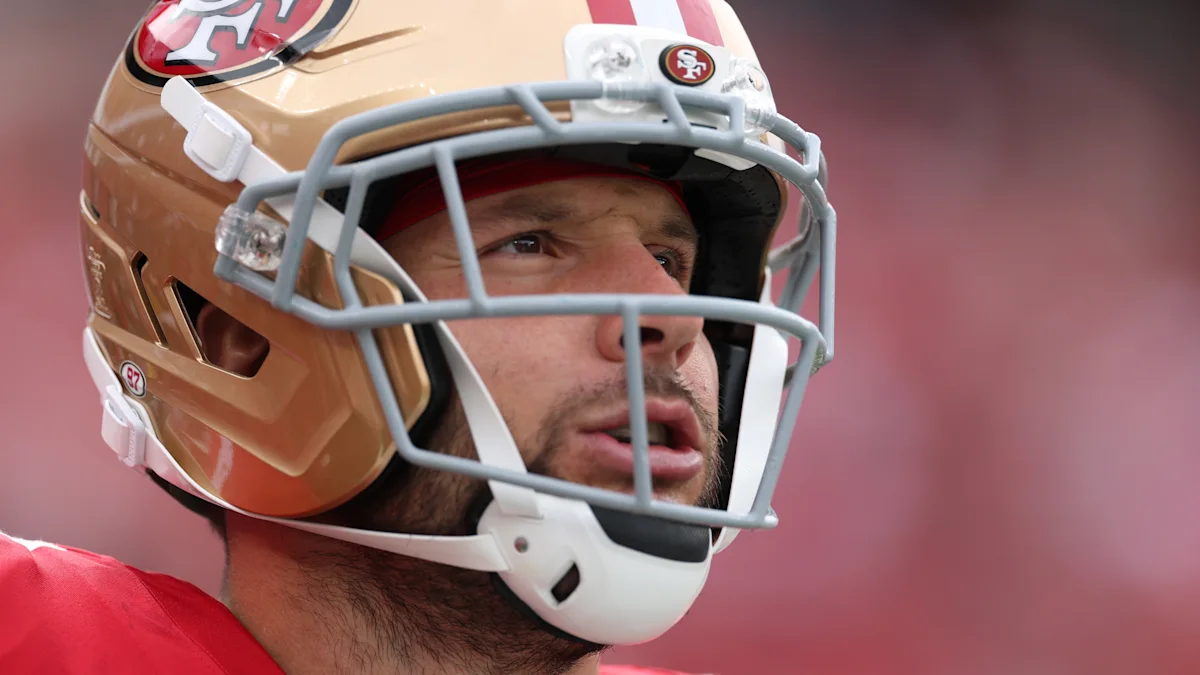
The newest blow came Friday, when Nick Bosa was ruled out for multiple weeks with a calf issue. Bosa missed most of last year after a torn ACL and was limited to three games in 2025; through the first two games this season he had only 60 snaps. That absence compounds an already battered defensive front: Alfred Collins is lost for the year, Mykel Williams is on the PUP list and can’t return until at least Week 5, C.J. West and Sam Okuayinonu are on IR, James Thompson Jr. is sidelined for multiple weeks, and rookie Romello Height just needed hand surgery.
The receiving corps has been hit hard as well. Ricky Pearsall, De’Zhaun Stribling and Christian Kirk are all on IR, and the team is also dealing with injuries to Mike Evans (hip) and Demarcus Robinson (ankle). Tight end Jake Tonges, linebacker Nick Martin and offensive tackle Austen Pleasants are among other notable names on IR. Things are that grim: ESPN’s Adam Schefter suggested the 49ers might even avoid placing Bosa on IR because teams are limited to eight return designations during the regular season.
And this is only Week 3.
San Francisco sits 2-0, with three of its next four games at home before road trips to Seattle and Atlanta in Weeks 5 and 7 ahead of a Week 8 bye. While many contenders welcome a later bye to rest up for the postseason, the 49ers likely would have preferred one even earlier given the mounting injury situation.
The team’s recurring injury problems aren’t new. They’ve sparked some outlandish theories — including suggestions that nearby electrical infrastructure is to blame — partly because a local expansion around 2014 coincided with when the yearly wave of injuries began, and because many injuries have happened during practice.
So why keep getting hammered by injuries? There’s no simple answer. Coach Kyle Shanahan has built rosters heavy on experience: this year’s Opening Day group was the oldest in the league at an average of 27.49 years and included 14 players over 30. Older players are generally more injury-prone, which likely contributes, though the 49ers weren’t always an older team under Shanahan and the trend toward veteran-heavy rosters has become more pronounced only in recent seasons. (Ironically, their relatively healthy 2023 campaign produced a Super Bowl appearance, which complicates any theory about roster age alone.)
Practice style is another suspect. Shanahan’s teams are known for fast, physical practices, and some players who’ve worked under him and other coaches have noted the difference. His Thursday padded sessions, in particular, are said to be tougher than what other clubs typically do — a point highlighted by Bosa’s history — though most of this season’s injuries didn’t occur on those specific days, so that explanation doesn’t cover everything.
Some observers have pointed to field surfaces — the 49ers practice and play on natural grass but have suffered injuries at turf venues in the past — but that theory is incomplete, too. The current team hasn’t been to the MetLife Stadium this year, their first two games were on grass, and some injuries happened on their own grass practice fields in Santa Clara.
In short, it may be an unlucky convergence of factors — roster composition, practice intensity, plain bad luck, or a mix of all three — that has left this team unusually banged up.
Fan Take: This matters because repeated injuries to high-profile teams change competitive balance, impact playoff races and alter how fans, bettors and broadcasters view the season. If the pattern continues around the league, it could push teams and the NFL to rethink roster construction, practice intensity and broader player-safety policies.
Source: sports.yahoo.com