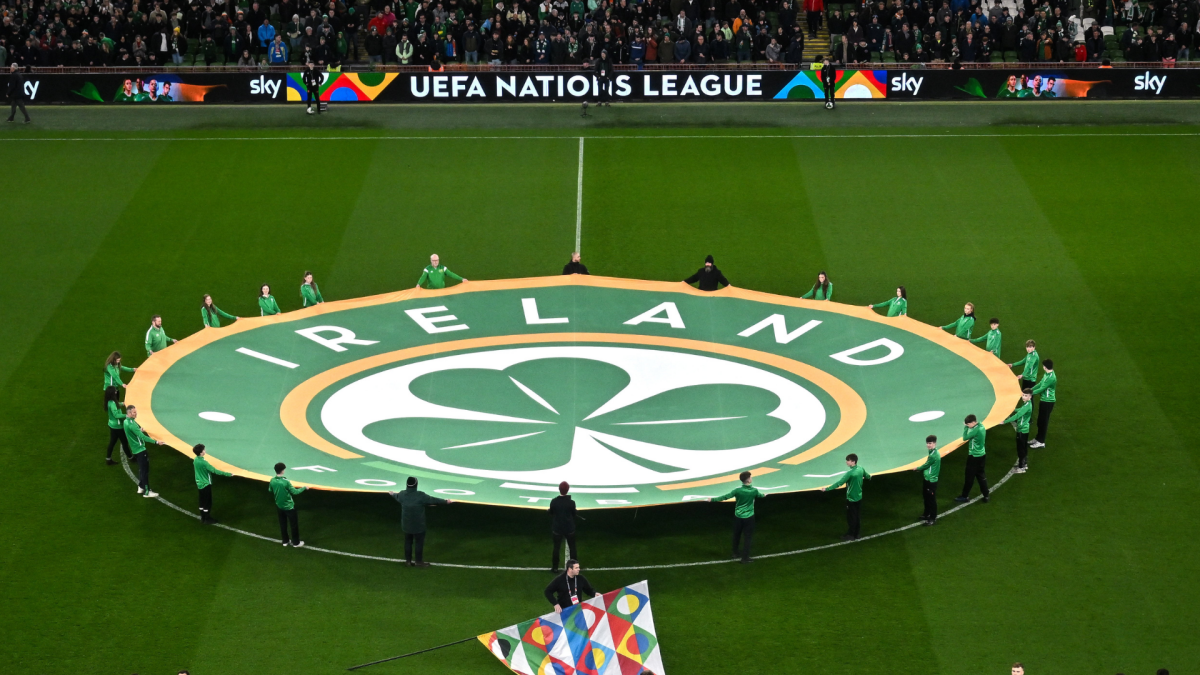
On a tumultuous Saturday morning in Debrecen, Hungary, the Republic of Ireland faced unexpected delays during their press conference and training session. Multiple sources indicated that the upcoming UEFA Nations League match against Israel might be at risk due to discussions surrounding a potential boycott, sparked by Irish goalkeeper Gavin Bazunu’s reluctance to participate.
### What transpired on Saturday?
Members of the media awaiting comments from coach Heimir Hallgrímsson and a player were informed of significant delays, with no clear explanation provided. Reports surfaced that Bazunu was opposed to playing against Israel, igniting a discussion among the players about whether or not to proceed with the game. Eventually, the press conference resumed later, featuring Hallgrímsson and Football Association of Ireland CEO David Courell. A vote among players confirmed a significant majority decision to go ahead with the match; however, Bazunu has since withdrawn from the squad and will not be involved in the game on Sunday.
### Background leading up to the weekend
The preceding week had been fraught with tension, particularly following Hallgrímsson’s strong remarks against Israel’s actions in Gaza, expressing discomfort among squad members about participating in this match. The Israeli Football Association responded with a statement condemning the coach, highlighting achievements in science and human rights while accusing him of ignorance and hypocrisy.
As political pressures mounted against the match taking place, over 160 Irish athletes signed an open letter from the Irish Sport for Palestine Group, urging the Football Association of Ireland to reconsider their decision. The letter emphasized the moral implications of playing, stating that not participating could represent a commendable stance.
Both matches are set to be hosted at neutral venues, with the Irish side taking on Israel in Hungary on September 27 and the reverse fixture scheduled for October 4 in Serbia. Meanwhile, the Irish public broadcaster RTE will fulfill contractual obligations to broadcast the games but will refrain from any studio analysis or advertising surrounding either match.
Ireland has been notably vocal in its criticism of Israel, particularly in light of the ongoing conflict. In November 2025, a significant majority of Football Association of Ireland members voted to urge UEFA to take action against Israel, further demonstrated through a letter titled “Stop the Game,” which gathered support from notable figures within Irish football.
### Fan Take
This situation underscores the intersection of sports and politics, reminding soccer fans of the responsibility athletes and organizations have to take a stand on global issues. It highlights how national sentiment can shape the future of international games, potentially altering the competitive landscape and fan engagement in the sport.
Source: www.cbssports.com