

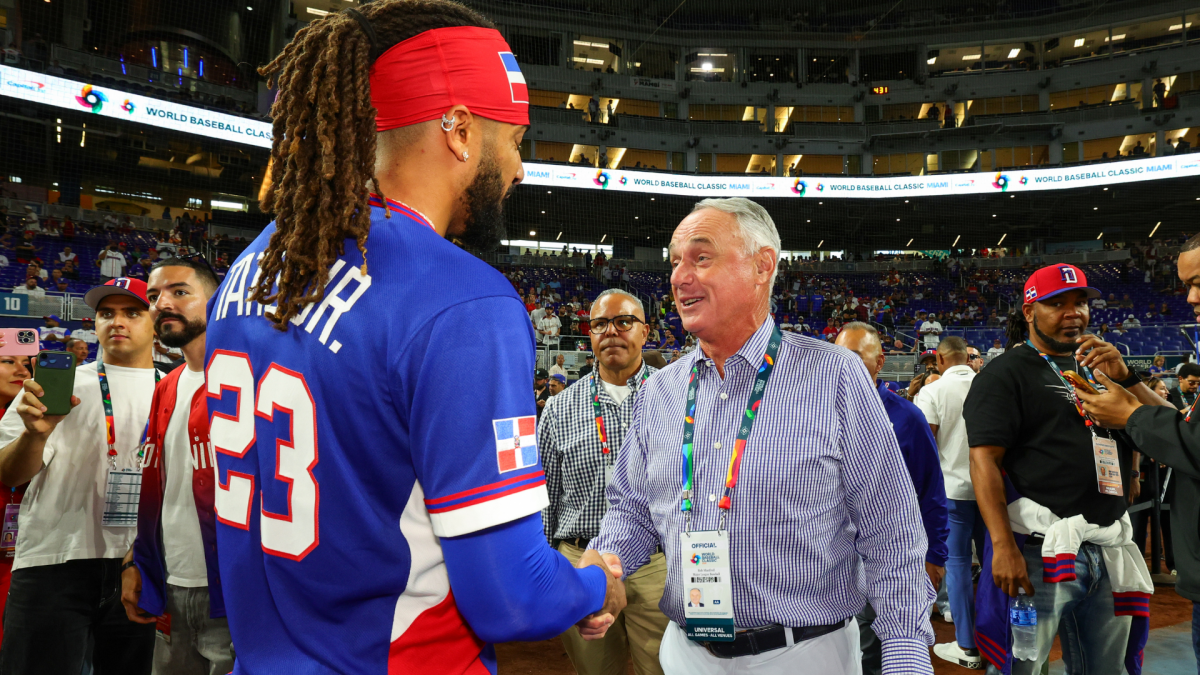
As the 2026 Major League Baseball season progresses, a crucial yet behind-the-scenes drama unfolds: the negotiation of a new collective bargaining agreement (CBA). This agreement, formally called the Basic Agreement, is a contract between players and team owners—represented by commissioner Rob Manfred—that dictates their working terms for usually five years. It ranges from everyday details like players’ meal allowances and travel procedures to major issues such as minimum salaries, free agency rules, revenue sharing, and roster sizes. Fundamentally, a CBA boils down to how the league’s income is split between players and owners.
The first-ever CBA in professional sports history covered the 1968 and 1969 seasons and was crafted under Marvin Miller, the first head of the Players Association and a Hall of Famer. Miller’s vision and expertise as a union economist shaped the association into a powerful labor organization. From 1972 until the mid-1990s, nearly every CBA negotiation ended with some labor stoppage, including strikes or lockouts. After the devastating 1994 World Series cancellation due to a strike, a period of labor peace followed—lasting until the last CBA talks, which led to a 99-day lockout delaying the 2022 season start.
Currently, talks around the new CBA are ongoing but contentious, with major disagreements persisting. The most high-profile dispute is over owners’ renewed push for a salary cap, which the players’ union strongly opposes. The owners argue that lacking a cap puts MLB at a disadvantage relative to other major U.S. sports in terms of franchise value, rather than focusing purely on competitive fairness. Still, the salary cap is only one of multiple critical issues requiring resolution.
Looking ahead, negotiations are expected to be fraught with strategic posturing and public statements from both sides. The goal is to reach an agreement by mid-March 2027 to avoid delays or shortening of that season. To help fans stay informed, a detailed timeline of negotiation milestones explains the proposals and their potential effects, with the hope of preserving a full, on-schedule 2027 season.
Sept. 28, 2026: The significance of a 60-game loss
If labor disputes cause a loss of 60 or more games in 2027, major broadcast and streaming contracts might be extended through 2029. This would postpone commissioner Manfred’s plan to centralize streaming rights revenue sharing, diminishing a key financial windfall the league expects. Consequently, the league has strong motivation to avoid any stoppage extending into June.
Sept. 2, 2026: Players largely united against a salary cap
An anonymous ESPN poll of MLB players reveals widespread opposition to the proposed salary cap and floor system. Players across salary levels—and across positions—express skepticism or outright rejection of a cap, though a small minority remain open to discussion. MLB is reportedly trying to exploit perceived divides between lower-paid, less tenured players and veteran stars, but the union remains resolutely opposed.
Aug. 27, 2026: MLB’s roster and free agency rule changes
MLB proposed roster rule modifications to improve stability, speed prospects’ promotions, and quicken offseason activity. These include setting weekly rosters with limited midweek changes, increasing pitchers allowed per roster, reducing injured list durations, decreasing optional minor league assignments, revising Rule 5 Draft eligibility, and creating “Quiet Periods” limiting free agent signings. The players’ union criticized restrictions on free agency leverage, and all changes hinge on acceptance of the salary cap system.
July 21, 2026: MLBPA’s draft counterproposal
The players union responded with its own suggestions for the draft to counter MLB’s radical proposals. Highlights include maintaining eligibility for younger players, preserving draft length and negotiating bonuses, enhancing signing bonus pools for low-revenue teams, easing penalties for overspending, and allowing draft pick trading. The union also aims to move the draft back to June to avoid conflicts with the trade deadline.
July 14, 2026: Public sparring
On All-Star Game day, Commissioner Manfred touted owners’ unity on the salary cap, while interim MLBPA head Bruce Meyer criticized league efforts to portray the game as broken despite strong fan interest and attendance. This exchange reflects the sharp divide between ownership and players as negotiations heat up.
July 1, 2026: Player-focused proposals
The MLBPA presented proposals emphasizing player health, safety, and access to data. Suggestions include expanding early-season roster size, new injured list options, adjusting Rule 5 Draft rules, and ensuring performance-based protections for pitchers optioned to minors. These focus on less controversial, technical matters that could build goodwill.
June 25, 2026: MLB proposes limits on free agency contracts
The league suggested maximum contract lengths and salary percentages tied to the proposed cap, raising minimum wages but eliminating deferred contracts, and accepting some union demands like earlier free agency for older players and doing away with the qualifying offer system. The league framed the cap as a way to address competitive imbalance and share revenues evenly, while the union strongly rejected the proposal as a pay cut and an erosion of player rights.
June 18, 2026: MLB’s sweeping draft overhaul and international draft proposals
The owners recommended cutting the draft from 20 to 12 rounds, instituting a $200 million hard bonus cap with no negotiation, and restricting high school player eligibility. They also proposed an international draft with similar rules and caps. The union responded harshly, arguing these changes would slash player compensation, restrict opportunity, and harm the game’s future.
June 5, 2026: Donald Trump backs a salary cap
Former President Trump publicly endorsed MLB’s push for a cap, citing it as essential for maintaining competitive sports leagues. He criticized the league for not implementing a cap years ago.
June 3, 2026: Manfred on luxury tax failures
Manfred conceded that the luxury tax system aimed at competitive balance had not succeeded, justifying the owners’ push for a salary cap as a more effective solution.
June 1, 2026: MLBPA denounces salary cap as “institutionalized collusion”
MLBPA head Bruce Meyer explained that MLB’s proposal would reduce player revenue share and cost players over half a billion dollars in 2026 alone. He called the salary cap a form of collusion, while MLB insisted their plan increases compensation and remains open to negotiation.
May 28, 2026: MLB’s initial proposal
The league floated a salary cap of $245.3 million and a floor of $171.2 million for 2027, a 50/50 revenue split, and centralized local revenue sharing. The plan would cause overall player salaries to shrink by nearly $19 million, a contentious issue—especially as owners seek to classify certain income streams in ways that minimize payouts to players. The MLBPA opposes an escrow system tied to revenue projections, fearing it undermines salary guarantees.
May 27, 2026: MLBPA’s opening proposals
The players union called for a “competitive integrity tax” ensuring minimum team payrolls, increasing minimum salaries to $1.5 million, raising luxury tax thresholds, adjusting revenue sharing to help lower-revenue teams, earlier free agency for older players, elimination of qualifying offers, and draft lottery expansion. The league criticized these proposals as worsening competitive imbalance.
May 12, 2026: Negotiations commence
Formal talks began focusing on a salary cap, revenue sharing reforms, league and playoff expansion, and an international draft.
Dec. 1, 2026: Current Basic Agreement expires
If no new deal is in place by midnight ET, owners are expected to lock out players, risking a labor stoppage.
Fan Take: These negotiations are pivotal because they will shape the economic and competitive landscape of MLB for years. For fans, the outcome could mean the difference between growing parity and excitement or prolonged labor disputes and fractured relations that jeopardize the game’s future.
Source: www.cbssports.com