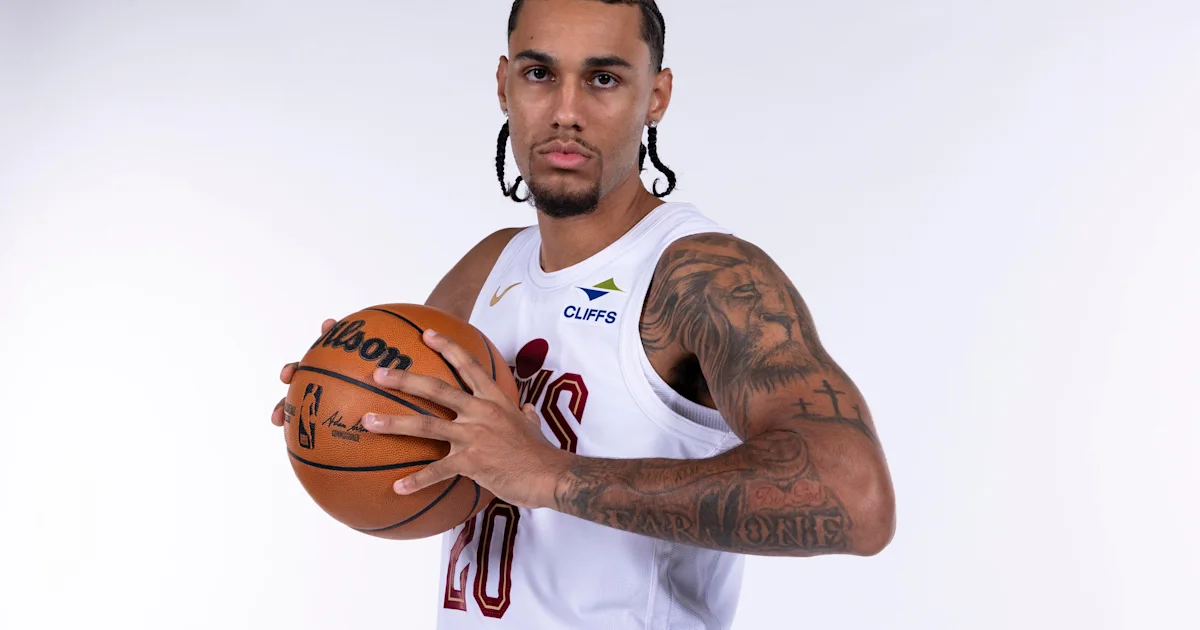
At the beginning of last season, Jaylon Tyson was one of the few positives for the Cleveland Cavaliers. While the team struggled with setbacks—Darius Garland dealing with a toe injury, De’Andre Hunter losing his composure, and Lonzo Ball losing his rhythm—the Cavaliers’ once-perfect 15-0 start slipped to a 15-11 record, casting doubt over their season. Amidst the turmoil, Tyson emerged as a crucial steadying force. His breakout sophomore season kept the team competitive, providing much-needed energy and pairing relentless effort with elite three-point shooting. Without his clutch performances, the team’s season might have faltered early on.
However, as the season progressed, Tyson’s influence waned. Inexperience and mental lapses caused him to drop out of the main rotation. By the time Cleveland was pushing to the Eastern Conference Finals, Tyson often looked out of place on the court. Approaching his third season, Tyson must build on his early success while addressing the issues that caused his decline late last year. Here’s a breakdown of what that path might look like.
Last Season’s Breakthrough
Tyson hit a critical milestone in his development during his second year, transforming from a questionable shooter to one of the league’s top role players. He boosted his shooting accuracy by 11%, finishing in the 98th percentile across the NBA for three-point shooting. This legitimate outside shot fundamentally elevated his game.
Thanks to his perimeter shooting, Tyson fit seamlessly into any lineup, providing the floor spacing so vital in today’s NBA. He connected on 45% of his corner threes and matched that efficiency from above the break, becoming a consistent off-ball threat. Beyond shooting, Tyson excelled at passing and creating from short-roll opportunities, making his collaborations with Donovan Mitchell and James Harden more fluid. This allowed Tyson to create plays even when he wasn’t the primary ball-handler.
Defensively, Tyson carved out a role as a scrappy, physical defender who could disrupt opponents—provided he avoided excessive fouling. His hustle was often the extra edge the team needed when games were close. Overall, Tyson laid the foundation for a true 3-and-D wing last season; sustaining this progress and refining his game are crucial for his next step.
Areas for Growth
The Cavs rely heavily on Tyson’s shooting as the linchpin of his game, and maintaining that accuracy is essential. Yet, even with consistent shooting percentages, Tyson has opportunities to increase his shot attempts. Last season, his three-point attempt rate was just in the 38th percentile, which is low for a player knocking down nearly half of his triples. Fortunately, he can afford to sacrifice a bit of efficiency for higher volume—his shooting was so strong that even a slight drop would keep him above league average.
Tyson should also work on broadening his offensive arsenal. Getting quicker to shoot and becoming more adept at creating his own shot—such as developing a reliable pull-up jumper or driving to the basket—would make him a threat from all three scoring levels.
On defense, Tyson needs better discipline. Leading the Cavs in fouls, he often found himself in trouble by reacting too aggressively or being overly physical off the ball. While pushing the limits of physicality has its value, knowing when to back off is a skill that comes with experience. Tyson has the physical tools and mentality to be an effective defender; his challenge is to play smarter rather than just harder. Being positioned correctly often outweighs the value of scrambling to fix defensive mistakes.
Conclusion
Even if Tyson’s development plateaus at last season’s level, he projects as a valuable contributor moving forward. He’s a reliable floor spacer who can occasionally handle playmaking duties and consistently brings intense effort on defense. While occasional foolish fouls or defensive errors may frustrate fans, his commitment and heart are undeniable.
Still, it would be disappointing to see Tyson’s growth stagnate. He’s extremely close to becoming one of the league’s elite role players. A modest improvement in either his defensive discipline or offensive versatility could elevate him into a must-have player for any NBA team.
Fan Take: Tyson’s progression matters because it highlights the importance of developing versatile, reliable role players who can adapt in today’s evolving NBA. If he continues to improve, not only will he boost the Cavs’ championship hopes, but he could also set an example for young players everywhere aiming to maximize their potential beyond pure scoring.
Source: sports.yahoo.com