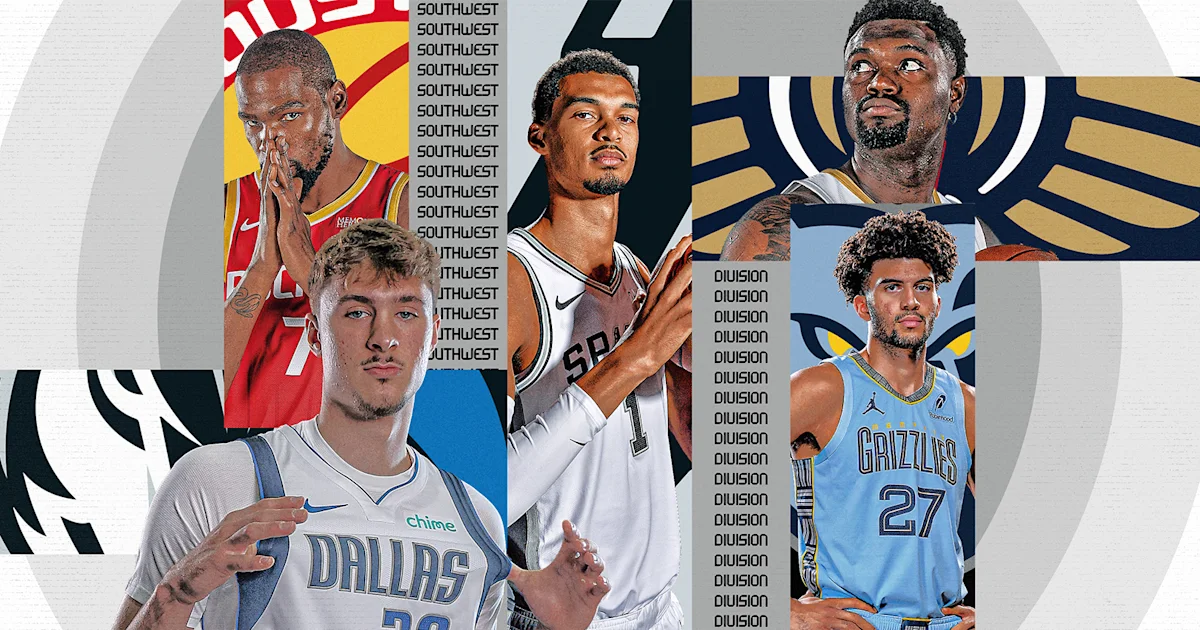
With the regular season starting on October 20, let’s evaluate the current status of each team in the Southwest Division. We’ll explore their strengths and concerns, highlight key lineups to keep an eye on, and suggest where they might reasonably finish in the standings.
San Antonio Spurs
Strength to Appreciate: Victor Wembanyama, both as a player and concept
Though not definitively the league’s best yet, Wemby comes very close, showcasing historically disruptive defense and efficient scoring without a dominant half-court move. His defensive IQ and leadership on the court set him apart.
Other Highlights:
- Stephon Castle is a defensive stalwart with improving offensive skills, particularly in catch-and-shoot 3-pointers.
- Dylan Harper offers unique driving and playmaking capabilities with plenty of upside.
- The Spurs’ flexibility at the power forward spot, with players like Julian Champagnie and Tobias Harris, offers varied looks for Coach Mitch Johnson.
Big Question: Where does De’Aaron Fox fit?
Despite criticism over a subdued postseason, largely due to injury, Fox remains an effective driver and ball protector. The Spurs may face tough decisions on starting lineups next offseason, especially about balancing Fox with rising guards Castle and Harper, and where Devin Vassell fits in.
Concerns:
- The trio of Castle, Harper, and Fox must improve volume and efficiency in shooting to open the floor.
- Wembanyama needs to develop consistent half-court shot creation.
- Depth at the wing positions may create limited minutes, especially for Carter Bryant, even though he shows promise.
Lineup to Watch: Castle-Harper-Vassell-Champagnie-Wemby
This group has only logged 94 minutes but dominated those minutes by a 73-point margin. If this clip grows, it could be a pivotal unit for the Spurs.
Best-Case Scenario: Securing the No. 1 seed, possibly nearing 70 wins with young talent growth and good health.
Worst-Case Scenario: Landing as low as the No. 5 seed if offensive limitations and stronger defenses suppress their success.
Houston Rockets
Strength to Appreciate: Kevin Durant remains a dominant threat
Despite drastically reducing attempts close to the basket, Durant averaged 26 points on impressive efficiency, demonstrating his enduring skill and scoring touch.
Other Highlights:
- Amen Thompson’s evolved offense and electrifying defense continue to excite.
- Alperen Sengun flashed All-Star potential with versatile scoring and defensive comfort.
- Fred VanVleet’s return promises to alleviate offensive burdens from stars like Durant and Sengun.
- Jabari Smith Jr.’s competitive fire adds intensity to the roster.
Big Question: Half-court offense shot profile
The Rockets rely heavily on mid-range shots, ranking second highest in the league, but lagging in rim attempts and three-pointers, which could hamper their scoring efficiency. VanVleet will help but may not drastically transform their offense.
Concerns:
- Minutes for Reed Sheppard could shrink depending on defensive and decision-making performance.
- Tari Eason, recovering from injuries, needs to regain his former dynamic driving ability.
- Uncertainty remains over Smith’s three-point shooting consistency.
Lineup to Watch: VanVleet-Thompson-Eason-Smith-Durant
This center-less group showed mixed success last season, but VanVleet’s addition and better health could improve its effectiveness.
Best-Case Scenario: A solid No. 3 seed with elite defense and better offense.
Worst-Case Scenario: Playing in the play-in tournament if offensive struggles continue.
New Orleans Pelicans
Strength to Appreciate: Herb Jones’ defensive prowess
When healthy, Jones improves his team’s defense, connects plays, and makes impactful contributions, making him a vital piece.
Other Highlights:
- Trey Murphy III continues to develop as a scorer.
- A healthier Zion Williamson and impressive play from Dejounte Murray highlight the team’s upside.
- Derik Queen’s passing and scoring skills earned him All-Rookie Second Team honors.
Big Question: Zion Williamson and Derik Queen’s combined impact
While talented, their defensive shortcomings, especially when playing together, pose serious challenges. The Pelicans may need to rethink their lineup strategies to maximize both players’ potential without sacrificing defensive integrity.
Concerns:
- Coach Jamahl Mosley’s offensive system remains uncertain.
- How much freedom Jeremiah Fears will have is unclear, affecting his growth.
- The timeline and impact of potential trades, including the role of Jordan Poole, remain open questions.
Lineup to Watch: Murray-Murphy III-Jones-Bey-Williamson
This unit showed promise with a +10.9 net rating during limited minutes but needs a larger sample to determine sustainability.
Best-Case Scenario: Just missing the play-in tournament with significant growth from young players Queen and Fears.
Worst-Case Scenario: At the bottom of the West, with veteran minutes limiting the development of key youngsters.
Dallas Mavericks
Strength to Appreciate: Cooper Flagg’s rapid development
Flagg has matured across various roles, improving his driving, playmaking, and drawing fouls, earning a Rookie of the Year nod despite tough circumstances.
Other Highlights:
- The return of Kyrie Irving boosts offensive firepower and playmaking options.
- The Mavericks ranked 11th in defensive rating before the new year, showing promise on that end.
- New addition Morez Johnson impressed with his energy and scoring.
Big Question: Effectiveness against defensive switches
The Mavericks face frequent switching defenses, which previously troubled them. Success depends on players like Irving, Flagg, and P.J. Washington exploiting mismatches created by switches.
Concerns:
- Depth behind Irving at guard is thin, raising questions about offensive continuity.
- Defensive and health concerns surround players like Zaccharie Risacher and Dereck Lively II.
Lineup to Watch: Irving-Christie-Flagg-Washington-Johnson
This smaller lineup balances skill, spacing, and playmaking, potentially unlocking new offensive looks.
Best-Case Scenario: Competing in the play-in tournament with a solid defense and improved offense.
Worst-Case Scenario: Finishing near the bottom of the West due to injuries or offensive struggles.
Memphis Grizzlies
Strength to Appreciate: Offensive versatility
Memphis has a diverse offensive system, featuring strong pick-and-roll play from Ty Jerome and a promising rookie in Cameron Boozer. Zach Edey adds size and scoring variety, while Jerami Grant remains a consistent scorer.
Other Highlights:
- Guard Cam Spencer offers underrated shooting and balance.
- GG Jackson combines size and skill with valuable defensive versatility.
- The center rotation, including the emerging Edey, Quinten Post, and Isaiah Stewart, is a significant strength.
Big Question: Who commands defensive focus?
While talented, the team lacks a truly feared scorer, which could lead opponents to apply conservative defensive coverage, limiting the Grizzlies’ offensive impact unless Boozer steps up quickly.
Concerns:
- Will small-ball lineups be effective?
- How many players do opponents truly respect as shooters?
- The roster still requires cuts and adjustments before the season.
Lineup to Watch: Jerome-Spencer-Coward-Grant-Boozer
This “small” unit blends shooting, playmaking, and spacing, potentially creating high-efficiency scoring opportunities.
Best-Case Scenario: Making the play-in tournament by leveraging depth and offensive versatility.
Worst-Case Scenario: Landing at the bottom of the West due to defensive shortcomings and lack of top-tier talent.
Fan Take: The Southwest Division is brimming with intriguing storylines, from Wembanyama’s meteoric rise to Durant’s enduring brilliance, making it a captivating watch for basketball fans eager to see emerging stars and veteran resilience clash. How these teams manage their lineup puzzles and develop young talent will influence not only playoff races but also set the tone for the future landscape of the NBA.
Source: sports.yahoo.com