
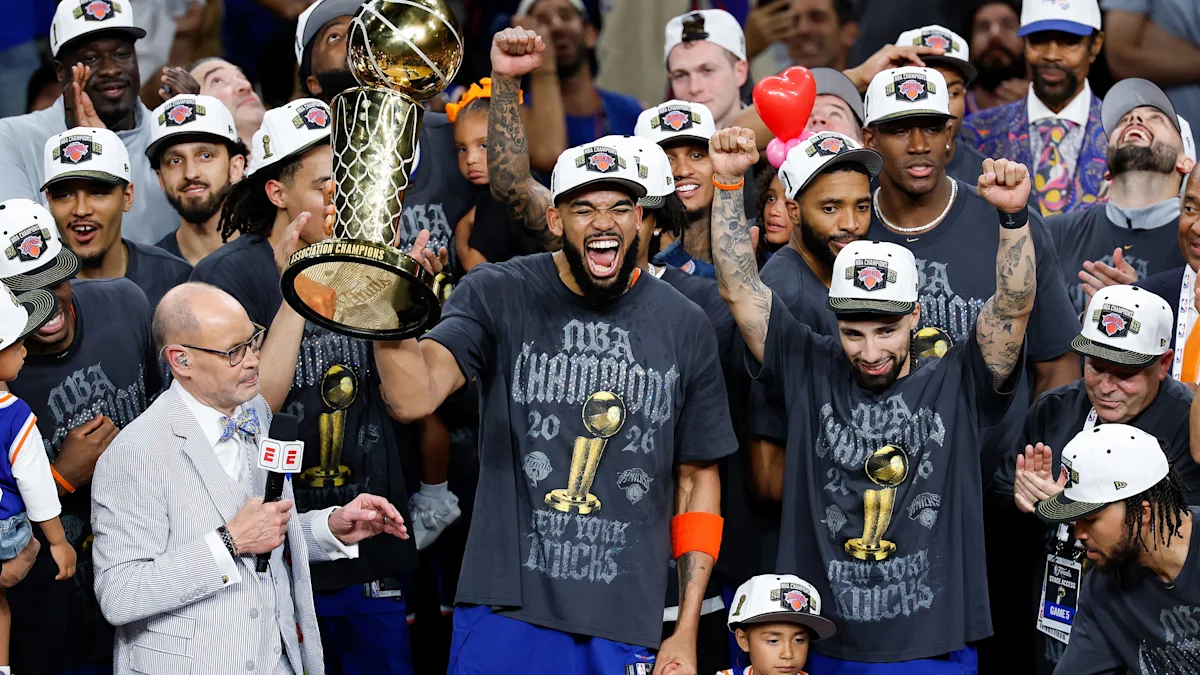
The situation between Karl-Anthony Towns and the New York Knicks appears to be at a standoff, where one side will have to make the first move. The team faces significant challenges in securing their star player for the long haul, raising the real possibility that Towns might be playing his final games with the Knicks.
Towns, a 30-year-old All-Star center who was key to the Knicks winning their first NBA championship in 53 years, is eligible for a four-year contract extension. He had hoped to finalize the deal before the season began, but on October 5, he expressed bleak views to reporters in Philadelphia, highlighting the large gap between the two parties. When asked about a potential agreement before their October 20 opener against the Philadelphia 76ers, Towns bluntly said, “It don’t look good.” He was even more straightforward when questioned if he deserved a new contract: “No (expletive), Sherlock. I just won a championship. You’d think it would be pretty easy, unless you guys think I have something else to prove.”
Throughout the Knicks’ historic playoff run, Towns was crucial—second only to NBA Finals MVP Jalen Brunson. After the team fell behind 1-2 against the Atlanta Hawks in the first round, coach Mike Brown adjusted the offense to focus on Towns, who took on more ball-handling and playmaking responsibilities. This shift freed Brunson to operate off the ball and select his moments strategically, unlocking a dominant Knicks offense that set a record with a +283 point differential. Towns’ presence on the court was especially impactful; during 578 postseason minutes, the Knicks outscored opponents by 258 points, giving him the best individual plus-minus for a single postseason in the play-by-play era.
However, Knicks owner James Dolan has been clear about avoiding the punitive luxury tax second apron, which limits the team’s financial freedom, establishing a strict cap on what the Knicks can offer their stars. This financial boundary also complicates contract talks with forward Josh Hart. According to ESPN, the latest Knicks offer to Towns was valued at $200 million—over $75 million less than his maximum eligible amount.
While these negotiations are ongoing, it’s important to remember that public statements often become part of the strategy in salary cap-constrained leagues like the NBA. Towns and his team are pushing for the best possible deal within New York’s financial limits, while the Knicks are aiming for more team-friendly contracts. For this partnership to continue, both sides will need to find middle ground. Towns emphasized, “Simply put: I want to do something that can keep this team together and work with the Knicks and also values me. None of those things have come close to happening.”
This situation is not ideal for a team preparing to defend its title, but it reflects the realities of the current salary cap system and second apron constraints. The Knicks’ immediate worry is whether this contract dispute will negatively impact their on-court performance. Towns has previously shown resilience amid adversity; during trade rumors earlier last season, he responded with his best career postseason showing.
That said, trade talks may intensify, especially since Towns has a $61 million player option next season. While that’s a hefty sum, he might believe he could garner an even bigger deal on the open market. The Knicks would want to avoid losing a premier stretch five like Towns without compensation, and given recent blockbuster trades—like Giannis Antetokounmpo moving to the Miami Heat—a player of Towns’ caliber would fetch substantial returns.
Where does this leave the situation? At present, it’s a high-stakes game of chicken. Knicks fans shouldn’t panic yet, but the upcoming weeks and months will be crucial, with the February 11, 2027, trade deadline looming.
Fan Take: This contract impasse is a pivotal moment not just for the Knicks but for NBA fans eager to see championship teams maintain their core talent. How this unfolds could influence future player negotiations and team-building strategies in the salary-cap era, ultimately shaping the competitive landscape of professional basketball.
Source: sports.yahoo.com