

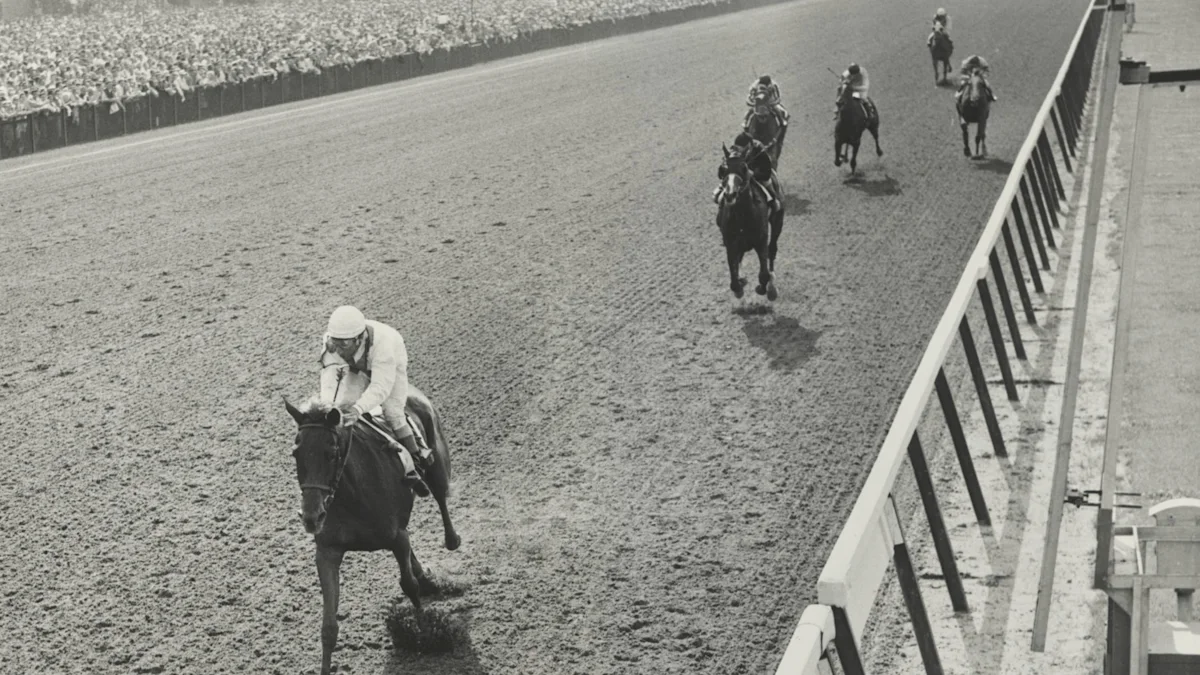
During the 1960 and 1961 racing seasons, American fans witnessed numerous equine stars, yet one standout from that era—Bowl of Flowers—has gradually faded from popular memory. This graceful yet tenacious chestnut filly was known for her explosive finishes, capturing major stakes races and two championships, achievements that secured her induction into the National Museum of Racing and Hall of Fame in 2004.
Despite her elegant name, Bowl of Flowers displayed fierce competitiveness on the track. Trainer Elliott Burch described her as overwhelming opponents when in full stride. She was the last champion bred and owned by Isabel Dodge Sloane, a prominent figure in American racing whose family founded the Dodge Brothers auto company. Sloane, having begun her involvement with steeplechase in the 1920s, bred and raced her horses at her Brookmeade farm in Virginia. Her notable success included the 1934 Kentucky Derby winner Cavalcade and the 1959 Horse of the Year Sword Dancer.
Bowl of Flowers was sired by Sailor, a stallion standing at Brookmeade known for speed, and out of Flower Bowl, a talented racemare with a notable lineage connected to Hollywood mogul Louis B. Mayer. Born in 1958 at Daniel W. Scott Farm in Kentucky, the filly was small but striking, impressing Burch with her combination of speed inherited from her sire and stamina from her dam.
Making her debut at Aqueduct in May 1960, Bowl of Flowers showed early promise despite a rough start, finishing a strong second. Under jockey Manny Ycaza, she broke a track record at Belmont Park later that spring, although the effort took a toll on her fragile ankles requiring rest. Returning in the fall, she triumphed in the Gardenia Stakes despite adversity during the race and followed up with a commanding victory in the Frizette Stakes, securing her juvenile filly championship.
Although there were hopes she could compete against colts in the 1961 Triple Crown races, her ankle issues prevented this, and she instead pursued the filly Triple Crown races in New York. She won the Acorn Stakes easily but narrowly lost the Mother Goose to the talented Funloving. Rebounding emphatically, Bowl of Flowers claimed the Coaching Club American Oaks but faltered in the Alabama Stakes due to illness. Later in the year, she reclaimed dominance by defeating Primonetta and Airman’s Guide in the Spinster Stakes, clinching her sophomore filly championship.
After an admirable third-place finish in the Roamer Handicap against top male horses, Bowl of Flowers suffered a career-ending leg fracture during winter training in Florida. Retiring with 10 wins from 16 starts and nearly $400,000 in earnings, she transitioned to broodmare duties but faced numerous reproductive challenges. Over sixteen years, she produced only six live foals, including Spruce Bouquet and Whiskey Road—the latter becoming a significant sire in Australia and passing on her legacy to future champions.
Unfortunately, after 1979, records of Bowl of Flowers vanish, and her final years and resting place remain unknown, unlike some of her contemporaries whose graves are marked and honored. While her memory may have been eclipsed by her half-brothers and even her own dam, Flower Bowl, who has a stakes race named after her, Bowl of Flowers’ remarkable racing exploits and genetic influence quietly endure.
Fan Take: Bowl of Flowers’ story is a poignant reminder of the incredible talent and heart often hidden within racing’s history, emphasizing the importance of preserving the legacies of all champions. For horse racing enthusiasts, revisiting her tale highlights the sport’s rich tapestry and the enduring impact of bloodlines on future generations, inspiring deeper appreciation for both past and future equine stars.
Source: sports.yahoo.com