

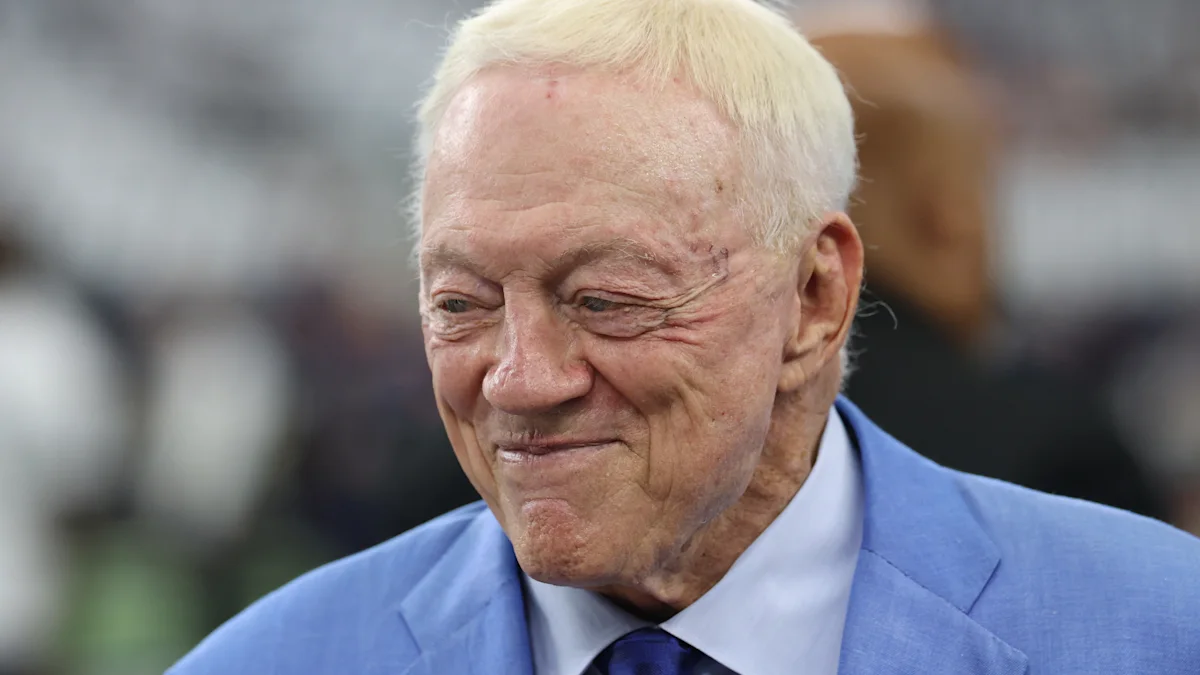
About a year and a half ago, the Dallas Cowboys followed a simple blueprint: rely on drafting and developing players from within the organization, sign and extend homegrown stars like Dak Prescott, CeeDee Lamb and DaRon Bland, and keep replenishing the roster through the draft to balance the costs of big contracts. If necessary, they would fill affordable gaps with free agents or trades, but the emphasis was clearly on building and sustaining a core from their own talent pool.
By early 2025, owner and general manager Jerry Jones’ frequent declarations that the team was “all in” rang hollow to some observers because the Cowboys’ actions didn’t always match that rhetoric. Unlike the bold, risk-embracing Jones of the 1990s, the franchise had seemed methodical and cautious — slow to hand out extensions and sometimes passive when it came to making decisive upgrades to a roster loaded with talent but prone to underperformance.
Jones had insisted he was open to moves that would push the team forward in the short term, and since May 2025 his roster decisions have backed up that claim. The Cowboys traded a third-round pick (and swapped a fifth and sixth) to the Pittsburgh Steelers for wideout George Pickens, a high-upside but volatile talent. In late August 2025, rather than extend Micah Parsons, Dallas shipped the three-time first-team All-Pro edge rusher to the Green Bay Packers in a deal that brought back defensive tackle Kenny Clark plus first-round picks in 2026 and 2027.
At last year’s trade deadline, Jones again surprised many by sending defensive tackle Mazi Smith, a 2026 second-round pick and a 2027 first-rounder to the New York Jets in exchange for Quinnen Williams — a blockbuster move on par with the 2018 deadline deal for Amari Cooper. The Cowboys later traded up in the 2026 draft to take safety Caleb Downs, and in August they swapped picks with the Steelers to acquire offensive tackle Broderick Jones. Most recently, when negotiations between Pittsburgh and cornerback Joey Porter Jr. stalled, Dallas sent a 2028 second-round pick and a 2027 sixth to obtain Porter; he played 25 defensive snaps (45%) in the Cowboys’ 34-30 win at Houston.
With the Nov. 10 trade deadline approaching and the Cowboys sitting at 2-2, there’s reason to think Jones might continue to be active. Dallas faces a manageable slate before the deadline — opponents with .500 records or worse in Tampa Bay, Green Bay, Philadelphia, Arizona and Indianapolis — and the division appears vulnerable due to injuries and transitions on rival teams. The offense remains potent while the defense shows steady improvement, and Jones is well aware that many of his starters will be free agents next spring, making the current window a key opportunity to contend.
Jones has been explicit about his willingness to make moves aimed at immediate gains rather than waiting years for payoff, saying the organization is open to transactions that push them into a better position now. With that stance, the Cowboys have shifted from talk to tangible roster changes that suggest a genuine appetite for upgrades.
Fan Take: This matters because Jerry Jones’ recent flurry of trades signals the Cowboys are serious about closing the gap between talent and results, not just preserving a core for the future. If Dallas keeps leaning into bold deadline moves, it could accelerate a trend of top franchises using trades aggressively to chase short-term championship windows, raising the stakes across the NFL.
Source: sports.yahoo.com