

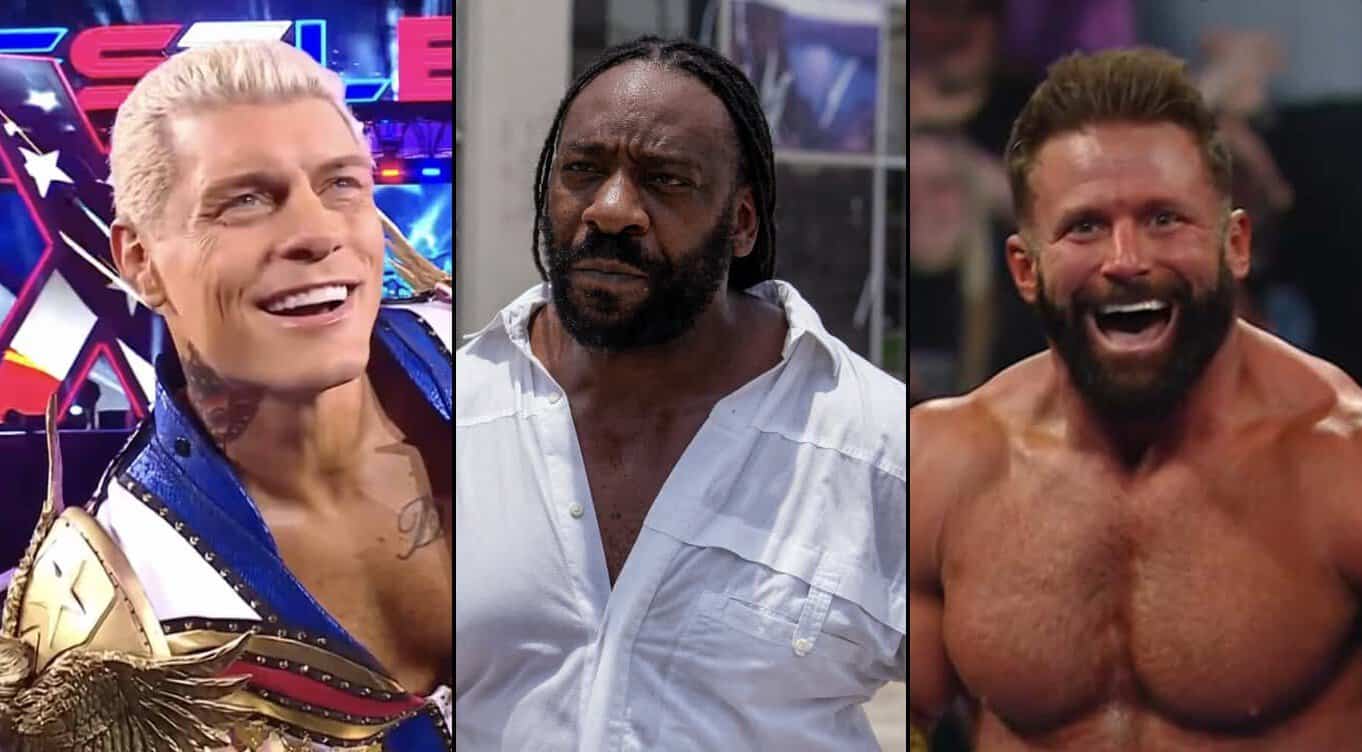
Booker T expressed that Cody Rhodes and Matt Cardona didn’t really mesh well with AEW because they are what he calls “entertainment wrestlers.” On a recent episode of The Hall of Fame with Brad Gilmore, the two-time WWE Hall of Famer explained that the founders of AEW have a different perspective on wrestling compared to veterans from his era.
He elaborated, saying, “It’s not meant as a criticism, but the younger talent behind AEW sees wrestling in a completely different way than guys like me, CM Punk, Undertaker, Stone Cold Steve Austin, The Rock, or Kurt Angle. Their approach to the sport is very distinct.” Booker pointed out that this difference in mindset is why some wrestlers, such as Matt Cardona, didn’t quite fit in when they joined AEW, simply because their style didn’t align.
When the host mentioned Cody Rhodes, Booker grouped him in the same category. “Cody is an entertainment wrestler as well,” he noted, “meaning their focus isn’t solely on in-ring matches.” Booker also referenced The Hurt Business, acknowledging their initial strong impact in AEW before their momentum cooled. He suggested AEW aims to reshape how fans experience wrestling, and while that’s a valid choice, it’s a different “flavor” or “menu” compared to other wrestling styles.
Rhodes co-founded AEW in 2019 and was an executive vice president before departing in February 2022. He made his WWE return at WrestleMania 38 and later defeated Roman Reigns to claim the Undisputed WWE Universal Championship at WrestleMania 40. Cardona had a brief AEW stint in 2020 following his WWE release. Meanwhile, MVP, Bobby Lashley, and Shelton Benjamin came together in AEW as The Hurt Syndicate in late 2024.
Looking ahead, Rhodes is set to face Randy Orton in a Last Man Standing match at WWE Crown Jewel on November 7 in Riyadh, Saudi Arabia.
Fan Take: This insight from Booker T highlights a deeper cultural and stylistic divide within the wrestling world, illustrating that AEW’s innovation isn’t just about fresh talent but also a fundamentally new philosophy toward the sport. For fighting fans, understanding these distinctions is crucial as it could shape wrestling’s future and how audiences connect with it across different promotions.
Source: wrestlingnews.co
