

I get a kick out of breaking down offensive ecosystems — how teams deploy personnel, turn concepts into mismatches and use schemes to gain an edge. Finding favorable offensive environments is also one of the best ways to spot fantasy value and identify players on the rise. After eight weeks, we can already see which offenses have improved since early season and which have worsened; I’ll focus on the improvers and briefly explain the slide of the fallers. To do that I use a simple composite metric.
Offensive Efficiency Score: I average each team’s rank across several measures of offensive performance — dropback EPA, rush EPA, points per drive, drive scoring rate, success rate and explosive play rate. The idea is to capture different ways teams attack (consistent movers vs. explosive-but-uneven teams) rather than favoring one style.
Biggest risers (Weeks 1–4 rank → Weeks 5–8 rank)
– Miami: 32 → 11 (up 21)
The Dolphins quietly look organized and well-coached, executing clean concepts. While they lack major star names, young pieces like boundary rookie Caleb Douglas, slot Malik Washington and especially RB Ollie Gordon have had impact moments. The run game has improved since Gordon took over; Miami is top-10 in yards per carry on gap runs and heavily leans on that approach. They also have a friendlier stretch of matchups coming up.
– New England: 22 → 3 (up 19)
After a brutal start against elite defenses, the Patriots’ offense has surged over the past month. Drake Maye has played at a very high level despite injuries and inconsistency among receiving options and an underwhelming run game. A Week 9 test vs. Green Bay will reveal how sustainable this recent play is and which young pass-catchers can carry fantasy relevance.
– Pittsburgh: 23 → 9 (up 14)
The Steelers were bottom-two in Weeks 1–2 but have consistently finished between fourth and 18th since, with multiple top-eight weeks. They’ve embraced a bully, run-first identity — using jumbo personnel a lot, slowing the tempo, and getting under center more — which has unleashed Jaylen Warren. Pittsburgh ranks first in rushing EPA in this stretch; the passing game under Aaron Rodgers is less efficient but the quick game and tight-end usage provide steady production.
– Washington: 28 → 14 (up 14)
Washington has been solidly mid-tier in the recent window. With Jayden Daniels healthy, the unit’s ceiling may not be huge, but the baseline is dependable, making heavily involved players reasonable flex options in favorable matchups. Rookie Antonio Williams led the team in routes last week and could get a post-bye boost.
– NY Jets: 18 → 5 (up 13)
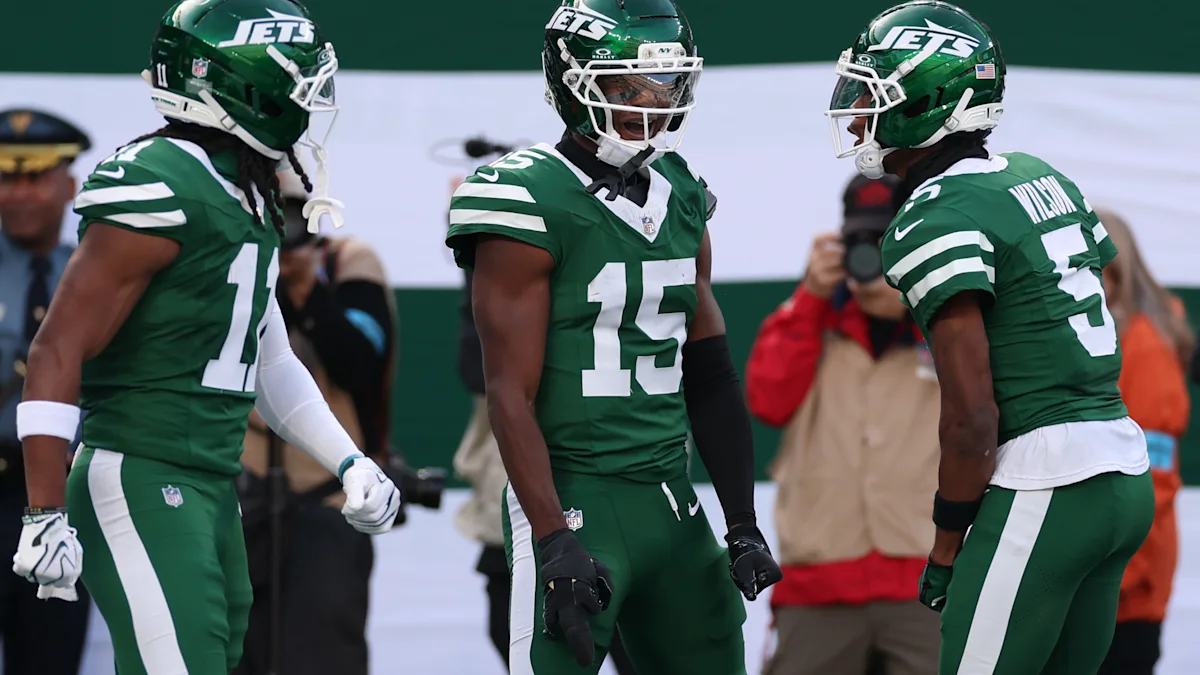
The Jets have dramatically improved from 31st in 2025 to a top-11 offense this year and have played even better recently with Braelon Allen and rookie Omar Cooper Jr. breaking out. Fantasy value is complicated by volume distribution: Cooper, Garrett Wilson and AD Mitchell form a three-deep WR group, the TEs split looks, and there are multiple backs once Breece Hall returns. With a suspect defense, the offense should get plenty of scoring chances — you just need to pick the right matchups.
– Houston: 19 → 7 (up 12)
The Texans have posted several top-seven weekly finishes. C.J. Stroud’s play covers up structural frustrations at times, but the roster would benefit from leaning more into the pass given Stroud’s talent and receiver depth. Houston’s pass rate over expected jumped in Weeks 4–6 but dipped in Week 7; how they attack after the bye will be instructive about play-calling philosophy.
– Green Bay: 27 → 18 (up 9)
Green Bay’s split is stark — about 11th in dropback EPA but 31st in rushing — one of the largest gaps in the league. The run game and offensive-line play look like the main problems; Josh Jacobs alone won’t fix that. Expect the Packers to stay pass-first, which should keep their offensive efficiency respectable if they continue to exploit the passing game.
– Tampa Bay: 29 → 20 (up 9)
Tampa Bay has leaned into the run and it’s paid off: over the last four weeks they’re among the league leaders in explosive rushing rate. Baker Mayfield has been extremely low-volume in recent wins, and Bucky Irving has been a strong fantasy bargain thanks to the line’s improved performance on gap runs.
– Tennessee: 31 → 23 (up 8)
Cam Ward’s career-best outing helped spike Tennessee’s rankings; otherwise they’ve been more middle-of-the-pack. They ran a no-huddle on a huge share of plays in Week 8, and a spread, high-pass-rate approach seems to suit Ward — that could be repeatable if they keep that identity.
Biggest fallers (Weeks 1–4 rank → Weeks 5–8 rank)
– Baltimore: 3 → 28 (down 25)
The Ravens were on pace for an elite offense before Lamar Jackson’s injury derailed them; his absence — and the loss of backup Tyler Huntley — has been catastrophic. Baltimore acquired Jacoby Brissett, who knows the staff and should stabilize things enough to avoid absolute disaster, but the unit is a long way from its early-season form.
– New Orleans: 11 → 31 (down 20)
The Saints’ drop correlates directly with the loss of left tackle Kelvin Banks; the offense has suffered badly without him. Banks has returned to practice, which could help, and New Orleans also needs Travis Etienne Jr. to return to the form they expected when they signed him — the current backfield corps hasn’t been effective.
– Carolina: 9 → 24 (down 15)
Injuries on the offensive line have sapped a team that looked fun in September. Without healthier o-line play, replicating that early success against quality opponents looks unlikely.
– Atlanta: 14 → 27 (down 13)
One game in a literal monsoon (Week 8 in Tampa) unfairly drags Atlanta’s metrics down; outside of that disaster they’ve generally been mid-teen in efficiency. They’re an average offense with the ability to spike because of talent like Drake London and Bijan Robinson.
– Kansas City: 4 → 16 (down 12)
Two tough games against the Seahawks and Broncos have exposed weaknesses: if you limit KC’s explosive run game, their passing attack is vulnerable on stout defenses. The Chiefs need to upgrade their receiving corps — likely via trade — or risk further setbacks.
– Chicago: 8 → 19 (down 11)
This decline is largely driven by one awful outing (Week 5) with Tyson Bagent; with Caleb Williams back, the Bears have gone 13th, seventh and fifth in his three starts and look like one of the league’s better offenses. The Week 5 anomaly skews the short-window ranking.
– Seattle: 16 → 25 (down 9)
There isn’t a single obvious reason for Seattle’s slide — it’s a compound problem. The offensive line has been uneven (hopes pinned on Quenton Nelson settling in), the run game needs more explosiveness from Jadarian Price, Sam Darnold hasn’t been effective and now faces injury, and the lack of a true secondary receiving threat beyond Jaxon Smith-Njigba makes defenses game-plan more easily. Even if they correct a couple issues, they may still be only average.
– Indianapolis: 17 → 26 (down 9)
The Colts have essentially conceded the season and are acting like it. If veterans such as Jonathan Taylor (and possibly Josh Downs) are moved before the trade deadline, Indianapolis could be left with one of the thinnest offensive rosters in football, and fantasy upside will be scarce.
Fan Take (two sentences)
These midseason offensive swings matter because they change who’s worth rostering and how teams should be evaluated moving forward — young breakouts and schematic shifts are where fantasy edges are found. For NFL fans, emergent offenses and the fallout from injuries/trades shape narratives and can alter playoff trajectories, making the next few weeks crucial to watch.
Source: sports.yahoo.com
