

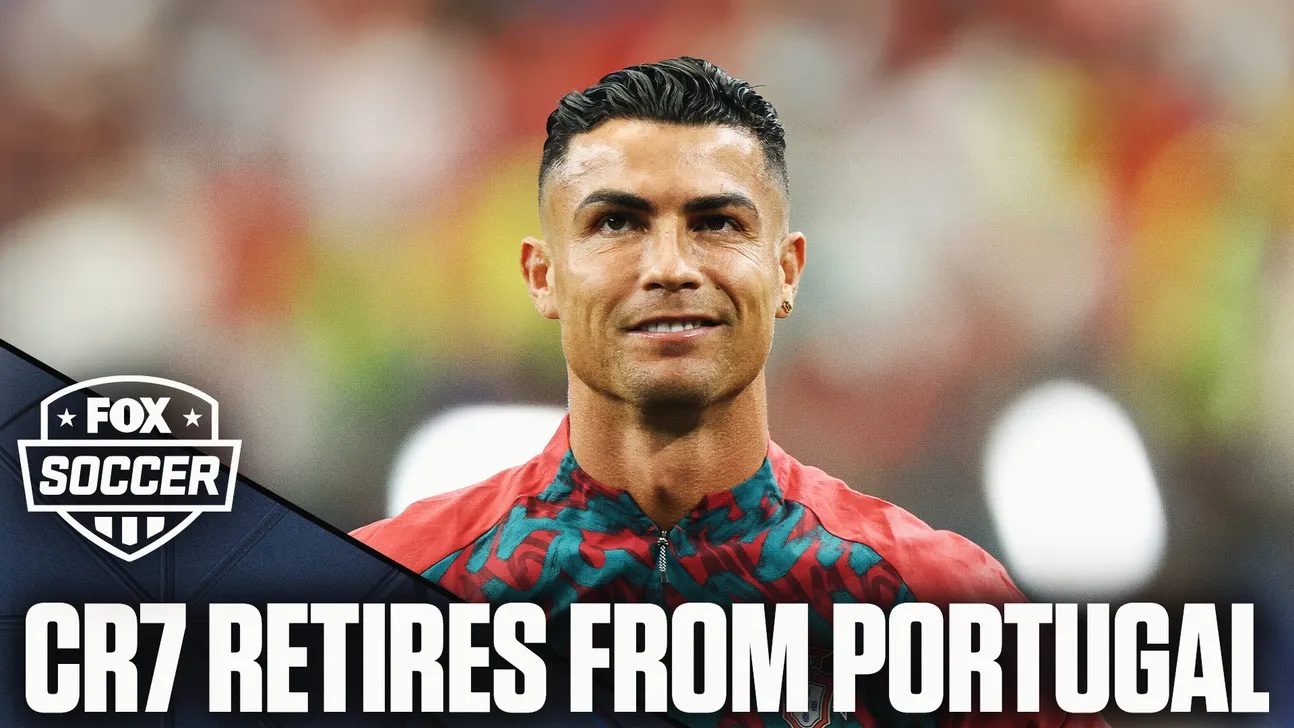
By the age of 12, Cristiano Ronaldo had packed his bags, leaving behind his home in Madeira for a new life in Lisbon, Portugal. Growing up as one of four siblings to a mother who worked as a cleaner and a father who was a war veteran battling alcoholism, Ronaldo was stepping into the unknown.
Upon arriving at Sporting CP’s youth academy, he encountered significant challenges. He struggled academically and even faced expulsion for throwing a chair at a teacher. After much convincing, he persuaded his mother and his coach to let him focus solely on football, a risky choice that could have changed his life forever.
Ronaldo himself has mentioned that, without his football journey, he might have ended up as a fisherman in his hometown. At 15, he was diagnosed with tachycardia, a heart condition that necessitated surgery. Though it was a frightening experience, he ultimately recovered fully, marking the beginning of his storied career.
It’s worth noting that “Ronaldo” isn’t actually his last name; it’s Dos Santos Aveiro. His father chose the name in homage to former U.S. President Ronald Reagan.
Ronaldo’s footballing excellence is both awe-inspiring and daunting. His tireless pursuit of perfection has been both his strength and weakness. While Lionel Messi’s talent often captured fans through a more subtle approach, Ronaldo has been defined by his relentless physical prowess and discipline. His intense training regimen and strict diet may seem extreme, but they contributed to his remarkable 23-year international career.
In my view, Ronaldo stands as the greatest scorer in men’s football history, which is an incredibly challenging feat. He has netted 146 goals for Portugal, each one significant—notably, even from penalty kicks. This is why his celebrated “SIUUUU” moment—an exuberant expression of triumph—reverberates through stadiums worldwide. It represents a declaration of his dominance.
His remarkable career span deserves respect. When he played in his first European Championship, Lamine Yamal was just a toddler. He is the only player to have represented his country in six European Championships, leading Portugal to victory in 2016 against France.
With six World Cups under his belt alongside Messi and Guillermo Ochoa—both of whom joined him in this milestone—Ronaldo scored 25 goals across these two prestigious competitions, a record unmatched by any other player. Notably, since 2004, he has scored at least once for Portugal for 23 consecutive years, amassing a record 234 international appearances as he continues to chase the milestone of 1,000 goals while playing for Al-Nassr.
These statistics are extraordinary.
Nevertheless, the five-time Ballon d’Or winner will retire without having clinched a World Cup, a haunting absence in his otherwise stellar legacy. An altercation with the national team manager and a lengthy social media post underscored his struggle to accept the aging process and fading powers. In many ways, his egotistical nature has also been a double-edged sword.
This is what ultimately defines Ronaldo. His relentless drive for goals has sculpted an extraordinary career, making him an icon in the sport. Goalscorers need a touch of egotism to thrive, and no one exemplifies that better than Ronaldo.
In closing, Cristiano Ronaldo exits from Portugal as its greatest player, standing shoulder to shoulder with Messi as candidates for the title of the sport’s all-time greatest. We’ve had the privilege of witnessing one of football’s greatest rivalries, possibly the greatest in all sports.
Cristiano Ronaldo, the boy from Madeira who learned to control his racing heart, has finally decided it’s time to slow down and step away from the international scene.
### Fan Take:
Ronaldo’s retirement marks the end of an era, leaving soccer fans reflecting on the beautiful game’s evolution. As one of the sport’s defining figures, his departure opens the door for a new generation of talent while solidifying his legacy as one of the game’s all-time legends.
Source: www.foxsports.com
