

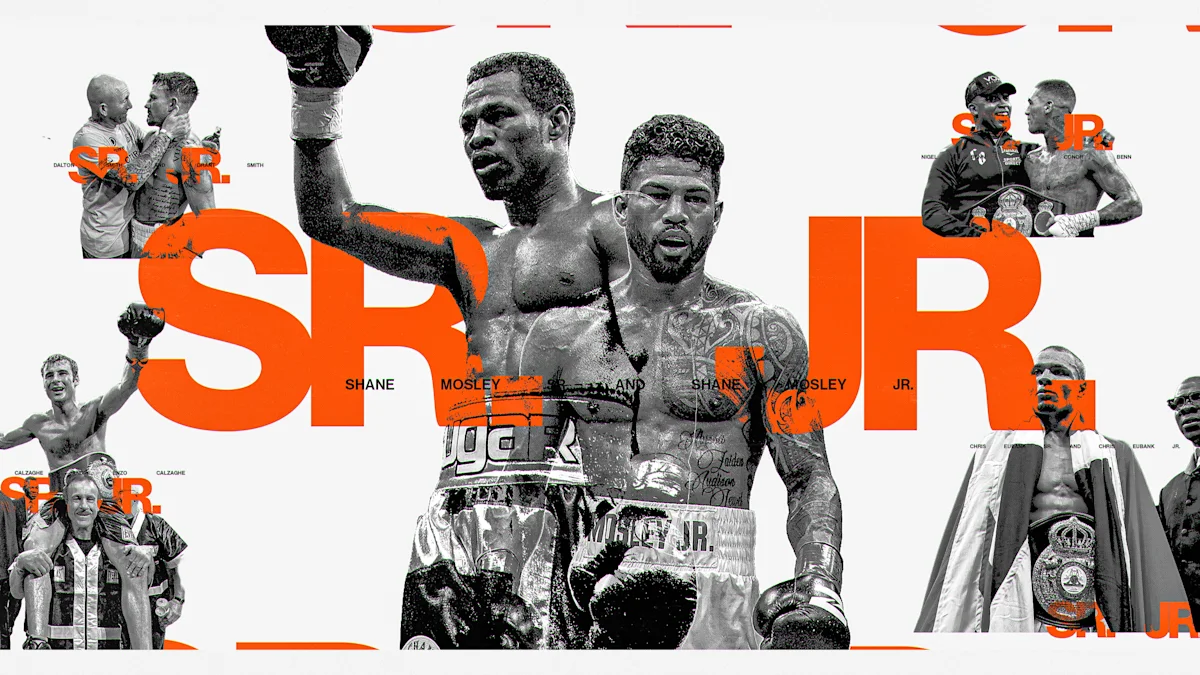
Before stepping into the ring to face Antonio Margarito in January 2009, “Sugar” Shane Mosley took a moment to check on his son, Shane Jr., calming both their nerves. “Do you see my eyes?” Mosley asked, to which Shane Jr. responded affirmatively. Mosley then told his son that this was the look of a fighter walking to the ring, promising he would knock Margarito out. Without a farewell or kiss, Mosley turned and walked away, showing Shane Jr. the fierce side of a fighter, not a father—a switch Shane Jr. understood well by age 18, choosing instead to watch quietly.
Fast forward nearly 18 years, and the roles have reversed: now Shane Jr., preparing for a middleweight bout against Denzel Bentley in London, tries to calm his legendary father’s nerves. At 35, Shane Jr. creates what they call a “healthy distance” between them, the sort of space a fighter needs to think, jab, and maneuver — signaling that rather than drifting apart, the two have matured together. Shane Jr. explains how early in his career he was heavily reliant on his father, who was his trainer, manager, and promoter, but to forge his own identity and avoid the label of riding on his father’s fame, he stepped back from that dynamic. He refuses to be known as “Sugar” Shane Mosley Jr., insisting on building his own legacy.
Their closeness in the ring was once unmistakable, with Shane Jr. spending nearly every day alongside his father during training and sharing moments between rounds on fight night. He cherishes keeping his dad as a dad—not as “Sugar” Shane—because living in his father’s shadow would limit his potential. He acknowledges others like Chris Eubank Jr., Conor Benn, and the Tszyu brothers who face similar struggles balancing family ties and personal success.
Watching these fighters navigate this complex relationship offers comfort and understanding that the path for children of boxing greats is rarely straightforward. Shane Jr., with a professional record of 23 wins and five losses, views boxing as a journey of self-discovery shaped by both victories and defeats.
The article also explores Chris Eubank Sr. and Jr.’s complicated relationship, highlighting moments of subtle power struggles and unconditional support. Eubank Sr. is fiercely protective and involved, believing his tough love is necessary to prepare his son for the brutal realities of boxing, despite criticism that his presence might overshadow or hinder Chris Jr. Eubank’s deep desire not to be absent like his own father led him to be intensely present in his son’s life and career.
Unlike the Mosleys and Eubanks, Dalton Smith and his father, Grant, appear to have found a healthy balance, with Grant avoiding excess media attention. Their professional and personal relationship offers mutual respect and communication in its own unique way, using boxing as a medium to bond. Similarly, heavyweight champion Daniel Dubois appreciates his father Dave’s motivational presence, which helps him recover from setbacks during fights.
The bond between father and son can be impactful in motivating fighters, as seen with Joe Calzaghe and his father/trainer Enzo. Despite sometimes heated exchanges—including a near walkout before a major bout—Enzo’s relentless belief and tough approach helped guide Joe to one of his defining career victories in 2006.
In 2004, Shane Mosley made headlines by announcing a professional split from his father and longtime trainer Jack Mosley, seeking a fresh approach after a series of defeats. Jack accepted the decision, emphasizing that their father-son bond would remain intact despite the change. Shane Jr. witnessed this difficult period and recognizes firsthand how boxing can strain family relationships when boundaries aren’t maintained, striving now to separate personal and professional aspects with his own father.
Now, Shane Jr. faces the challenge of raising his own son within boxing, determined to avoid imposing the same pressures he experienced. Although his 13-year-old trains alongside him, Shane Jr. prefers to have others coach his son to allow him to develop his own style and passion without undue pressure. He acknowledges how supporting his son would be a vital step in nurturing talent and combating the isolation often felt in the sport.
Reflecting on his father’s words from that pivotal 2009 fight night, Shane Jr. recalls the powerful lesson of focus and determination—an unspoken legacy passed from one generation to the next, demonstrating how support and independence can coexist in the world of boxing.
Fan Take:
This story highlights the intricate balance between family ties and personal ambition in boxing, showing how legendary fighters and their children navigate the pressures of legacy. For fight fans, it underscores the evolving dynamic in the sport, reminding us that behind every fighter is a deeply personal journey shaped by mentorship, love, and the quest to define oneself—even when carrying a famous name.
Source: sports.yahoo.com
