

With the NFL trade deadline approaching on Tuesday, every front office is weighing the worth of their upcoming draft picks against the players available to acquire now.
That calculation is a familiar annual dilemma, but this year feels different because the 2027 draft — once hyped in the spring — hasn’t lived up to expectations so far. A longtime draft and QB evaluator speaking anonymously said the early returns on the class have been underwhelming. Much of the disappointment stems from how the first half of the 2026 college season has tempered enthusiasm about the quarterback crop, and that quarterback talk tends to color views of the whole class.
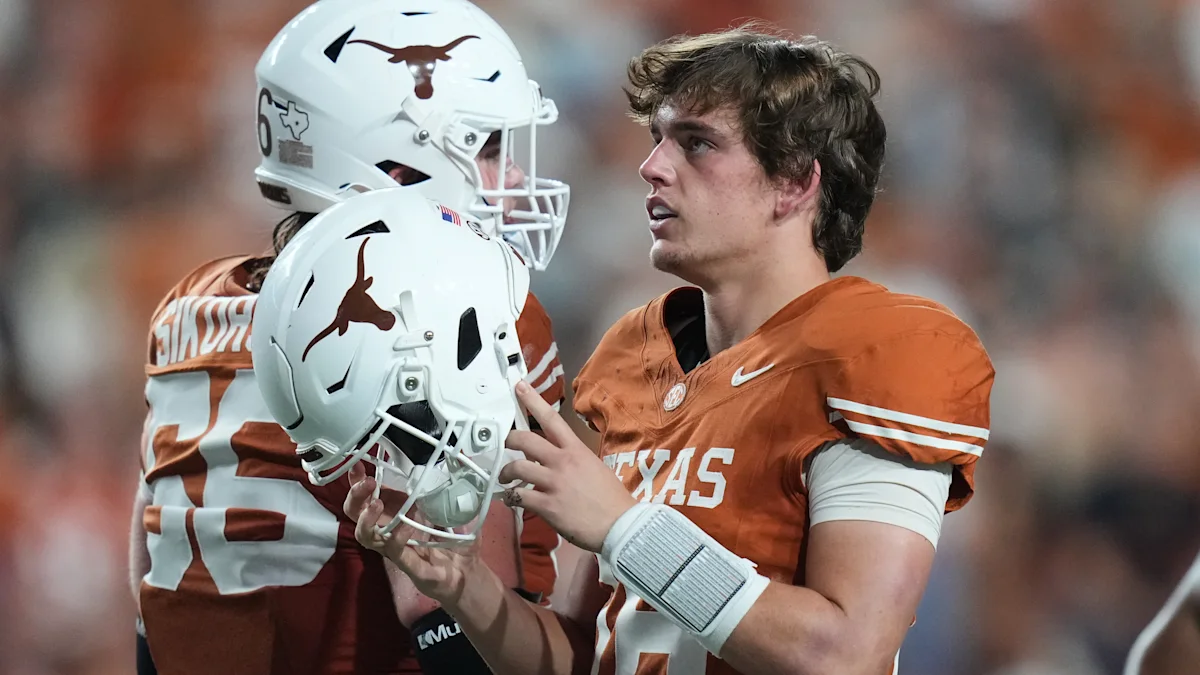
(IMAGE CAPTION: Texas QB Arch Manning’s uneven play this season has raised questions about his NFL draft prospects.)
Back in April, many clubs were reluctant to trade away 2027 picks because of the buzz around potential first-round quarterbacks. If that hype has faded, some teams may be more willing to deal those picks for players who can help now. Front-office philosophies will vary, but several league sources acknowledge that some prospects have lost sheen, and that perception could push teams to pursue proven players at the deadline rather than gamble on the draft delivering at certain positions.
Although evaluations are still evolving in early November, one senior AFC executive said teams can already map where the draft looks deep and where it’s thin — even if individual grades aren’t finalized. Teams use medicals, background info and early scouting to decide whether they can realistically address a need in the draft or should instead trade now to fill it. “You try to use all that information to piece together the plan,” the executive said.
How will scouts and executives be thinking? Here’s what Yahoo Sports heard.
As QB evaluations shift, are people overreacting?
Scouts and executives from several teams painted a mixed picture. Representatives from two AFC clubs and one high-ranking NFC executive said they no longer view the 2027 draft with the same optimism they had over the summer, largely because of doubts about the quarterback group. One AFC evaluator admitted he got caught up in the early hype and now feels the class isn’t as deep as expected — there are some standout players, but depth and consistency have disappointed.
Another AFC evaluator suggested most drafts are broadly similar in talent, but perceptions hinge on elite players at premium positions (QB, receiver, edge, OT). This year, he said, evaluations around receivers, edge rushers and quarterbacks feel shakier, which could push teams to acquire controllable veterans rather than gamble. An NFC executive pointed to teams like the Texans using that logic when targeting high-end talent.
Specific QB questions abound: Is Mississippi’s Trinidad Chambliss physically suited for the NFL? Has Miami’s Darian Mensah faced sufficient competition to project well? Are college defensive coordinators doing a better job of containing college quarterbacks? Two of the biggest uncertainties are Texas’ Arch Manning and Oregon’s Dante Moore — Manning’s inconsistency and Moore’s early-season concussion cast doubt on readiness and the timing of turning pro. Evaluators are split on whether a transfer would help Manning or further complicate his evaluation; Moore could benefit from better health and more starts.
Despite the unevenness, several QBs and other prospects still look like first-round talents — Oklahoma State’s Drew Mestemaker has risen, and evaluators also flagged Notre Dame’s CJ Carr, Mensah, Chambliss, Missouri’s Austin Simmons and playmakers such as Ohio State receiver Jeremiah Smith. A pair of senior executives said the draft likely has more top-tier talent beyond quarterbacks than last year, but then falls off, leaving the middle tiers thinner.
One AFC executive argued that the conversation about the draft is being driven too much by quarterbacks, with people first overhyping the class and now swinging too far the other way. Even removing QBs from the equation, he said, there are still some truly elite players in this draft.
Two frameworks that will shape how teams value picks at the deadline
Executives differ on how much the forthcoming draft should influence trade-deadline decisions. Some see roster-building as a continuous, multiyear process that blends trades, free agency and the draft. Others treat deadline moves as win-now gambles that should be driven primarily by this season’s outlook.
A league source grouped teams into three types: those effectively rebuilding and focused on next year, those who can reach the playoffs but aren’t true contenders, and bona fide contenders with high ceilings. Expect top contenders such as Buffalo, Kansas City and Chicago to be buyers, while clubs like Minnesota, Pittsburgh and Seattle may make targeted moves to patch weaknesses. Meanwhile, rebuilding teams — examples given included Indianapolis, Tennessee and possibly Las Vegas — are more likely to hoard picks and assets.
Still, every team can make a case for a trade based on its specific situation, one high-ranking AFC executive said. Players who can help beyond this season will attract interest across the standings, but expensive acquisitions at depreciating positions make less sense for teams not contending. Mid-round picks are generally viewed as expendable and easier to trade than first-rounders; teams near the top of the draft pecking order are less likely to part with firsts.
The most common pitfall is misreading where a franchise is in its competitive cycle; trades fail when teams overestimate how close they are to contention. Past examples cited include big trades that didn’t pan out and more judicious moves that did. The teams that succeed, scouts say, are those that understand their phase and use trades to complement a coherent, multiyear plan rather than make one-off gambles.
Fan take:
This matters because how teams value future picks versus immediate upgrades will shape roster construction for years to come — the deadline could remake contenders or accelerate rebuilds. For fans, that means the next few days might determine whether their team goes all-in for 2026 success or bets on the draft to build a sustainable contender.
Source: sports.yahoo.com
