
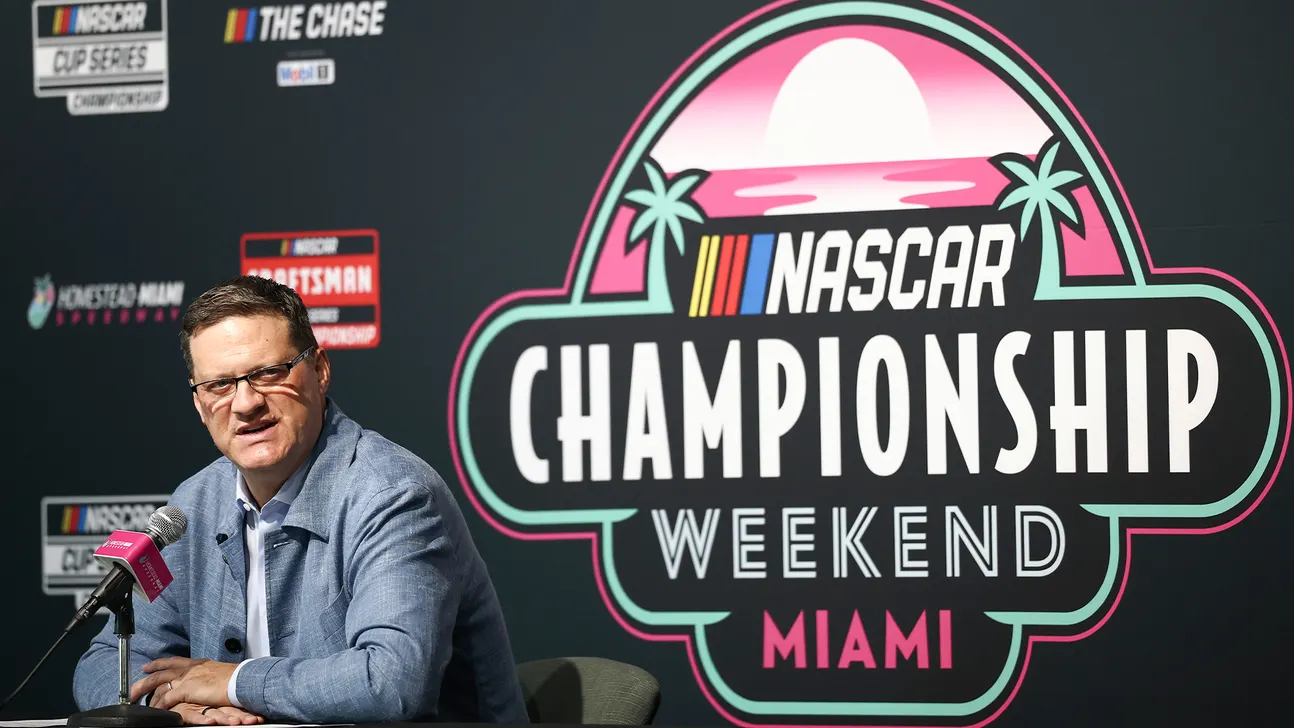
At Homestead-Miami Speedway in Florida, Steve O’Donnell, the newly appointed NASCAR CEO, shared his perspective on the current state of NASCAR during a recent press conference. While acknowledging the sport’s positive momentum, including a 5% increase in race attendance and a 34% surge in social media engagement, O’Donnell emphasized there is still work to be done, particularly in making NASCAR easier to follow and better at sharing the stories behind its drivers and teams.
O’Donnell, who has decades of experience with NASCAR and stepped into the CEO role in April, discussed several key topics:
Scheduling: NASCAR is exploring new markets both domestically and internationally but has no new announcements at this time. The initiative to hold an annual race on a military base, a concept supported broadly, will continue with a return to Naval Base Coronado in 2027 and a new base planned for 2028. Domestically, NASCAR aims to grow its fan base through social media and possibly new races in strategic locations. International expansion will be approached cautiously to ensure lasting connections, new sponsors, and fan development rather than short-term appearances.
The Car: Fan surveys indicate general satisfaction with the current racing vehicles, including the criticized short-track package. NASCAR is comfortable with the aerodynamic setup of the Next Gen car and will not conduct testing at Daytona next January. The series prefers making adjustments to the existing car over developing an entirely new version, and while increasing horsepower on certain tracks is under consideration, no decisions have been finalized. O’Donnell said the organization is constantly evolving to improve the product.
Driver Safety: In light of findings that NASCAR Hall of Famer Fred Lorenzen had chronic traumatic encephalopathy (CTE), O’Donnell addressed NASCAR’s ongoing commitment to driver health and concussion research. He reaffirmed that safety has long been a priority in the sport, with ongoing studies and partnerships with medical institutions like Wake Forest University. NASCAR’s medical team remains deeply involved in monitoring and managing the risks associated with the sport.
Fan Take: For NASCAR fans, O’Donnell’s remarks underscore a commitment to both growth and tradition—balancing innovative scheduling and international outreach with a focus on fan engagement and safety. This approach suggests NASCAR is aiming to preserve the core excitement of racing while evolving thoughtfully to appeal to new generations and ensure the well-being of its drivers, which is critical for the sport’s future success.
Source: www.foxsports.com