
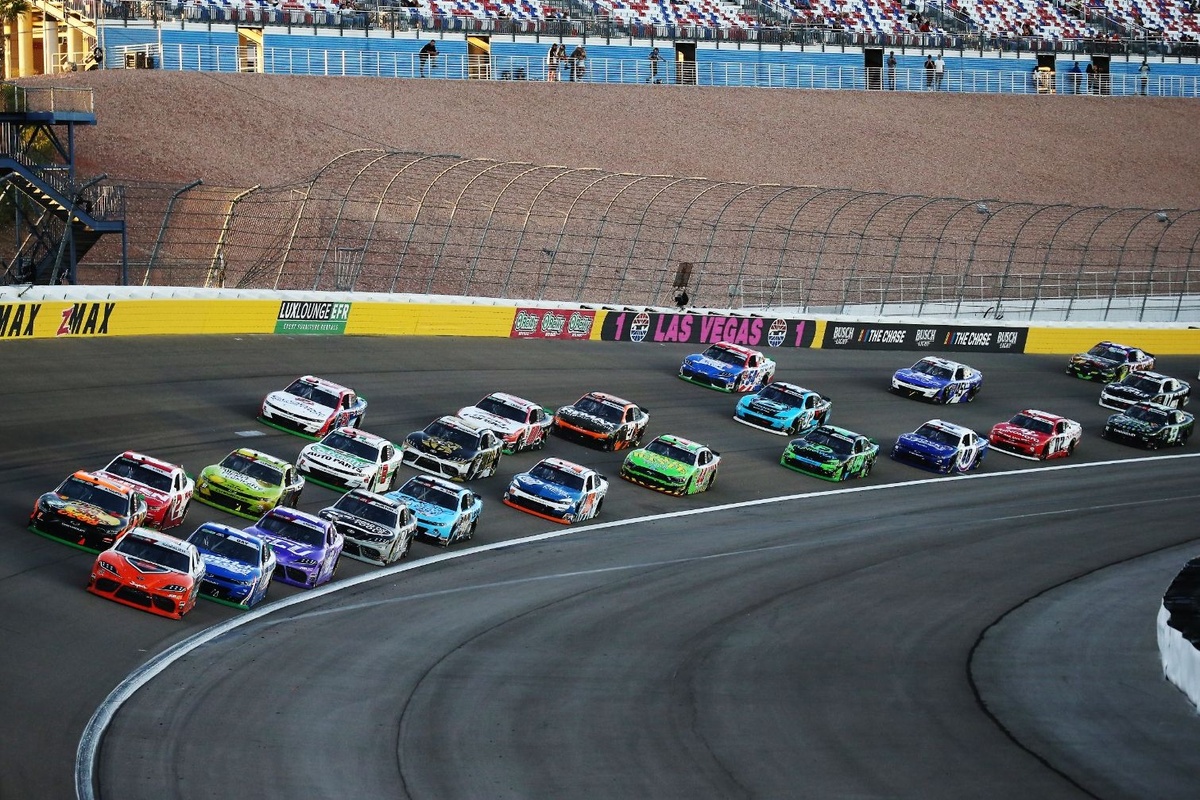
What does the future hold for the NASCAR O’Reilly Auto Parts car? Since its debut in 2011, this chassis has been a staple, but NASCAR has indicated plans to eventually introduce a vehicle similar to the Next Gen Cup car for its highly popular secondary racing series.
During a recent state of the sport update, NASCAR CEO Steve O’Donnell addressed this topic, stating, “You’ve identified a clear challenge and opportunity regarding what we want racing to look like in that series moving forward. John [Probst] and his team are assessing the availability and longevity of parts, and determining the best approach for an affordable model that supports car owners, drivers, and ultimately helps expand our fan base.” He added that a lot of work and investment have gone into this effort over the past two years, including discussions with the teams, but no final decision has been made yet.
Dale Earnhardt Jr., who owns a five-car NASCAR O’Reilly team, shared his perspective in response to O’Donnell’s remarks on social media. He proposed maintaining the current car’s framework but updating it with new components produced by NASCAR-approved manufacturers. He explained, “The NASCAR Cup car’s foundation is based on a mid-1960s Chevrolet Chevelle front and a mid-1960s pickup truck rear suspension, technology honed over decades by NASCAR teams. We should keep these core concepts like mounting points intact and have designated companies supply all parts such as trailing arms, control arms, and spindles.” Earnhardt Jr. suggested phasing in these parts over five years to continue racing a car deeply loved by fans.
He also mentioned that the Truck Series could adopt these parts, which could cascade down to ARCA and Late Model Stock levels. This would serve as a cost-effective solution for teams and help manufacturers by creating a market for these components throughout the broader stock car racing community. However, he expressed concern that the sport might struggle to find a way to adapt the current Next Gen Cup car parts for use in lower series, which could create challenges for the industry’s traditional parts pipeline and that convincing NASCAR to retain the current O’Reilly car architecture long-term might be difficult.
Fan Take:
This discussion is crucial for NASCAR fans as it highlights the balancing act between innovation and tradition in the sport’s future. How NASCAR manages the evolution of their cars will impact not only competition costs but also the connection fans feel to the vehicles they’ve followed for over a decade.
Source: www.motorsport.com