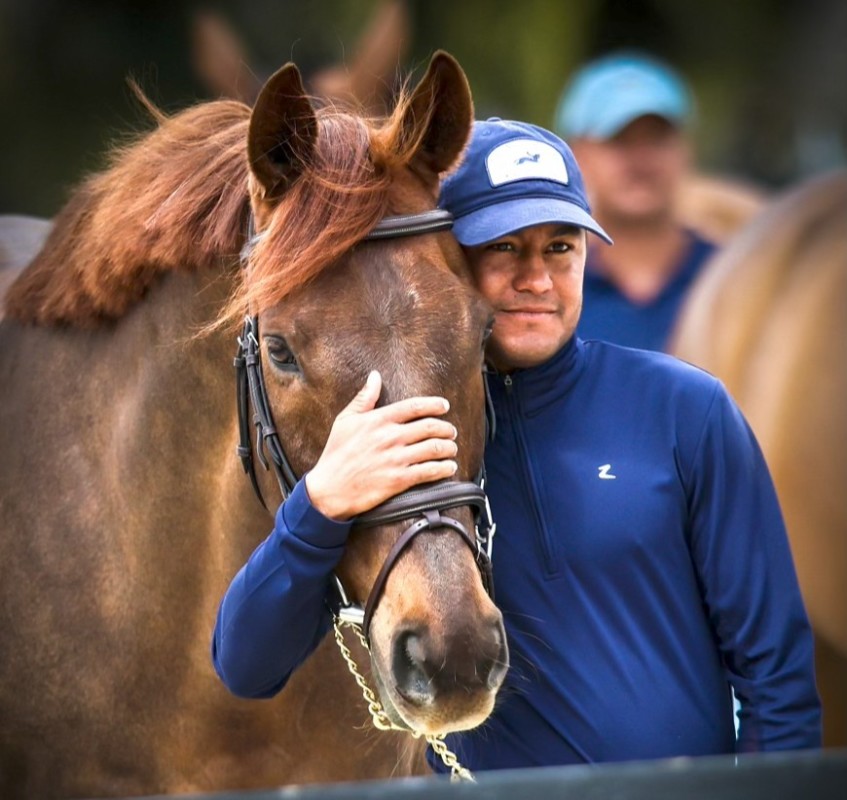
Every time Michelle Feitosa and her partner Niven step into the spotlight at international show jumping events, the 13-year-old maroon gelding, a thoroughbred descended from Lemon Drop Kid, stands out as the only thoroughbred in the competition. Feitosa, 32, acknowledges that many are surprised to learn Niven is a thoroughbred, but she trusts him completely for jumping high and challenging courses.
In the past, American show jumping was dominated by thoroughbreds such as Touch of Class, an individual gold medalist from the 1984 Los Angeles Olympics, and Hall of Fame horses like Idle Dice and Jet Run. Feitosa believes thoroughbreds still have a place at the top levels of show jumping, especially with horses like Niven (sometimes called “Evenbetter”), who didn’t excel in early race training but has shown remarkable jumping talent and a calm temperament.
With the 2028 Olympics set to feature equestrian events at Santa Anita Park in Southern California, it’s intriguing to imagine thoroughbreds soaring over big jumps near the San Gabriel Mountains. Although Feitosa and Niven have several steps ahead, they aim to represent Brazil in the prestigious Nations Cup in Wellington, Florida, with jumps up to 1.55 meters high in this edition. Competition for team spots is intense, as only four horse-rider pairs can represent each country, and Feitosa will be competing alongside Rodrigo Pessoa, a celebrated show jumper.
Feitosa explains that while Olympic selection emphasizes consistent performance over months, the Nations Cup focuses more on readiness at the event itself. This will be Niven’s first time on a Nations Cup team, but Feitosa is confident in his potential. Over the next few months in Wellington, Feitosa plans to showcase Niven in FEI-sanctioned Grand Prix events to gain the attention of Nations Cup coaches.
Niven, bred in Kentucky by Peter Blum and sold as a yearling for $190,000, initially showed no promise as a racehorse, leading to his early career being cut short. After going through several owners and riding homes, mostly with juniors and amateurs, Niven caught the attention of Feitosa’s wife Amanda through a Facebook video of his jumping ability. Feitosa and Amanda quickly grew fond of the horse, deciding to keep him longer than initially planned.
Feitosa, who grew up in a humble background in Santos, Brazil, has limited experience with thoroughbreds but fell in love with horses through hard work and perseverance. He honed his skills training young horses in Brazil and later worked with Olympic gold medalist Rodrigo Pessoa in the U.S. Starting with Niven, he’s been impressed by how well thoroughbreds can jump even after warmbloods have become the trend in show jumping.
Despite some early setbacks, Niven has shown steady improvement in international jumping classes, impressing Feitosa who considers him one of the best horses he has ridden. Although the horse’s prime years might have been earlier, Feitosa treasures Niven’s soundness and character, and the duo looks forward to competing at high levels, possibly through the 2028 Olympics.
Fan Take: This story is a heartening reminder of the tough, often underappreciated thoroughbreds making their mark in show jumping, a field now dominated by warmbloods. It highlights how versatility and determination can redefine a thoroughbred’s role beyond racing, potentially inspiring a broader appreciation and new opportunities for these remarkable horses within equestrian sports.