Video assistant referees (VAR) generate debate in the Premier League weekly. This season, we’ll analyze significant incidents and clarify the decision-making process, focusing on VAR protocols and the game’s regulations.
All images credit: NBC
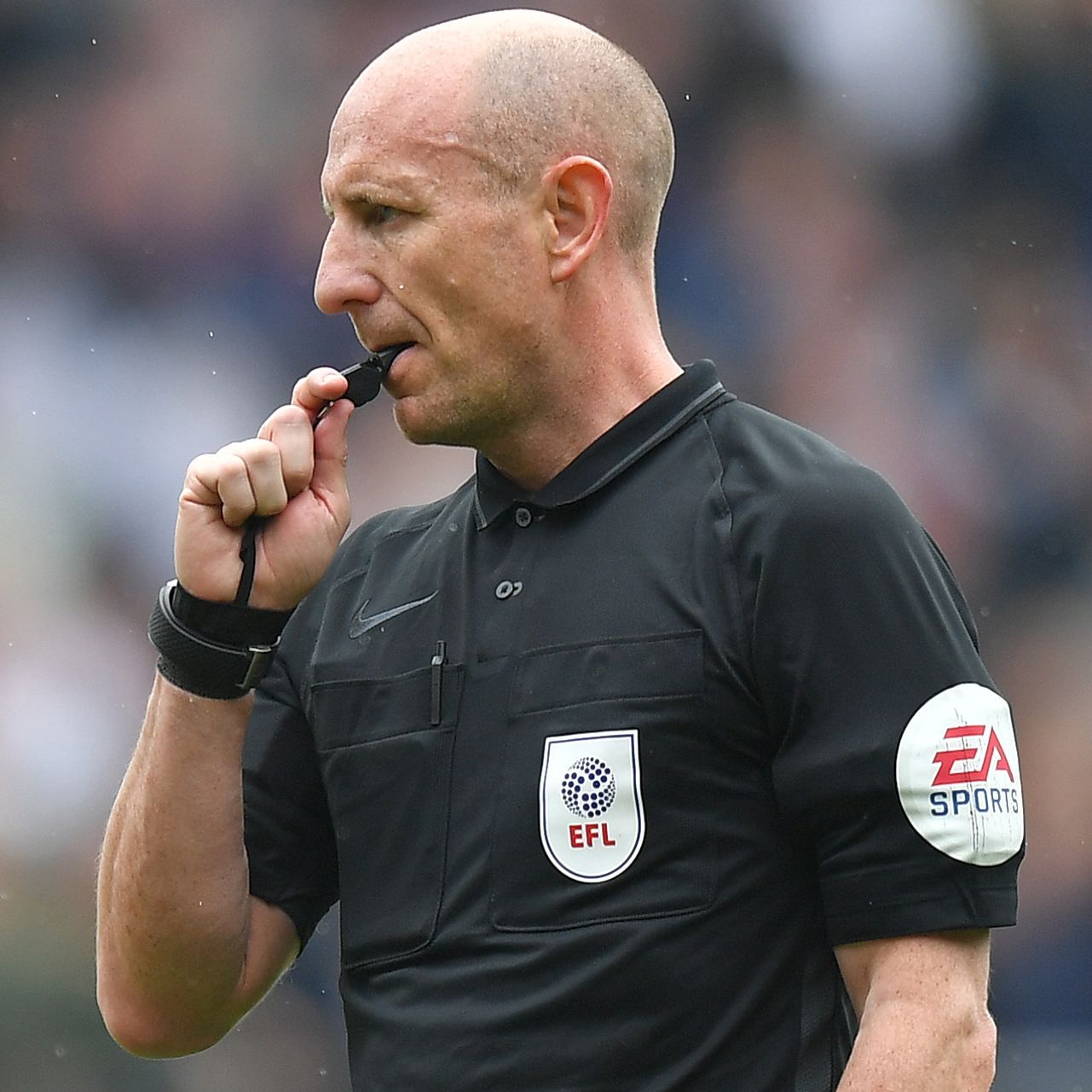 Andy Davies (@andydaviesref), a former Select Group referee with over 12 seasons of experience in the Premier League and Championship, offers insights into VAR operations during matches.
Referee: Anthony Taylor
VAR: John Brooks
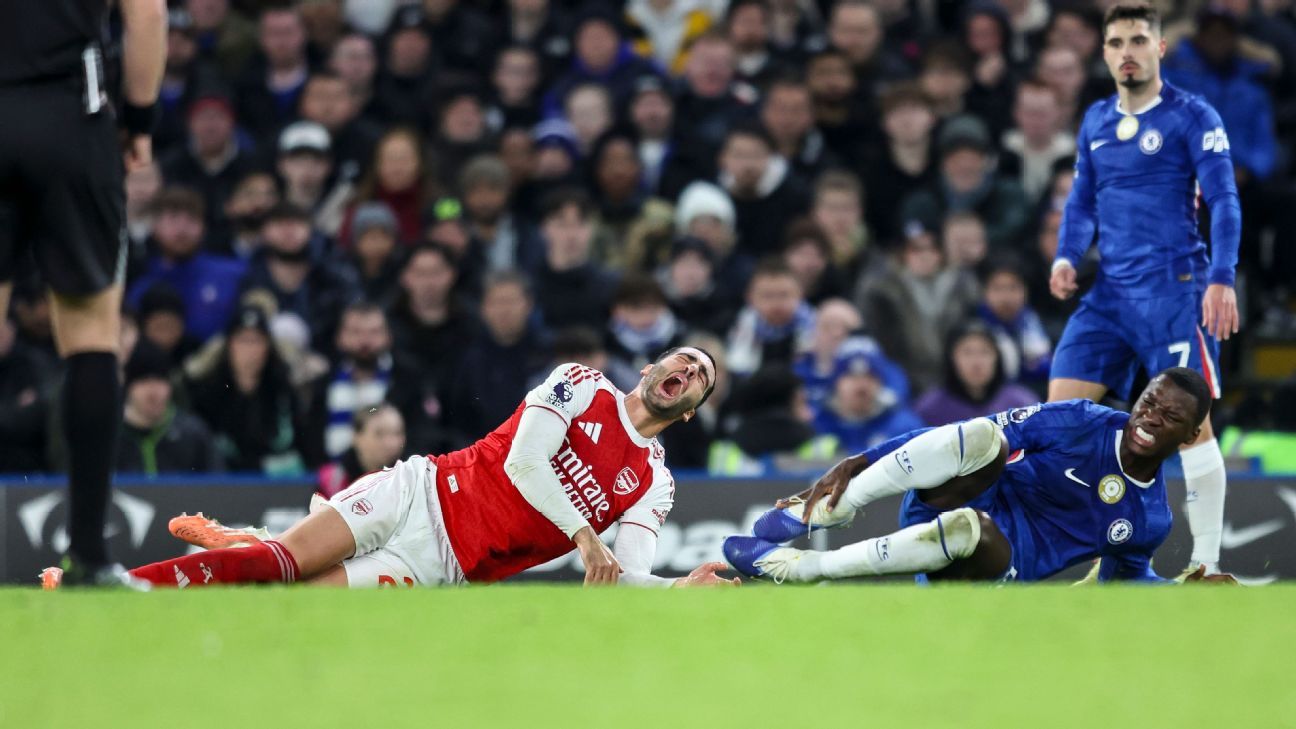
Incident 1: Serious foul play concern with Moises Caicedo tackling Mikel Merino.
Time: 34 minutes
What occurred: Caicedo delayed his tackle on Merino. Initially, Taylor allowed the game to continue as Arsenal pursued an attacking opportunity, but he later halted play to issue a caution against Caicedo, deeming the challenge reckless.
Moises Caicedo receives a straight red card, leaving Chelsea with 10 players. 🟥 pic.twitter.com/b6MNOGkE0K
— NBC Sports Soccer (@NBCSportsSoccer) November 30, 2025
VAR decision: After reviewing the footage, Brooks determined that Caicedo’s tackle endangered Merino’s safety and warranted a red card. He advised Taylor that an on-field review (OFR) was necessary.
VAR review process: Brooks believed intervention was necessary after just one or two views of the incident. However, VAR operates on a process-driven basis, requiring substantial evidence to prove a clear error was made on the field. He described the tackle: “It was slow, executed with a straight leg, applying significant force, and made contact above Merino’s ankles. It was a poor tackle.”
Brooks relayed his recommendation after a pause while both players were treated post-Taylor’s yellow card decision. The anticipation among the crowd was palpable, and after reviewing the footage from crucial angles, Taylor reversed his initial decision, issuing a red card to Caicedo.
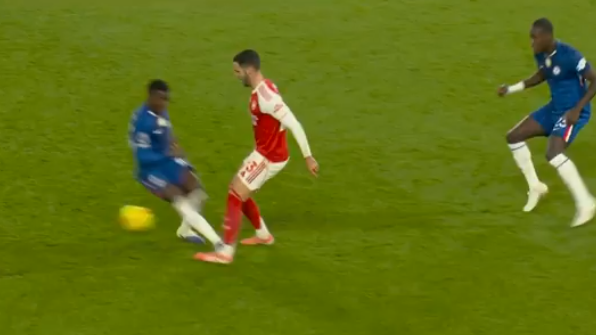
Verdict: VAR’s proactive intervention resulted in the correct outcome upon Taylor’s review. The challenge indeed endangered Merino’s safety, justifying Caicedo’s dismissal.
While Taylor’s initial decision to issue a caution was understandable given the difficulty in real-time assessment, key elements like the challenge’s force and point of contact might not have been immediately obvious. The mechanics of the play could lead to differing interpretations of the challenge’s severity.
Incident 2: Possible serious foul play involving Pierre Hincapie and Trevo Chalobá.
Time: 40 minutes
What took place: Hincapie and Chalobá contested a high ball, and Hincapie accidentally made contact with Chalobá’s face, leading the Chelsea defender to the ground in apparent distress. Taylor observed closely and decided to award Chelsea a free kick, cautioning Hincapie for reckless play.
VAR evaluation: The VAR approved Taylor’s interpretation, supporting his call of mere recklessness on Hincapie’s part.
VAR review method: Given the potential for distortion in slow-motion replays, Brooks aimed to assess the incident at full speed before analyzing the contact involved.
Taylor clarified his decision effectively, explaining that Hincapie’s challenge involved minimal force and was not intended to harm. This provided a clear understanding for Brooks, correlating with Taylor’s description and visible evidence.
Trevo Chalobá seemed to sustain a bruise after facing light contact from Pierro Hincapie’s elbow. Only a yellow card was given for this incident 👀
This occurred shortly after Caicedo’s red card 😅 pic.twitter.com/VEBBsppfxc
— ESPN FC (@ESPNFC) November 30, 2025
Verdict: The on-field referee’s action was correct, giving a warning for reckless behavior, and VAR Brooks utilized clear and concise evidence to support this caution.
In evaluating arm usage for potential red cards, referees and VAR officials consider distinctive indicators such as deliberate swings, clenched fists, and aggressive motions. In this instance, the challenge didn’t present enough danger, allowing both Taylor and Brooks to arrive at a fair conclusion.
Referee: Rob Jones
VAR: Matt Donahue
Incident: Penalty retake due to Jean-Philippe Mateta playing the ball twice during a penalty kick.
Time: 34 minutes
What happened: A penalty was awarded to Crystal Palace following a foul on Mateta by Lenny Yolo in the box. Mateta successfully converted the penalty for a lead, but VAR Donaghue identified that Mateta had played the ball twice, which is against the rules.
Mateta’s first penalty was deemed a double touch, but the second shot counted as Crystal Palace led against Man United. 🦅 pic.twitter.com/cGyGtPGnIa
— NBC Sports Soccer (@NBCSportsSoccer) November 30, 2025
Verdict: The VAR’s intervention was correct as no on-field confirmation was necessary. New laws this season state that accidental double touches on successful penalty kicks shouldn’t incur penalties.
However, if a player willfully plays the ball twice before another player does, an indirect free kick is awarded to the defense, as when the ball indirectly contacts the post and the kicker plays it again.
Referee: Chris Kavanagh
VAR: James Bell
Incident: Goal ruled out. Wolves’ Jorgen Strand Larsen had an initial goal disallowed for offside.
Time: 16 minutes
What transpired: An initial goal by Wolves was deemed offside by the referee team. Strand Larsen provided an assist to John Arias; however, the assistant referee flagged it due to Arias impacting Aston Villa’s keeper Emiliano Martinez’s ability to make a save.
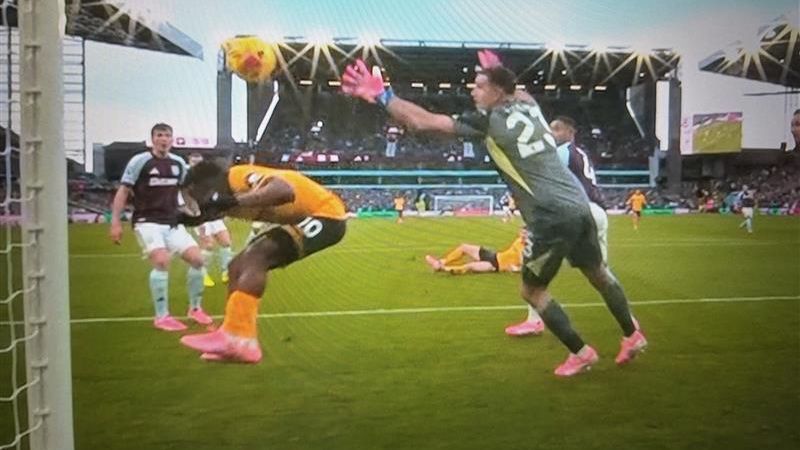
VAR decision: The VAR confirmed that Arias was offside, impacting Martinez’s capacity to save the goal.
VAR review process: In VAR reviews, the starting point comes from the referee’s decisions and real-time communications between officials.
As we’ve seen, VAR can only act after a clear on-field error when play has commenced. The communication was effectively transmitted from the field; assistant referee Cook confirmed Arias’s offside position and noted his proximity to Martinez might have influenced the situation. Kavanagh, positioned well, supported the assistant’s observations.
The replay corroborated the immediate accounts from the on-field team, allowing for a quick resolution.
Verdict: The decision was appropriate, consistent with similar challenges noted recently in the Premier League.
Arias’s clear offside status affected Martinez, allowing the goal; the swift movements linked with such plays significantly challenge refereeing. Understanding the nuances of these calls could lead to enhanced collaboration between the PGMO and Premier League teams, enriching the insights for all involved.
Fan Take: The efficacy of VAR remains crucial for soccer fans, as the technology often impacts match outcomes and team fortunes. Understanding its application not only enhances viewer engagement but could also foster trust in match officiating, shaping the future of the sport.