
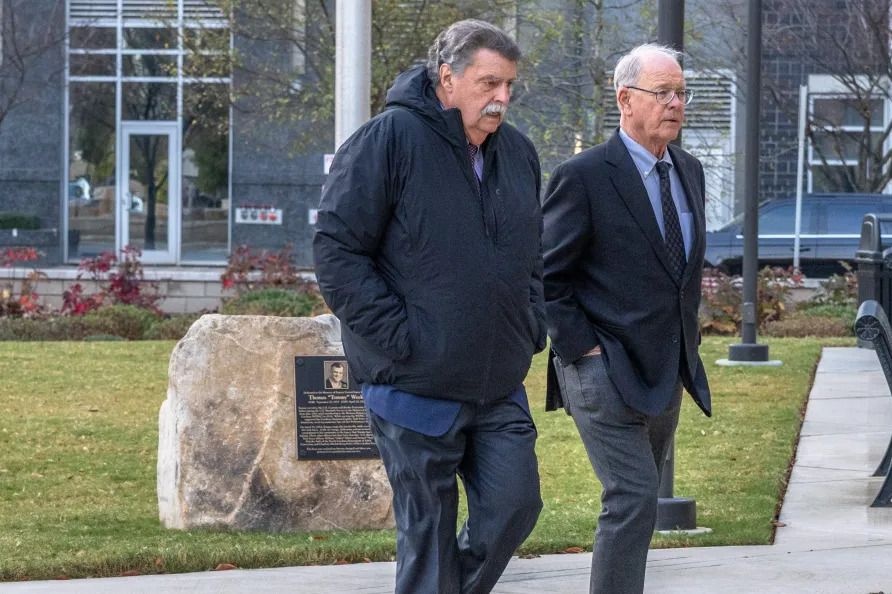
On the third day of the antitrust trial involving 23XI Racing, Front Row Motorsports (FRM), and NASCAR, testimony from NASCAR Executive Vice President and Chief Strategy Officer Scott Prime wrapped up, while FRM team owner Bob Jenkins began his testimony. Prime spent much of Tuesday under cross-examination by 23XI and FRM attorney Jeffrey Kessler, with his testimony covering topics such as the goodwill clause in NASCAR’s charter agreement, which restricts team owners from competing in other series or owning teams without NASCAR’s approval, and the intellectual property protections around next-generation vehicles designed to prevent competition outside NASCAR.
Kessler challenged Prime on these clauses, arguing they are anti-competitive, though some points were dropped following objection. Prime acknowledged the goodwill clause’s intent but described it as well-meaning. Discussions also involved NASCAR’s contingency plans in the event of teams breaking away to form a new series, including reducing charters and running races independently, something Prime said was necessary to protect NASCAR’s interests.
Prime faced tough questioning about the strict deadline NASCAR imposed on teams to sign charter extensions by September 6, 2024, which Kessler described as a “gun to the head.” Most teams signed, but 23XI and FRM did not, leading to this lawsuit. Prime said NASCAR needed contingency plans and emphasized no intention of removing charters outright, though the deadline meant charters could expire. The trial also examined an internal chart by NASCAR’s Chief Legal Officer Amanda Oliver, showing only one negotiation win for teams, revealing tensions within NASCAR’s senior leadership over how to handle team relations.
Later, Bob Jenkins testified about the financial struggles of his team, reporting annual losses of $6.8 million and increased costs due to new regulations requiring parts repairs through NASCAR-contracted vendors. Jenkins criticized the 2025 charter agreement as unfair and overly controlling, likening NASCAR’s governance to “taxation without representation.” Despite this, he sees the charter system as fundamentally sound but in need of reform to truly benefit teams. During cross-examination, NASCAR’s attorney questioned Jenkins on driver non-compete clauses and financial transparency, highlighting differing opinions on team profitability and competitive fairness. Jenkins expressed a preference for fewer, more exclusive teams to increase value, a point bound to be contentious as the trial continues.
Fan Take: This trial shines a spotlight on the intense struggles between NASCAR management and teams, underscoring how control over competition and revenue distribution remains a flashpoint. For fans, the outcome could reshape the sport’s future, potentially changing how teams operate and compete, and influencing NASCAR’s ability to maintain a balanced and exciting racing environment.