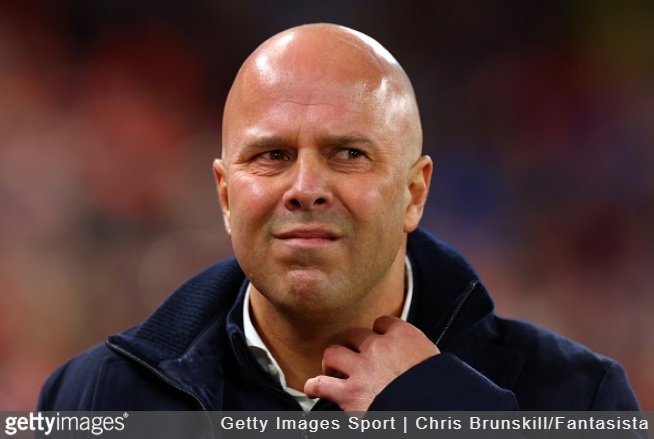
<p>Liverpool's 1-1 draw against Sunderland at Anfield on December 3 not only cost them two crucial points but also highlighted a season that has seemingly spiraled downward. Just a few months ago, the reigning Premier League champions basked in victory under Arne Slott, but now they are struggling, sitting eighth and nine points adrift from leaders Arsenal.</p>Issues Revealed by Sunderland’s Challenge
The match exposed underlying issues, such as a lack of sharpness, strategic indecision, and increasing anxiety among fans.
A deflected shot from Kemsuddin Talbi gave Sunderland a surprising lead in the second half, revealing Liverpool’s passive defense and inability to manage transitions. Florian Wirtz’s late equalizer, which some attribute as an own goal by Nordi Mukiele, provided temporary relief, but the overall performance lacked energy and inspiration. Club legend Jamie Carragher described the performance as “really, really concerning,” noting that the team appeared to be “sleepwalking.” Even a heroic goal-line clearance from Federico Chiesa in stoppage time could not mask the team’s current vulnerabilities.
The decision to bench Mohamed Salah for two consecutive league matches raised eyebrows. Slott introduced him at halftime, but the Egyptian’s presence could not rekindle the lost rhythm and confidence of the squad. This tactical risk, coupled with ongoing struggles from key players Alexander Isak and Wirtz, has led to increased skepticism regarding Slott’s approach.
Slott’s Relationship with Liverpool’s Leadership
Despite rising pressure, Slott asserts he retains the confidence of Fenway Sports Group (FSG) and sporting director Richard Hughes. Following a devastating loss to PSV in the Champions League, he stated that he “feels trust” from the leadership, emphasizing that discussions have been “normal” and collaborative. Insiders have confirmed that his position remains secure, even amid the club’s worst losing streak since 1953, with nine defeats in 12 matches.
Following Jurgen Klopp’s exit, the new leadership structure was set up to ensure stability, with Michael Edwards returning as CEO for football and Hughes overseeing recruitment strategies. Slott communicates primarily with Hughes while receiving occasional insights from FSG’s senior management. This setup reflects a history of cautious decision-making by the owners, but patience has its limits. As one source put it, “What defuses the storm is results, not rhetoric.”
Nonetheless, discontent among fans is escalating, particularly after images circulated of Slott smiling with former Feyenoord captain Lutcharel Heertrujda after the Sunderland match. This incident sparked outrage online, illustrating the growing disconnect between the manager and the club’s passionate fanbase.
The Broader Crisis: Performance, Finances, and Future Uncertainty
Liverpool’s struggles extend beyond the pitch. Failing to qualify for the Champions League could cost the club up to £80 million, with analysts labeling the financial shortfall as “relegation-level money.” This predicament has been intensified by a record summer spending spree of nearly £450 million on new players, including Wirtz and Isak, whose contributions have come under fire.
Statistics reveal a troubling trend: the team has won just three out of their last 14 matches across competitions, and their home record has been marred by defeats to Nottingham Forest and PSV prior to the Sunderland game. Anfield, once an imposing fortress, now feels vulnerable. Slott insists that the stadium hasn’t lost its “fear factor,” but he acknowledges that opponents are gaining confidence against Liverpool.
Tactically, the team’s performance appears disjointed. Carragher criticized Slott for lacking a consistent starting eleven, citing ongoing rotations and an absence of attacking cohesion. While injuries have played a part, the team’s higher-profile signings have struggled to mesh, and the intensity that marked Liverpool’s identity under Klopp seems to have dissipated.
Embed from Getty Images
Outlook for the Rest of the Season
Can Liverpool turn their season around? The immediate outlook is grim, with challenging matches against Leeds, Inter Milan, and Tottenham on the horizon. Despite FSG’s reputation for stability, a turnaround is critical. Carragher warned that Slott has “a week to save his job.”
The January transfer window could prove pivotal. Although reinforcements might be on the way, spending alone won’t resolve the structural issues. Slott faces a dual challenge: restoring faith within a fractured team and reconnecting with a fanbase that has lost trust. His mantra of “keep fighting, no matter how difficult it gets” could ring hollow unless it translates into results.
Failure to secure a top-four finish would have repercussions far beyond finances. The club’s long-term strategy, which relies on Champions League participation, could be jeopardized.
For Slott, the stakes are a matter of survival. He was brought in to usher Liverpool into a new era of tactical sophistication and stability, but he now finds himself on the edge of a crisis that could define, if not end, his tenure.
Fan Take: This news matters significantly to soccer fans, not just at Liverpool but across the world, as it underscores the delicate balance between management, player performance, and fan expectations. The potential fallout from Liverpool’s situation could reverberate throughout the sport, affecting transfers, coaching strategies, and the dynamics of power in the Premier League.