

The WNBA and WNBPA have reached an agreement to extend their collective bargaining agreement (CBA), which was due to expire on November 30th, by 40 days. Despite this extension, progress on a new contract appears slow, largely because player salary hikes do not adequately reflect a fair share of the league’s revenue growth.
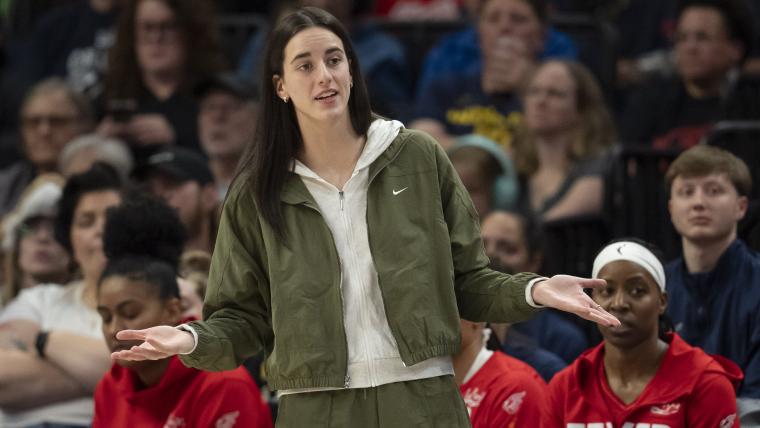
Indiana Fever guard Caitlin Clark stands out among WNBA players, having earned millions from NIL sponsorship deals even before playing her first professional game in 2024. According to Sportico, Clark is projected to be the sixth-highest paid female professional athlete by 2025, with $16 million generated from various endorsements during the year she signed a major contract with Nike.
However, her earnings from playing in the WNBA are comparatively modest. In her second season with the Fever, Clark made just $114,076, partially due to an injury limiting her to 13 games. Her base salary under her four-year rookie contract was $78,066, with additional earnings including a $30,000 bonus for winning the Commissioner’s Cup, $3,435 for reaching the WNBA semifinals, and $2,575 for being named an All-Star for the second consecutive year.
Both the league and players agree that salaries should see significant increases in the upcoming CBA, but there’s still debate over the implementation and the scale of these raises starting in 2026. Players like Clark, with elite talent, will soon make $114,000 in salary alone, yet the fact that this figure is a fraction of their total income highlights an ongoing issue the WNBA needs to address urgently.
Fan Take: This salary breakdown highlights the stark contrast between WNBA salaries and outside earnings, underscoring the need for more equitable pay as the league grows. For fans, it signals a pivotal moment where better compensation could attract and retain top talent, ultimately boosting the league’s competitiveness and popularity.