

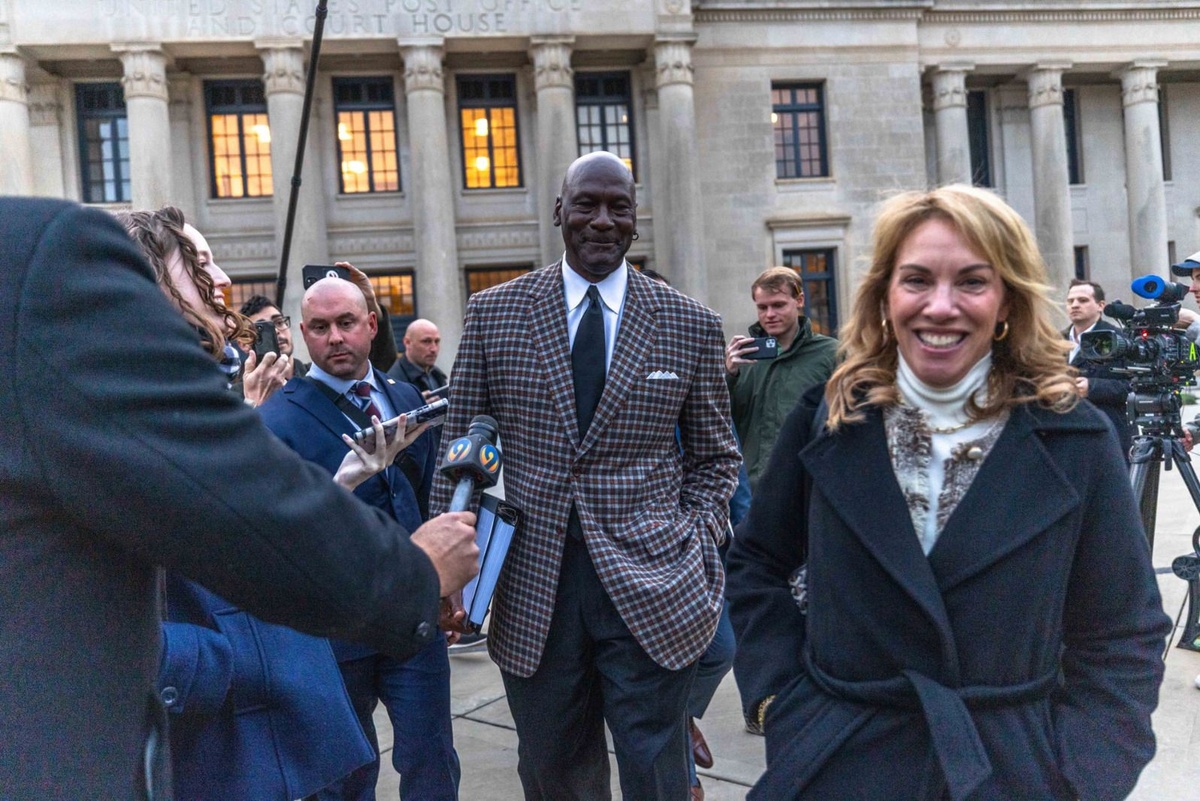
Michael Jordan was present at Western North Carolina on Friday afternoon to mark the conclusion of Week 1 of the antitrust lawsuit trial between 23XI Racing, Front Row Motorsports, and NASCAR. Jordan, who co-owns 23XI Racing alongside Cup Series driver Denny Hamlin and longtime associate Curtis Polk, is suing NASCAR and CEO Jim France in a case that has been ongoing for 15 months and entered its trial phase this week.
The court has identified NASCAR as a monopsony, meaning it is the sole buyer of top stock car racing teams, and the jury is tasked with determining whether NASCAR used this market power to limit competition and reduce the revenues of racing teams during charter extension negotiations. 23XI and Front Row contend that they would have earned more if not for NASCAR’s anti-competitive behavior, which has hindered market competition.
Despite two years of negotiations, 13 of 15 Cup Series teams signed charter extensions, but the teams owned by Hamlin, Jordan, and Front Row owner Bob Jenkins did not. Jordan has voiced his belief that NASCAR should operate similarly to the NBA, where revenue is split evenly between league and teams, promoting shared responsibility and growth. He argues that the current charter system is unfair and limits team profitability.
NASCAR defends itself by stating it is privately held by the France family and operates differently from leagues where teams essentially own the sport. Jordan, however, has heavily invested between $35 and $40 million in 23XI Racing, motivated by a shared vision with Hamlin to secure competitive success with multiple charters despite warnings that NASCAR posed a risk to his brand. Jordan remains optimistic that a fair business partnership model would benefit everyone involved.
Throughout the trial, NASCAR has portrayed Polk as primarily a businessman with limited interest in racing, evidenced by discovered statements about his lack of passion for the sport and strategic moves to pressure NASCAR publicly. Jordan acknowledged Polk’s focus on business over racing, with Polk actively engaging in tactics to leverage negotiations.
Heather Gibbs, Joe Gibbs Racing’s daughter-in-law, also testified, reflecting on the financial hardships teams face in the Cup Series, especially family-run teams without secondary revenue. She condemned comments from NASCAR leadership about reckless spending and expressed a desire for a new economic model, while still showing respect for NASCAR’s leadership.
NASCAR Chairman Steve O’Donnell was on the stand for almost five hours, addressing competition threats like the SRX series, non-compete clauses, and the economics of NASCAR’s charter system. He defended NASCAR’s approach, highlighting increased charter values and a willingness to explore partnerships and cost controls but expressed concerns over the financial demands being made by teams.
Judge Kenneth D. Bell noted the trial could extend beyond the planned 10-day period due to the case’s complexity and the burden on jurors, aiming for a conclusion around mid-December.
Fan Take: This lawsuit is a pivotal moment for NASCAR, as it challenges the core financial structure of the sport and how teams are valued and compensated. The outcome could reshape NASCAR’s business model, potentially heightening competition and profitability for teams, which is crucial for fans wanting a vibrant and competitive racing scene.