
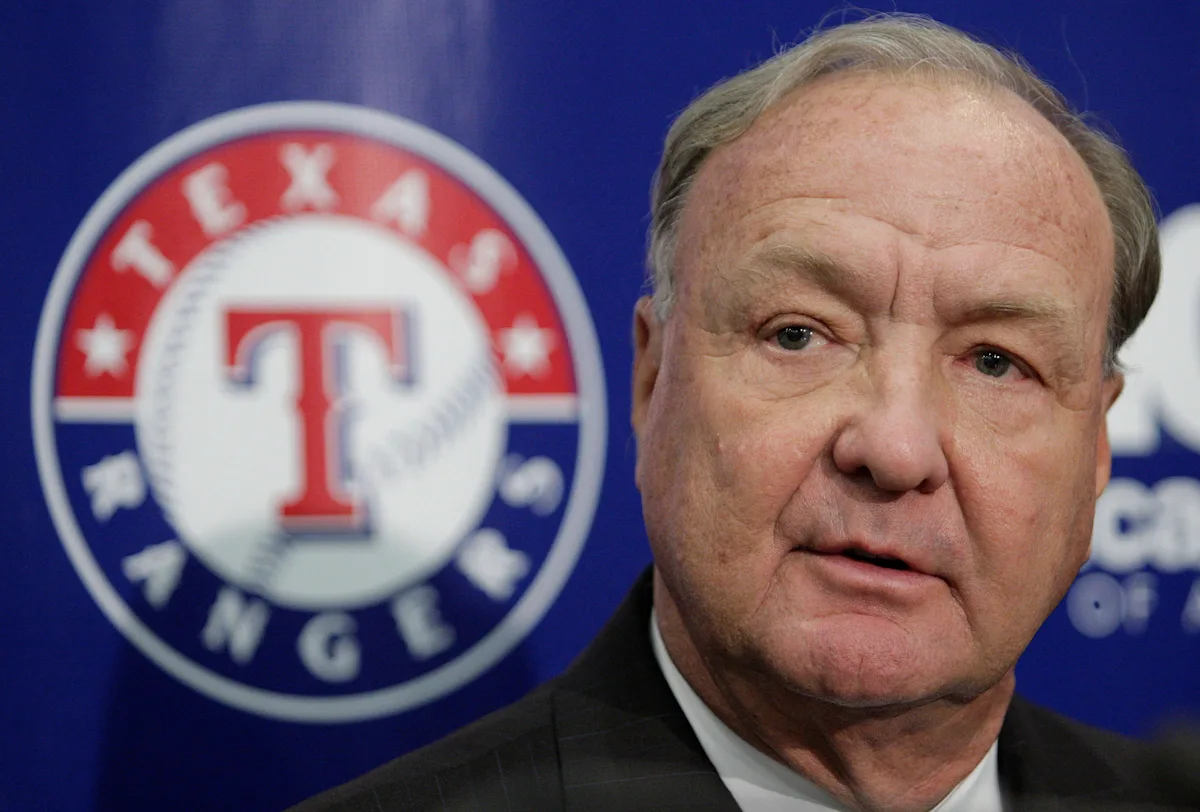
Tom Hicks, who owned Liverpool, the Texas Rangers, and the Dallas Stars, passed away on Saturday at the age of 79.
Hicks built his wealth as a private equity investor and entered professional sports in 1995 by acquiring the Dallas Stars. Despite the team finishing last in the 1995-96 NHL season, they bounced back to win their division for five consecutive years, consistently making the playoffs and securing the Stanley Cup championship in the 1998-99 season.
After a one-year playoff absence, the Stars returned to the postseason for five straight years, although they only reached the conference finals during that period.
In 1998, Hicks bought the Texas Rangers from a group led by George W. Bush. The Rangers won the American League West division in his first two years, but failed to secure any postseason wins in both seasons.
During Hicks’ tenure, the Rangers signed shortstop Alex Rodriguez to a then-record 10-year, $252 million contract. Although Rodriguez performed well, the team finished last for four years straight. Prior to the 2004 MLB season, Hicks traded Rodriguez to the New York Yankees, later calling the trade “one of the stupid things” he did as an owner.
In 2007, Hicks became co-owner of Liverpool alongside George N. Gillett Jr., but his ownership was highly unpopular with fans. He promised a new stadium and insisted no new debt would be taken on, leading to significant fan backlash. Frustrated supporters created a video titled “Dear Mr. Hicks,” criticizing his management and urging him to leave.
By January 2010, Hicks agreed to sell the Rangers, but faced financial difficulties which caused him to default on a loan to the Stars, pushing the team into bankruptcy. The Rangers were sold to a group led by Chuck Greenberg and Nolan Ryan, while the Stars were sold at auction to Tom Gagradi.
Hicks eventually lost control of Liverpool in 2010 after the club’s board narrowly voted 3-2 in favor of selling the team to New England Sports Ventures.
Fan Take: For baseball fans, the legacy of Tom Hicks is a reminder of how ownership decisions can deeply impact team performance and fan loyalty. His ownership era underscores the importance of balancing financial management with competitive success to maintain a strong and passionate fanbase in the sport.