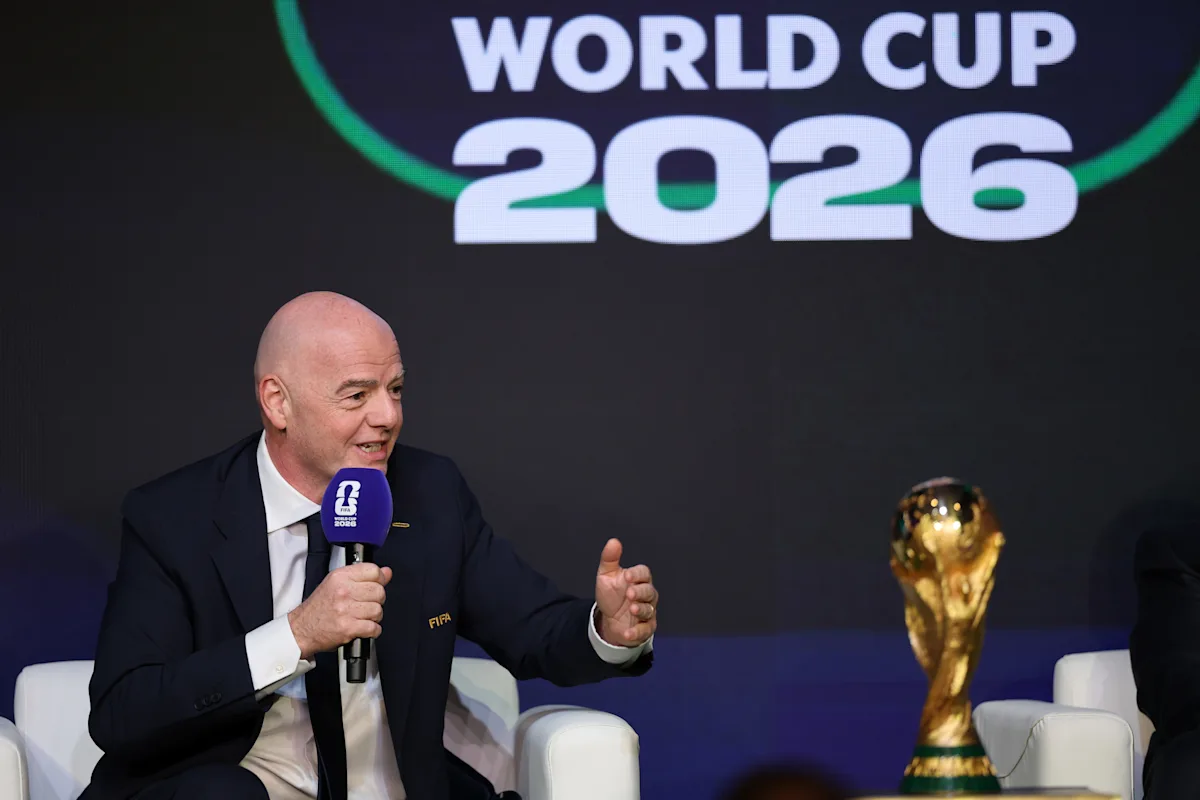
The 2026 World Cup will introduce commercial breaks, with FIFA announcing a three-minute rehydration pause during the first half of each match. This decision emerged from discussions amongst coaches and broadcasters following the recent World Cup draw, as reported by Henry Bushnell from The Athletic.
FIFA stated that the new measures aim to enhance player safety, particularly after various Club World Cup matches were held in hot conditions, raising hydration concerns. To mitigate heat-related issues, many games in the U.S. have been scheduled in indoor stadiums or during the cooler evening hours, which is also a consideration for the 2026 World Cup.
The hydration breaks will take place at the 22nd minute of both halves, effectively splitting the match into four segments. The game clock will continue to run during these breaks, and an extra three minutes will be added to stoppage time at the conclusion of each half.
Humidity conditions will not affect the implementation of these breaks, ensuring all teams have equal opportunity. According to Inside FIFA, this policy aims to maintain fairness across the tournament.
“A three-minute hydration break will be scheduled for every match, independently of location, enclosure, or temperature.” This announcement was made by Manolo Zubirria, the chief tournament officer for the 2026 FIFA World Cup, during the World Broadcasters Meeting in Washington, D.C.
These breaks also provide an opportune moment for networks to incorporate commercial spots during the matches.
Beyond ensuring player hydration, these pauses could significantly influence match dynamics. As noted by a reporter from The Athletic, coaches will have the chance to communicate with their players and adjust strategies mid-game, allowing teams to adapt their tactics as needed.
The tournament is set to kick off on June 11, 2026, and conclude on July 19, 2026, with matches hosted across various cities in the U.S., Canada, and Mexico.
Fan Take: This move to implement hydration breaks could greatly affect the pace and strategy of games, making each match more dynamic and engaging for fans. It also emphasizes the importance of player welfare, reflecting a growing awareness of sports health and safety at the highest level.