
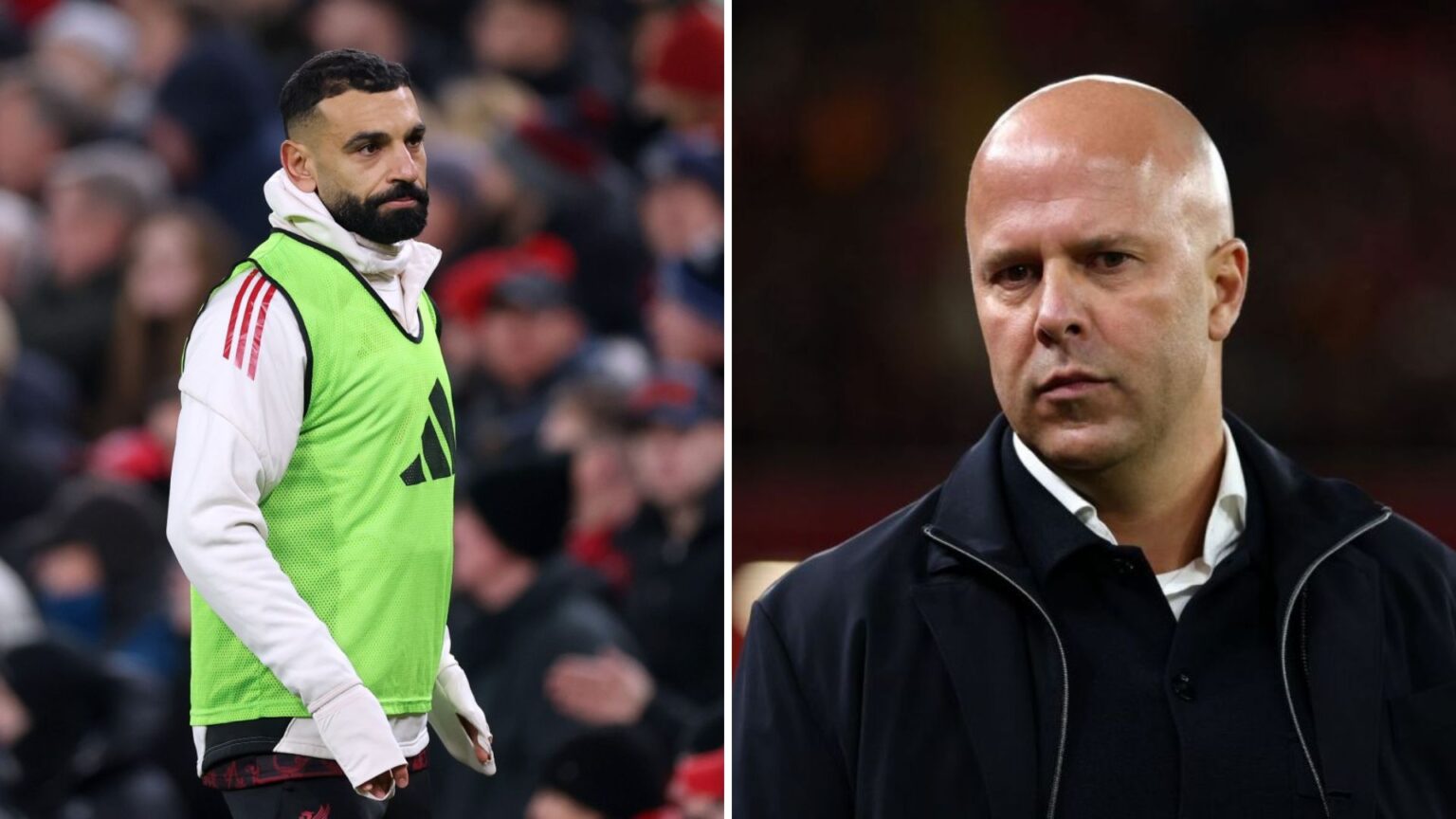
Tensions at Anfield reached a new high this weekend after Liverpool’s dramatic 3-3 draw with Leeds United. Mohamed Salah sat on the bench for the third consecutive game, a decision that ultimately triggered an explosive reaction from the Egyptian king.
In a graphic post-match interview, Salah did not hold back and insisted he was being made the scapegoat for the team’s wider struggles.
He made it clear that his relationship with manager Arne Slott had broken down and suggested that “someone” at the club was trying to throw him under the bus.
Pundits have been quick to criticize the 33-year-old’s form, suggesting he is fading or past his prime, but digging deeper into the data shows Salah is telling the truth. The problem isn’t him, it’s the system.
Statistics that prove Mohamed Salah right
While the narrative that Salah’s power is waning is convenient, the numbers tell a different story.
Despite his limited playing time and the team’s inconsistent form, the data confirms that Salah has created the fourth-highest number of chances in the Premier League so far this season.
He remains one of the most creatively expressive players in the league, even when the team is dysfunctional around him.
The real problem seems to be isolation rather than decline. Further statistics from the current campaign reveal a worrying trend in Liverpool’s usage of their talisman.
30% fewer touches per game compared to the average of the past three seasons.
The number of touches inside the opponent’s box has decreased by approximately 40%showing that he has been left on the fringes of the game.
You don’t get “washed out” of being one of the best players in the world overnight.
These statistics highlight a systematic failure to feed the ball to players who historically only have half the chances of punishing teams. The decline in output is a direct result of the decline in service, justifying Salah’s claim that the problem is beyond the control of individuals.
Is it because of Arne Slot’s tactics?
If Salah is the only forward who is struggling, the argument that he is ‘not in form’ may be unfounded.
However, under manager Arne Slott, Liverpool’s attack overall looks dull. With the exception of Dominik Szoboszlai, who continues to perform reasonably well, the expensively assembled front line is a dud.
The most damning evidence against Slot’s tactical setup is the performance of his new players. The manager has at his disposal a trio that terrorizes Europe in Alexander Isak, Florian Wirtz and Mohamed Salah.
On the contrary, Isak has registered just 14 touches in recent starts and has often looked isolated, while Wirtz has struggled to replicate his impact in the Bundesliga.
When a manager fails to get the best out of three world-class attackers at the same time, the blame must be directed at the dugout.
Additionally, Slott’s personnel decisions have raised eyebrows.
Kodi Gakpo’s persistence in subpar performances while forcing Salah off three games in a row under the guise of “tactical reasons” or “not feeling well” suggests personal or political motives rather than sporting ones.
Is Salah a planned scapegoat?
The timing and nature of Salah’s exclusion has fueled speculation that it is more than just an exercise of managerial authority. Is this a calculated move by the club’s hierarchy?
Questions are now being asked of sporting director Richard Hughes and chief executive of football Michael Edwards.
The prevailing theory is that he was intentionally used as a scapegoat to get rid of Salah, allowing the club to obtain a large transfer fee.
Liverpool are sitting on a potential financial gold mine as Saudi clubs maintain strong interest in Salah.
The decision to give Salah a contract extension in April 2025 may have been a strategic move to protect his value rather than a commitment to his future on the pitch.
By extending their contracts, Hughes and Edwards ensured they would not lose their biggest assets for free.
Now, painting him as a “problem” and reducing his influence may be paving the way for the club to sell him for a huge profit in January, but Salah appears to have seen through that strategy in an explosive interview.